Traditional bank branches are becoming less common as financial institutions increasingly embrace digital banking and reassess their physical footprints.
As consumers turn to mobile apps and online platforms to manage their finances, banks are reconsidering how many brick-and-mortar locations they need to serve customers effectively.
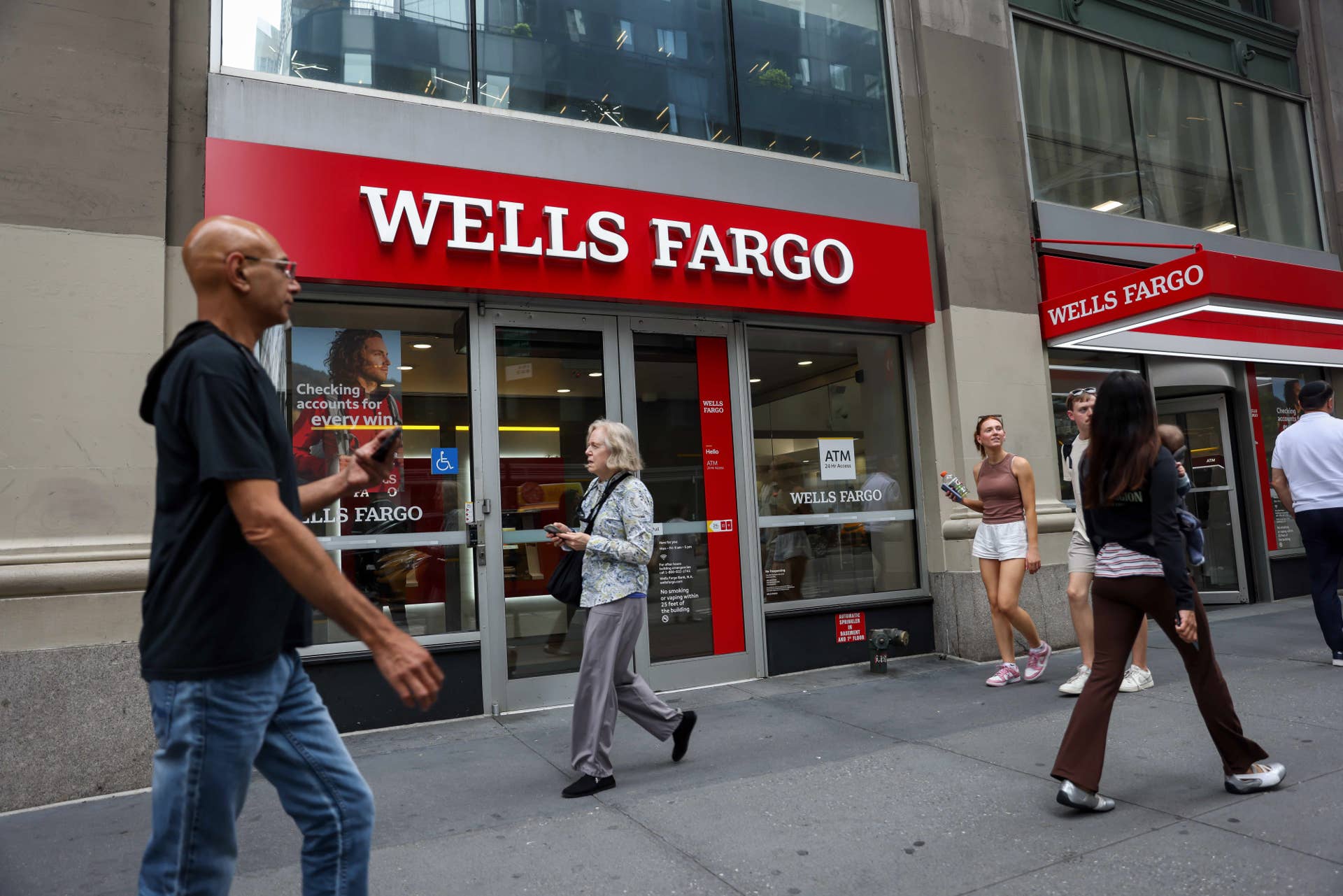
Wells Fargo is among the latest banks to scale back its physical presence, having closed dozens of branches nationwide in recent months. The bank has also filed notices to shut down additional locations, continuing a broader shift that has reshaped the U.S. banking industry.
Wells Fargo closes dozens of retail branches nationwide
Wells Fargo (WFC) closed 37 retail branches between Aug. 12 and Oct. 22, 2026, across 18 states, according to FinanceBuzz.
The bank has also filed notices with the Office of the Comptroller of the Currency to close 10 branches across eight states.
States where branches have already closed include:
- Alabama: 2
- Alaska: 1
- California: 4
- Florida: 3
- Georgia: 3
- Idaho: 1
- Iowa: 1
- Minnesota: 2
- Nebraska: 1
- New Jersey: 4
- North Carolina: 3
- North Dakota: 1
- Oregon: 2
- Pennsylvania: 2
- South Carolina: 1
- Texas: 2
- Virginia: 2
- Washington: 2
States with additional branches slated for closure include:
- Colorado: 1
- Florida: 2
- Georgia: 2
- Minnesota: 1
- Montana: 1
- North Carolina: 1
- Pennsylvania: 1
- Virginia: 1
The shutdowns follow earlier reductions in the bank’s physical footprint. In June 2026, Wells Fargo announced plans to close 18 additional branches, including locations in Pennsylvania and New Jersey, according to the Philadelphia Business Journal.
Digital banking grows in popularity among consumers
The shift toward digital banking has changed how Americans interact with financial institutions, with mobile apps and online platforms increasingly becoming their preferred channels.
A Morning Consult survey conducted on behalf of the American Bankers Association (ABA) from Oct. 9 to Oct. 12, 2026, found that 44% of U.S. bank customers most often use mobile banking apps to manage their accounts. Another 20% use online banking through a laptop or desktop, while 10% most often visit a physical bank branch.
The survey included 4,402 adults and had a margin of error of plus or minus one percentage point.
“Americans greatly appreciate their banks’ online and mobile offerings and ability to choose from a wide variety of banking options that best meet their needs,” said ABA President and CEO Rob Nichols.
However, the growing popularity of digital banking does not mean physical branches have become obsolete. In-person services remain important for customers who prefer speaking with bank employees, particularly when handling complicated transactions or seeking financial guidance.
The continued decline in physical banking locations also reflects a longer-term industry trend.
In 2025, Wells Fargo recorded 91 net branch closures for the year, ranking second among U.S. banks, according to the FDIC Branch Openings and Closings data reported by the Wall Street Journal.
The Journal’s Personal Finance Editor Lauren Nowacki said branch closures have been happening gradually for years.
“Physical banking locations have been on a gradual decline since the 2007-09 recession. However, the Covid-19 pandemic accelerated branch closings due to a reliance on digital banking. People weren’t necessarily choosing to use an app instead of going to a physical location — they had to.”
Wells Fargo’s branch network continues to shrink
Wells Fargo’s latest financial results provide additional context for how the bank is managing its operations as customer banking preferences change.
During the third quarter of fiscal 2026, Wells Fargo reported $21.9 billion in total revenue, up 2% from the prior year, while net income increased 6%, according to its earnings report.
Here’s some of my previous coverage of bank closures:
- 169-year-old bank to close 26 branches in major shift
- 70-year-old bank chain closing 51 locations across 13 states
Its branch network has continued to shrink even as its digital customer base has grown.
Wells Fargo ended Sept. 30 with 4,068 retail branches, down from 4,108 during the same period in 2025. That represents a net reduction of 40 branches.
At the same time, the bank reported 38.2 million digitally active customers in the third quarter, up 3% from a year earlier. Its mobile active customer base also increased 5%, reaching 34 million.
These figures illustrate how Wells Fargo’s digital customer base is expanding while its physical branch network contracts.
The bank has also been working to reduce expenses and improve operational efficiency. Its headcount has declined for six consecutive years, with employee numbers falling 8% year over year in the third quarter of fiscal 2026.
Although Wells Fargo has not attributed each branch closure to digital banking adoption, the combination of a growing customer base and a smaller physical network highlights how the bank’s customer service is changing.
For customers affected by the closures, Wells Fargo’s online branch locator and mobile app can help identify nearby locations that continue to offer in-person services.
Despite the bank’s growing digital customer base, maintaining access to physical banking services remains important for customers who prefer face-to-face assistance.
Related: Department-store chain closing half its locations after 188 years in business