Here’s a little something to be thankful for. And you might notice as soon as you pull into a gas station to fill up.
Gas prices are lower: around $3.58 a gallon nationally, according to GasBuddy.com data. That’s down about 20% from the September highs and 22% from the year’s highs in May.
If you fill the 15-gallon gas tank in your car four times a month, congratulations: You’re saving $55 a month from what you paid in September.
The downside is, of course, that gasoline (and diesel) prices are still up for the year: 27% for gas and 63% for diesel.
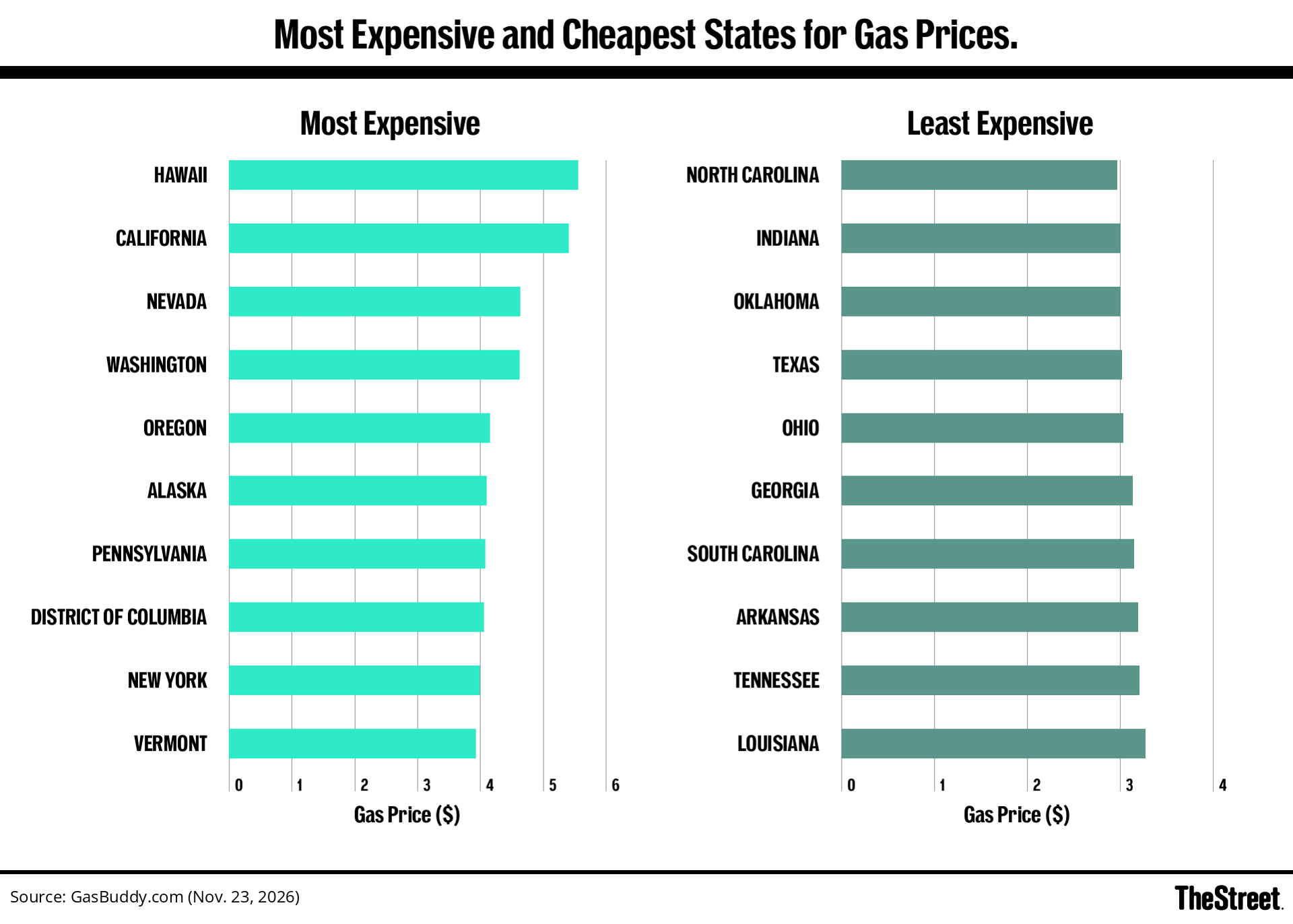
Higher on the West Coast and Hawaii. Lowest in North Carolina, Oklahoma and Indiana, where statewide averages are under $3.
But unless serious war erupts again in the Middle East, says Patrick DeHaan, GasBuddy’s head of petroleum analysis, gas and diesel prices will continue to fall through the new year.
Gas and diesel prices typically decline in the fall across the Northern Hemisphere, DeHaan said in an interview. Demand declines as the weather cools, and refiners don’t ramp up for the summer driving season until the end of February.
So, hooray!
Unless the United States gets hit by a brutally cold winter, which would increase demand for diesel fuel and heating oil, which are essentially the same thing.
Prices broke at the end of September
Gas prices have been falling fairly steadily since Sept. 24, when GasBuddy’s data put the national average at $4.494 a gallon and 21.6% from GasBuddy’s 2026 peak price of $4.566 a gallon on May 6 and again on May 20.
I should note that diesel prices have fallen by about 11% since peaking at $6.519 a gallon on Sept. 23. For a long-haul trucker with a 250-gallon tank, that works out to savings of about $100 per fill-up. The only problem: Diesel prices are still up 63% this year.
Diesel is a critical input in farming, construction, mining, transportation, power generation, and defense.
Between April and early July, gasoline and diesel prices dipped sizably after the United States and Iran agreed to a ceasefire. The deal collapsed in July. And gas and diesel prices shot up again into September. Diesel prices, in fact, set new highs through most of September.
A caveat: One reason for low prices in states like Indiana and North Carolina is that many states suspended excise and/or sales taxes to provide relief to motorists, truckers, and others. Those suspensions will end. Indiana’s ends on Dec. 5, for example. It began in May as a one-month break, has been renewed seven times since, and looks like it will cost the state around $1 billion in revenue.
In addition, President Trump signed an order in October allowing the use of red diesel on highways in another move to reduce costs. Red diesel is dyed red and is not subject to federal highway taxes so long as it is used in farming, logging, and related activities.
Where the lowest and highest prices are
In addition to North Carolina, Oklahoma, and Indiana, you can find sub-$3 gas in large portions of Ohio and in parts (mostly rural) of Texas, Louisiana, Arkansas, Georgia, and South Carolina.
The highest statewide prices now, according to GasBuddy, are those in Hawaii and California, both above $5 a gallon. Prices in Washington, Oregon, Idaho and Nevada have slipped well below $5.
More on gas prices and fuel inflation in 2026
- U.S. gasoline prices are coming down fast
- August sees a dubious record on gasoline prices
- White House bid to bring in Russian diesel sits parked on the ocean
Prices on the West Coast are typically higher because of fuel taxes and fees imposed for environmental protection. In addition, fuel sold in Hawaii and Alaska is more expensive because it is shipped in from refineries in Washington State and California.
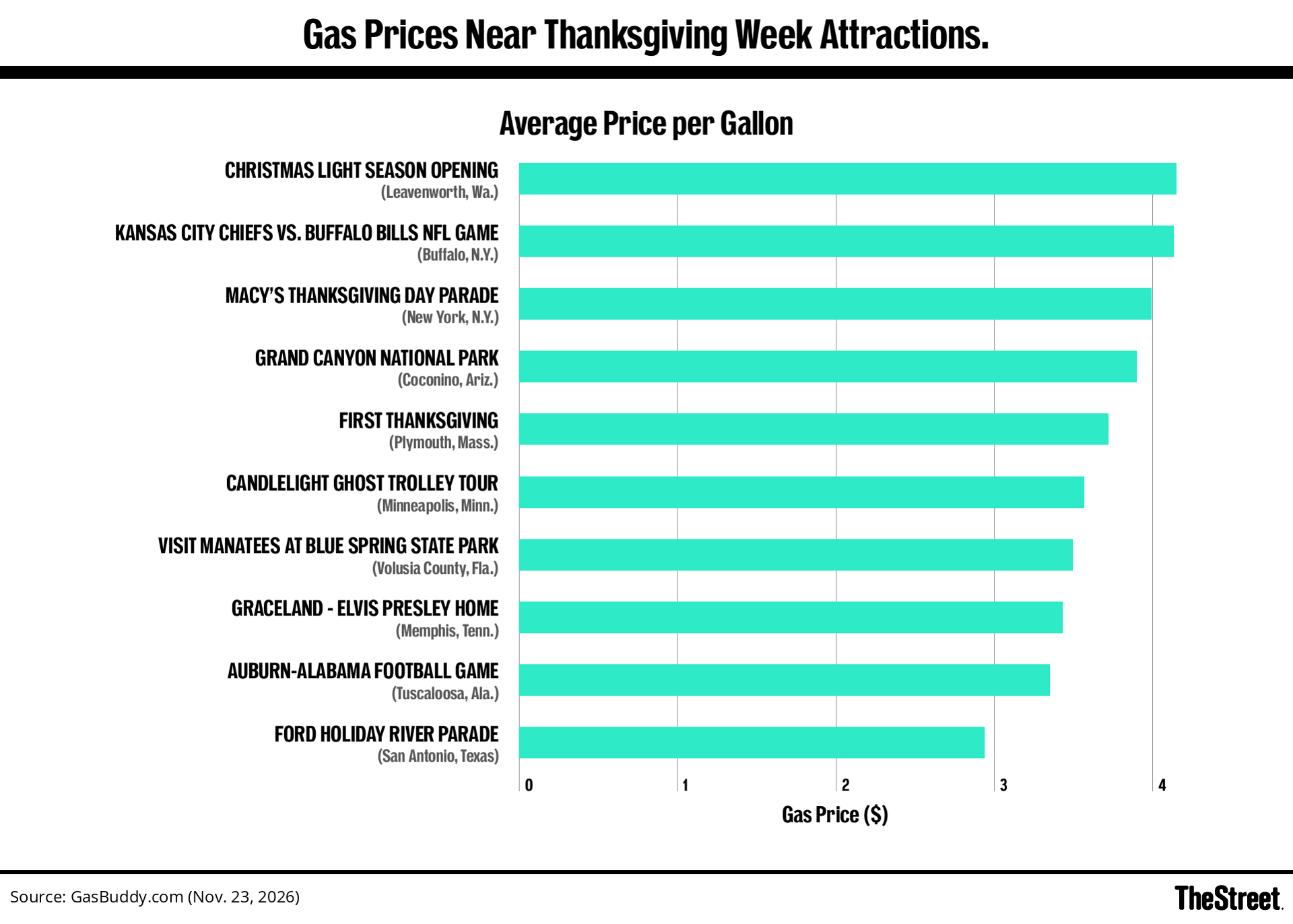
If you plan to be on the road this holiday season, here are gas prices in states or places you might be visiting.
Gas prices weren’t supposed to rise in 2026
By the end of 2025, gas and diesel prices had been fairly stable for more than a year. And many energy experts were predicting an oil glut would drive prices lower.
That all ended when Israel and the United States attacked Iran on Feb. 28, and Iran defended itself by closing off the Strait of Hormuz and launching drones and missiles at its neighbors in the Persian Gulf. The strait is the waterway linking the Persian Gulf to the Indian Ocean and, before the war, saw as much as 20% of crude oil pass through daily.
Crude oil, gasoline, and diesel prices promptly shot higher worldwide. The tensions and costs were major factors in the United States Midterm elections, which resulted in the biggest Democratic majorities in Congress since 1992 and in much of the country.
Related: The IRS just rewrote a fuel tax credit as diesel hit $5.94