People like the idea of healthy fast food more than they actually want to order it.
It’s a battle between intention and reality. Everyone gets up in the morning, says they’re going to work out, and plans on eating a healthy lunch.
When it actually comes time to do that, however, people skip chains like Sweetgreen, Salad and Go, and the just-shuttered Vinaigrette Salad Kitchen because they want to enjoy what they’re eating.
We know what’s good for us, but don’t make healthy choices for a number of reasons.
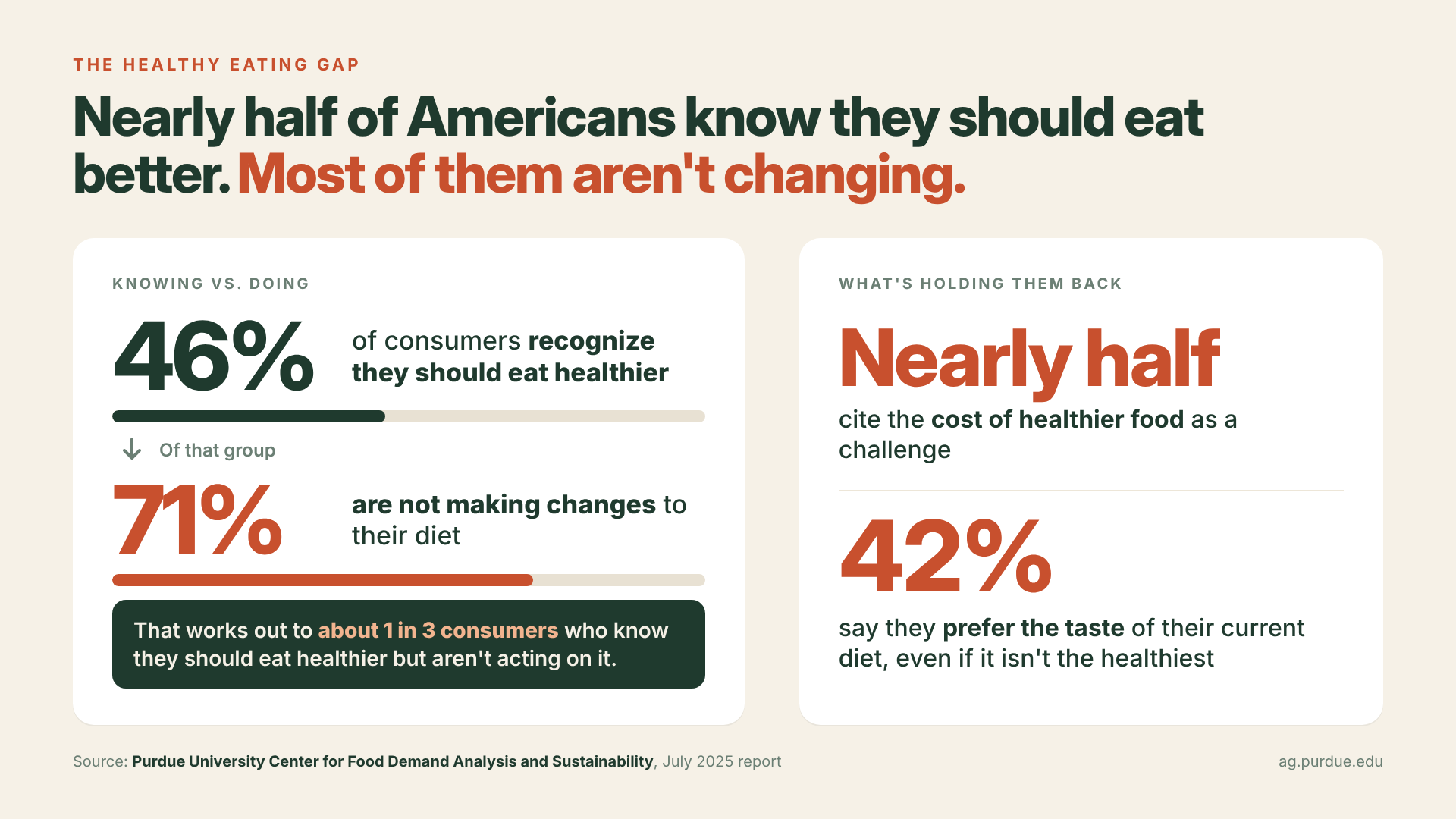
“Almost half of consumers — 46% — are aware they should eat healthier diets, but most of those — 71% — are not making changes, and the two biggest barriers to a healthier diet are cost and taste,” said Joseph Balagtas, professor of agricultural economics at Purdue, citing a 2025 survey conducted by his department.
Nearly half of consumers cite the cost of healthier foods as a challenge, and 42% say they prefer the taste of their current diet, even if it’s not the healthiest.
Restaurants don’t make money based on people’s best intentions. They need people to actually want to eat there, and salad-based chains simply don’t give people enough of what they want.
Vinaigrette Salad Kitchen closing its final locations
Vinaigrette Salad Kitchen had a simple slogan: “People Love a Salad Done Right.”
The problem is that they don’t. They might say they do, but people actually like burgers, chicken nuggets, pizza, tacos, and pretty much anything else that isn’t good for them.
Once a six-restaurant chain, Vinaigrette Salad Kitchen posted on its Facebook page that its final two locations would be closing after service on Nov. 25.
“This isn’t goodbye to a restaurant; it’s goodbye to a community,” the company’s owners posted, and hundreds of people responded.
More Restaurants:
- 40-year-old fast-food franchisee files for Chapter 11 bankruptcy
- Landry’s rescues 9 restaurants from bankruptcy as closures mount
- Outback Steakhouse restaurant franchisee files for Chapter 11 bankruptcy
Michelle Rawlings’ post was typical of most of the messages.
“I’m so sad, as the Harvest Kale Salad has been my favorite salad for years. Would you share the list of what’s in the dressing for that salad? I don’t know that I’m savvy enough to recreate it, but I’d like to try,” she wrote.
Deborah Miller noted that this has become a trend.
“First Core Life and now this!! Where are healthy food options?” she posted.
Shutterstock
Healthy restaurants have struggled
Gyms work because you have to pay your monthly membership fee whether you actually go there or not. Healthy restaurants need customers to actually show up and eat there.
Vinaigrette Salad Kitchen isn’t isolated. It’s part of a trend that has hit a number of chains, including:
Salad and Go
- Filed Chapter 11 bankruptcy on Aug. 5, 2026.
- Closed all 70 remaining restaurants.
- Previously closed 41 Texas restaurants in 2025 and another 32 locations in Texas and Oklahoma in January 2026.
- Had grown to approximately 146 locations before its retrenchment.
- Cited sustained pressure on consumer demand, past expansion problems, and rising costs.
- A July 2026 Cyclospora outbreak also hurt confidence in salads, although Salad and Go was not implicated.
- Its founders blamed declining food quality and price increases after selling the business.
True Food Kitchen
- Filed Chapter 11 on Oct. 4, 2026.
- Closed 12 restaurants, leaving 34 locations operating across 14 states.
- Oprah Winfrey is an investor and board member.
- Secured approximately $20 million in debtor-in-possession financing.
- Plans to pursue a court-supervised sale.
- Reported sales of approximately $312 million in 2025, compared with $314 million the previous year.
- Reported debt was approximately $42 million, according to an attorney interviewed by TheStreet.
Planta
- Filed Chapter 11 in May 2025.
- Reported between $10 million and $50 million in liabilities.
- Initially closed several restaurants, including West Palm Beach (CityPlace), Miami Beach, and other markets.
- A Delaware bankruptcy judge subsequently converted the case to Chapter 7 liquidation in March 2026.
- The chain’s upscale vegan concept faced a limited customer base and declining interest in plant-based food.
- Assets were previously sold for approximately $7.8 million during the Chapter 11 process.
Veggie Grill
- Closed 12 restaurants, approximately 40% of its locations.
- The closures were part of a restructuring effort.
- The chain was acquired in January 2024 to avoid bankruptcy.
- Continues to face challenges in the plant-based restaurant category.
Slutty Vegan
- Founder Pinky Cole filed for Chapter 11 bankruptcy in March 2026.
- The chain had shrunk from approximately 14 locations to just a handful.
- The company had expanded rapidly, becoming a nationally recognized vegan restaurant brand.
- Its financial problems illustrate the challenges of building a restaurant around a specialized food category.
LEON
- The British healthy fast-food chain exited the U.S. market in 2026.
- Closed all its U.S. restaurants.
- Subsequently entered administration in the U.K., a process broadly comparable to insolvency proceedings.
- Its menu focused on Mediterranean-inspired, natural fast food.
Neat Burger
- Vegan burger chain backed by Leonardo DiCaprio and Lewis Hamilton.
- Closed all its U.S. locations in May 2026.
- Had already closed its U.K. locations in 2025 and entered liquidation.
- Another example of the difficulty of scaling a restaurant concept around plant-based food.
And for good measure, Sweetgreen has seen its business shrink.
“Same-store sales change was (6.4)%, reflecting a 4.9% decrease in traffic and a 2.1% decrease in product mix, partially offset by a 0.6% benefit from menu price increases implemented during the current year period,” the company shared in its third-quarter earnings report.
Overall revenue did climb by 2.1% because the company opened 30 new locations over the past year, but the chain lost $30.1 million.
TheStreet
Americans don’t want healthy food
“How Major Restaurant Chains Plan Their Menus,” an article that appeared in the American Journal of Preventive Medicine, showed the challenges of offering healthy options and why many chains don’t.
“Restaurants may try to avoid losing groups with a ‘health seeker’ by offering healthier foods (low in fat and calories, more fruits and vegetables) (27% of chains), but operators believe demand for healthier foods is not widespread. Additional obstacles to including healthier menu items are the short shelf life of produce (46%), increased preparation time, low sales, and high labor costs,” the data showed.
Basically, a chain like Wendy’s may put a salad on the menu to appease a member of the group who might otherwise veto the chain. It’s doing that to sell more burgers and chicken nuggets, not because it thinks it’s going to turn Americans into salad eaters.
The 2025 IFIC Food & Health Survey shows that Americans struggle with making healthy eating choices. The findings include:
- 79% say it’s hard to know what to believe because nutrition information keeps changing.
- 54% say eating healthy consistently is harder than doing their taxes.
- 58% say it’s harder than exercising regularly.
- 56% say it’s harder than getting eight hours of sleep.
The annual study, which surveyed 3,000 people, also found that Americans think they’re getting less healthy.
“In 2025, fewer than half of Americans (49%) describe their health as excellent (13%) or very good (35%), representing a notable 13-percentage-point decline from its peak. This sustained downward trend signals a meaningful shift in how Americans perceive their
health,” the data showed.
Salad restaurants sell a product that people say they want, but often pass up for something they enjoy more. That’s not going to change in any meaningful way, no matter how many chains open and close.
Related: There’s one thing Trader Joe’s won’t do that customers want