Traditional department stores have spent years fighting for survival as shopping habits shift online and away from enclosed malls.
Recent federal data confirms the battle is ongoing. While total U.S. retail and food services sales climbed 5% during the first 10 months of 2026 compared to the same period a year earlier, department store sales rose just 0.7%, according to the U.S. Census Bureau.
That broader shift has reshaped how rival chains manage their stores. Upscale competitor Nordstrom recently shut down its deep-discount clearance outlet in Illinois and cut 101 jobs, marking one of several closures as it refocuses on smaller, off-price Nordstrom Rack locations in open-air strip malls, as I previously reported for TheStreet.
Now, another longtime mall anchor is preparing to shut down a massive 50,000-square-foot store. Yet this closure is not a sign of financial trouble, as it is happening to one of retail’s sturdiest performers, Dillard’s.
Dillard’s confirms Florida clearance store permanent closure and layoffs
The Little Rock, Arkansas-based retailer confirmed in its third-quarter earnings release on Nov. 12, 2026, that its Boynton Beach Mall Clearance Center in Boynton Beach, Florida, will close permanently in January 2027.
The shutdown will result in 22 permanent layoffs between Jan. 8 and Jan. 15, 2027, according to a state WARN notice filed with the Florida Department of Commerce.
At 50,000 square feet, the store is one of 28 clearance centers operated by Dillard’s across its 272-store network.
Normally, closing a clearance hub would raise red flags, since Dillard’s uses these outlets to clear unsold seasonal merchandise and protect full-price profit margins. Yet Dillard’s latest financial results show solid sales, pointing to a completely different reason behind the shutdown.
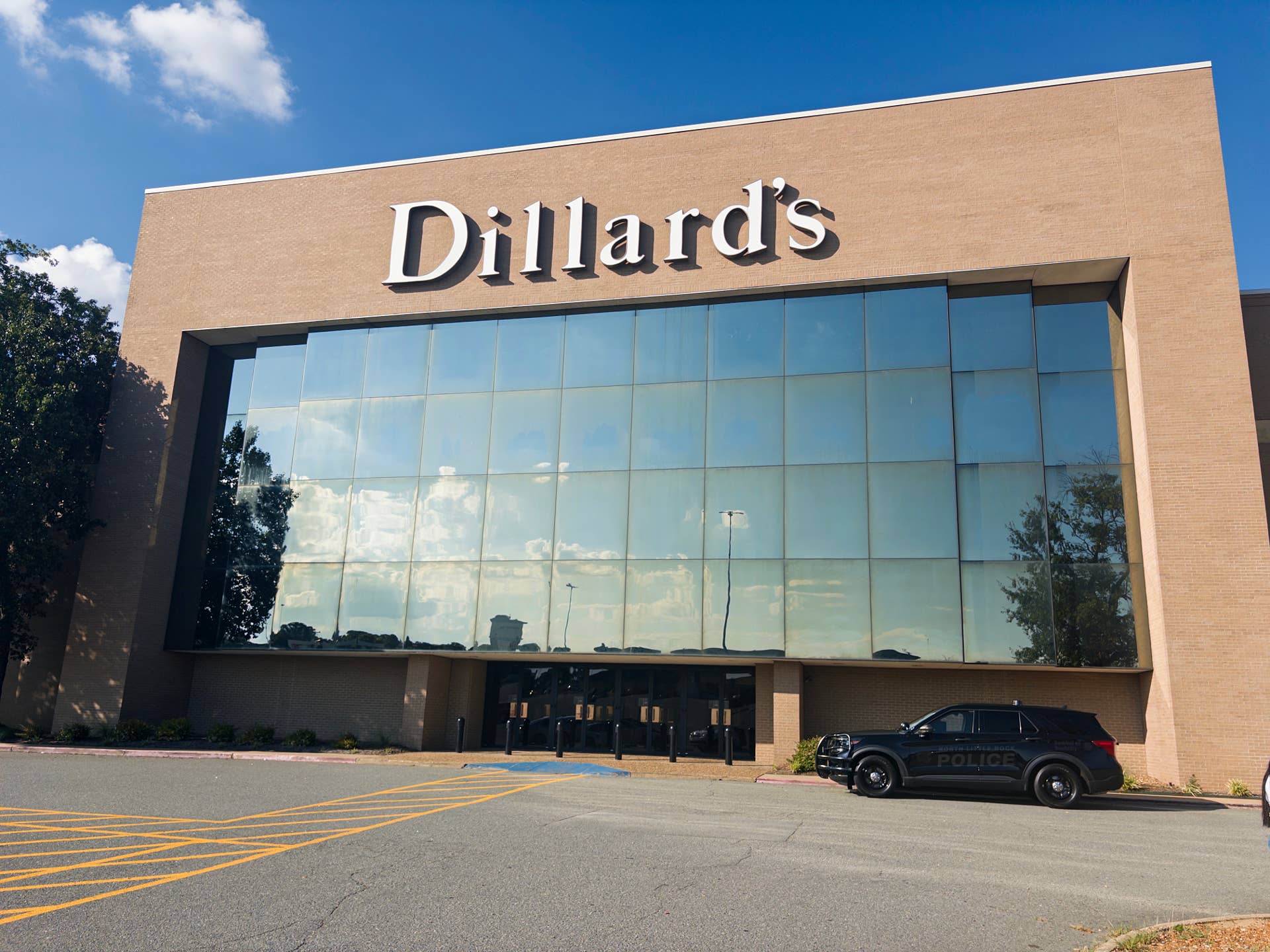
Why Dillard’s is closing Boynton Beach Mall Clearance Center
Dillard’s earnings release did not give a reason for the closure, but the timing points to the mall’s planned redevelopment rather than weak performance.
In October 2026, mall owner Washington Prime Group sent lease-termination notices to the shopping center’s remaining tenants, ordering them to vacate by Jan. 15, 2027, according to The Coastal Star. That eviction deadline aligns directly with Dillard’s planned January exit and its Jan. 8 layoff timeline.
Opened in October 1985, the 91-acre Boynton Beach Mall spent more than four decades as a major shopping destination in Palm Beach County. Over the past decade, however, anchor departures and e-commerce competition hollowed out the indoor property.
Following a steady decline accelerated by the Covid pandemic in 2020, the mall’s owner successfully petitioned the city to rezone the property from commercial to mixed-use, making the land more appealing to residential homebuilders.
Now, one of the largest U.S. homebuilders, Lennar, has the site under contract and expects to close on the purchase in early 2027, according to Discover South Florida. Though planning is still in the early stages, Lennar has said it plans a mixed-use community led by single-family attached housing, along with retail, open space, and civic uses.
Only three operators on the site, JCPenney, Cinemark, and Christ Fellowship Church, own their parcels separately and may continue operating after the main mall shuts down. For leased tenants like Dillard’s, however, it was time to move on.
Malls are not disappearing completely, but major change is underway
Boynton Beach Mall is part of a broader structural shift reshaping U.S. retail real estate, one in which aging enclosed malls are shrinking while open-air centers are increasingly gaining popularity.
Enclosed malls carry an 8.2% vacancy rate nationwide, nearly double the overall U.S. retail vacancy rate of 4.3%, according to MMCG Invest. In comparison, open-air power centers sit at just 4.7% vacancy, and strip centers hold steady at 5.2%.
As I have covered extensively in recent analyses of mall staples like Tilly’s and Journeys parent Genesco, traditional mall chains have increasingly trimmed underperforming indoor locations to protect profitability. Even off-mall players such as The Cato Corporation have aggressively pruned weaker storefronts while reshaping their footprints.
Malls are not disappearing completely, though. Instead, the format is splitting into two distinct tiers:
- Top-tier “Class A” malls are reinventing themselves by adding dining, entertainment, fitness, and medical tenants to draw social traffic.
- Older “Class B and C” malls built in the 1970s and 1980s are increasingly being demolished or converted into mixed-use housing and open-air retail parks.
Even when retailers close stores, open-air space gets snapped up quickly. Across all U.S. retail formats, tenants absorbed 16.4 million net square feet of space through the first eight months of 2026, proving that demand for physical stores remains healthy outside struggling enclosed malls, according to MMCG Invest.
Related: Target cut its Apple Black Friday discount in half
Dillard’s history and resilience amid retail shifts
Few department store operators have shown resilience amid mall decline pressures better than Dillard’s.
Founded in 1938 when William T. Dillard opened his first store in Nashville, Arkansas, with an $8,000 loan from his father, the company expanded steadily across the South and Midwest by acquiring regional chains. Today, it spans 30 states with 46.1 million square feet of retail space.
Shoppers remain loyal to Dillard’s mix of upscale national brands and exclusive private labels, including:
- Antonio Melani
- Gianni Bini
- Cremieux
- Roundtree & Yorke
In its third-quarter earnings report, Dillard’s reported that both total retail sales and comparable store sales rose 1% year over year. Net income reached $130.9 million, or $8.38 per share, while retail gross margin held firm at 45.3% of sales.
“We achieved 1% sales growth on top of last year’s 3% increase, supporting a strong 45.3% retail gross margin,” Chief Executive Officer William T. Dillard II said in the report.
Just as important is Dillard’s real estate strategy. Unlike rivals that lease most of their stores, Dillard’s owns approximately 43.3 million of its 46.1 million square feet of retail space outright, or roughly 94%, according to its 2025 annual report filed with the U.S. Securities and Exchange Commission.
That ownership shields Dillard’s from rent hikes and landlord evictions, making its leased Boynton Beach store a rare exception.
50% discounts and what else Dillard’s customers should know
For South Florida shoppers, final bargains are already on the racks.
The Boynton Beach location is advertising steep closing markdowns, including an additional 50% off the lowest ticketed prices, ahead of its January shutdown, according to Dillard’s.
Visitors should also check hours before driving over, as the store operates on a reduced schedule and remains closed on Mondays and Thursdays.
Once the Boynton Beach store shuts down in January 2027, Palm Beach and Broward County residents will lose their closest clearance hub.
Four clearance outlets will remain open elsewhere in Florida, according to Dillard’s:
- Jacksonville: Regency Square Mall Clearance Center (9501 Arlington Expressway)
- Ocoee: West Oaks Mall Clearance Center (9403 West Colonial Drive)
- Orlando: Fashion Square Mall Clearance Center (3403 East Colonial Drive)
- Port Richey: Gulf View Square Clearance Center (9409 U.S. Highway 19)
Full-line Dillard’s stores in Wellington, Coral Springs, Fort Lauderdale, Pembroke Pines, and Jensen Beach will remain open, offering regular assortments without the deep clearance-center markdowns.
Related: Some Amazon “best deals” might cost more during the sale