Lowe’s is rolling out a major change in its stores to help keep customers from taking their business elsewhere.
The home-improvement chain continues to contend with uneven consumer demand as shoppers navigate economic pressures. In the third quarter of 2026, its comparable sales increased 1.8% year over year, according to its latest earnings report.
However, while comparable average ticket, which measures how much customers spent per purchase, rose 3.5%, comparable customer transactions declined 1.7%.
Additionally, according to recent Placer.ai data, foot traffic at Lowe’s same-store locations declined 1.9% year over year during the quarter.
Lowe’s CEO Marvin Ellison described the current business climate as unusual during a Nov. 18 earnings call.
“What we’re looking at today is an unprecedented, unique environment of historically high fuel costs and other macro factors that, candidly, we haven’t seen probably ever all converge at the same time,” said Ellison.
Lowe’s directs tariff refunds toward customer savings and loyalty
As customers remain cautious about spending, Lowe’s has decided to use tariff refunds it recently received from the government to reinvest in the consumer.
In the third quarter, Lowe’s benefited from about $250 million in tariff refunds. Lowe’s Chief Financial Officer Brandon Sink said one-third of that was “reinvested into initiatives to reinforce our customer value proposition” and “remain competitive in the market.”
This includes reinvesting in Lowe’s major seasonal promo events and loyalty ecosystem. The company also used these funds to enhance fulfillment, specifically within its online platform. Ellison said that Lowe’s shoppers are already responding to these efforts.
“We thought first about how we are going to share these refunds with the customer,” said Ellison. “Our intention is to reinvest our tariff refunds in ways that strengthen our customer value proposition by putting these dollars to work to enhance the customer experience, strengthen our competitive position, and bring value to our customers.”
Read more: Home Depot faces a customer challenge despite sales growth
Sink said during the call that the remaining two-thirds of those tariff refunds will continue to be reinvested in the same areas during the fourth quarter of this year.
“Our priority is to put these dollars back to work for our customers, helping make their home improvement projects more affordable while building loyalty to Lowe’s,” said Sink.
Ellison highlighted that these investments will have short-term and long-term benefits for the company.
“We believe that the investments we’re making right now by getting customers into our loyalty ecosystem are going to not only pay benefits short term with revenue growth, but it’s going to grow benefits long term, because once customers get in this ecosystem, the data is so compelling on the value that they bring to Lowe’s and the value that we give back to them,” said Ellison.
The move from Lowe’s comes as it continues to see pressure in its discretionary merchandise categories, such as kitchen and flooring, reflecting persistent weakness in consumer spending in these areas.
While Lowe’s uses tariff refunds to reinvest in the consumer, Bill Boltz, Lowe’s executive vice president of merchandising, revealed on the call that the company remains focused on two priorities as it navigates price sensitivity among consumers and competition from rivals.
“Our first and foremost priority is to be competitive,” said Boltz. “So there’s ongoing dialogues with our merchants and our vendors to make sure that we remain competitive in the market. That’s the number one priority. Then we’ll navigate where the consumer allows us to go. So, some of the reinvestment is part of making sure that we can remain competitive.”
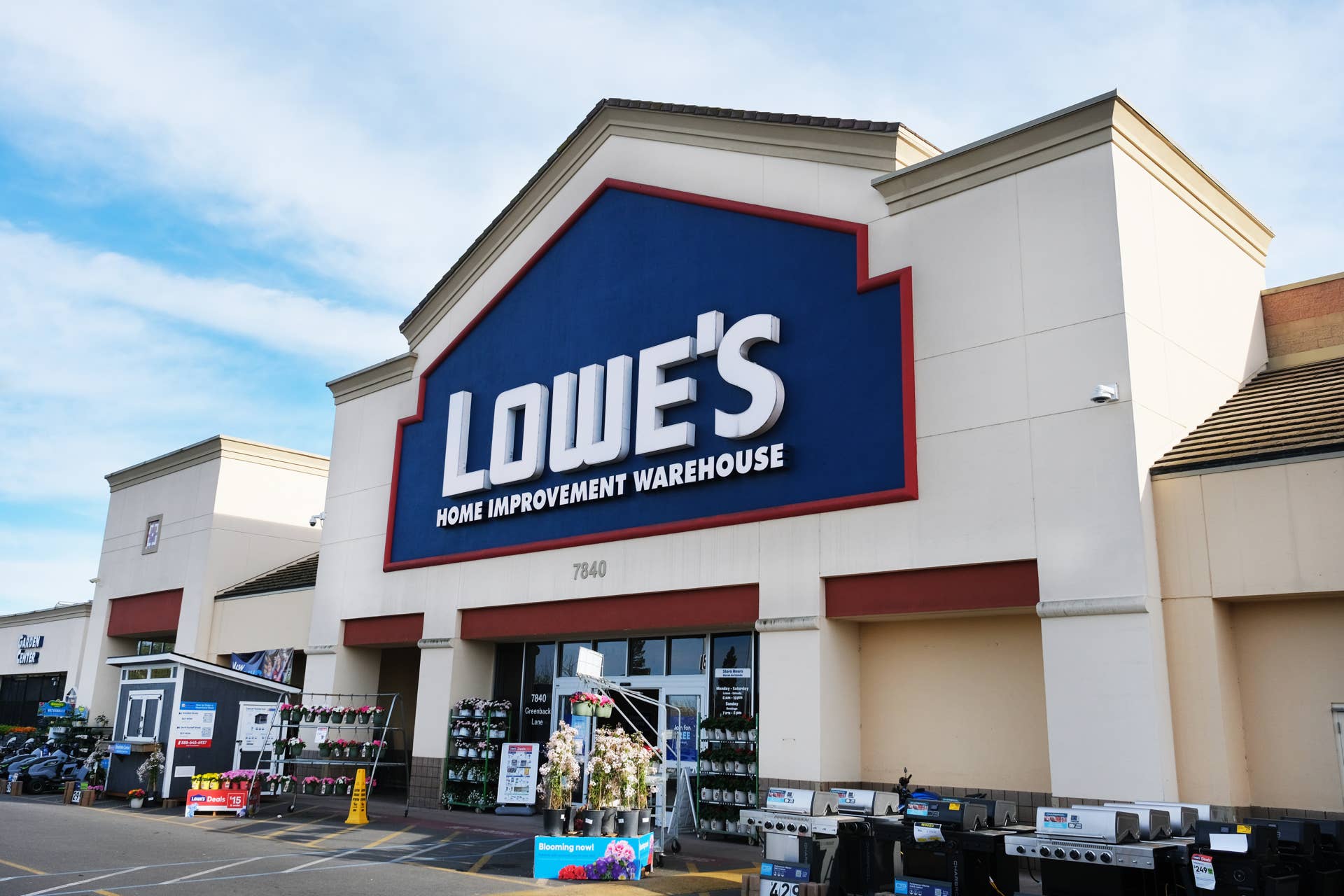
Lowe’s faces mounting challenges as home-improvement activity declines
Lowe’s is currently facing a more cautious consumer as the U.S. housing market remains strained by affordability challenges and sluggish buyer demand.
The home-improvement chain has previously warned that ongoing housing market pressures have affected its sales, as more consumers are avoiding large home improvement projects in favor of smaller ones focused on repair and maintenance, a trend it continued to see in the third quarter.
Housing market challenges intensified in October, with mortgage borrowing costs moving higher. According to Freddie Mac data, the average rate on a 30-year fixed mortgage reached 7.33% during the month, compared with 6.86% in September.
Homebuying activity also weakened in October, as existing-home sales dropped 5.5% from the previous month, according to the National Association of Realtors. Meanwhile, the median existing-home price climbed 0.4% year over year to $416,700.
More Retail:
- Target raises price of annual grocery deal for holiday shoppers
- Publix faces uphill battle as customer behavior shifts
- Home Depot drops generous offers as customers grow harder to win
In a press release, Lawrence Yun, chief economist at the National Association of Realtors, highlighted the connection between higher mortgage rates and declining home sales.
“Home buying is difficult when mortgage rates have climbed to their highest levels since 2000, aside from a single month in 2023,” said Yun. “As a result, home sales fell to their lowest level since August 2010.”
As the housing market remains challenged, home improvement activity continues to steadily decline, according to recent data from the Home Improvement Research Institute.
The data revealed that only 37% of homeowners completed a project in the third quarter of 2026, compared to 51% in the same quarter last year.
Even home maintenance projects, which typically help sustain market demand, have declined considerably over the past year: Only 72% of homeowners completed home maintenance projects in the third quarter, down from 76% in the second quarter and 84% in the third quarter of 2025.
Approximately 65% of homeowners completed home repairs in the third quarter, down from 73% a year earlier, while 35% completed home renovations, down from 41% a year ago.
Against this backdrop, Lowe’s expects its comparable sales to grow by only 0.5% in fiscal year 2026. It also lowered its full-year operating margin forecast to 11.1% from its previous projection of 11.2%, reflecting continued cost pressures and demand trends.