After rapidly expanding from an internet beauty sensation into a global retail brand, one of the industry’s most recognizable direct-to-consumer (DTC) names is now betting on a leaner future.
The company, which built a devoted following through social media, community-driven marketing, and a minimalist aesthetic, has spent the past year pulling back from aggressive growth plans, including closing most of its physical stores worldwide and restructuring operations.
Now, it has secured fresh financing that could support its next phase of operations as it adapts to a more competitive beauty market and changing consumer habits.
Founded in 2014, Glossier became one of the defining brands of the DTC era, particularly among Millennial consumers. But like many digital-first retailers, the company has faced pressure as growth slowed, customer acquisition costs increased, and expansion became more difficult.
Glossier secures $45 million in financing
Glossier secured $45 million in debt financing from Tiger Finance, following the transaction’s closing on June 8, according to a company announcement.
The beauty brand did not disclose specific uses for the capital but said the financing will support broader business objectives and its long-term growth strategy.
“This financing supports the next chapter of Glossier’s growth, enabling us to deepen our connection with customers and continue creating meaningful experiences that inspire lasting brand love around the world,” said Glossier CEO Colin Walsh in the announcement.
Tiger Finance said the funding was structured to provide flexibility as Glossier continues to evolve its operations.
“Our experience across consumer brands and retail enabled us to structure a flexible financing solution to support the company’s ongoing operations and future opportunities,” said Tiger Finance in the announcement.
Glossier is closing most of its stores
In April 2026, Glossier confirmed plans to close nine of its 12 stores over the next two-and-a-half years, leaving only three locations operating globally.
According to the company, the closures are intended to streamline operations and focus investments on markets that generate stronger returns.
Glossier stores remaining open:
- New York City
- Los Angeles
- London
Stores scheduled to close:
- Seattle
- Atlanta
- Boston
- Brooklyn
- Chicago
- Dallas
- Washington, D.C.
- Las Vegas
- Philadelphia
Why Glossier is keeping only 3 locations
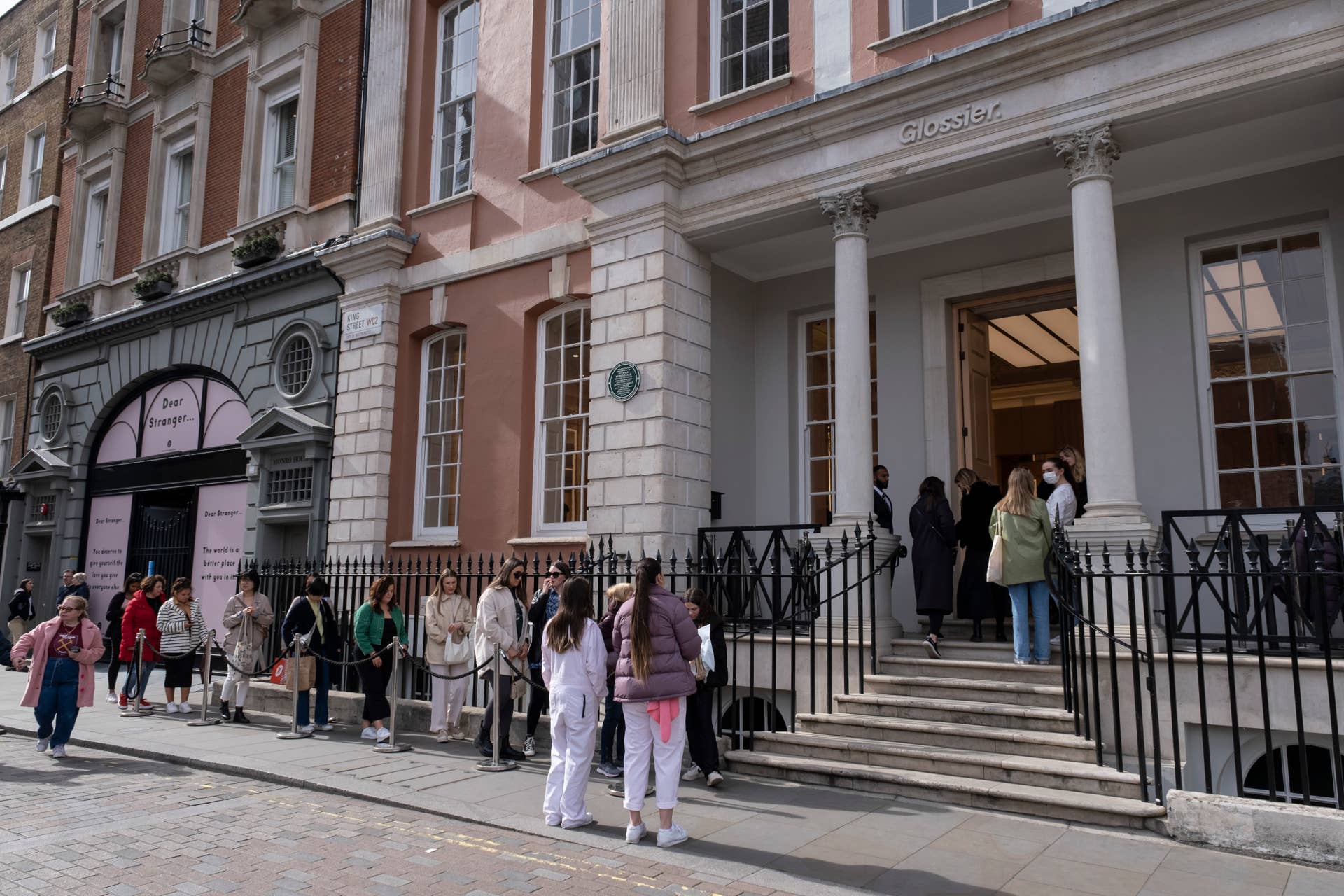
Glossier said its remaining stores are being repositioned to function less as traditional retail outlets and more as experiential destinations centered on events, product discovery, merchandising, and community engagement.
The New York, Los Angeles, and London locations generate approximately 55% of store revenue and account for roughly 60% of new customer acquisition, according to Walsh.
The company said concentrating investment in those markets allows it to maintain a physical presence while improving operating efficiency.
Leadership changes and broader operational reset
The store closures come amid significant changes inside the company.
Walsh became CEO in October 2025, and within his first months in the role, reportedly reduced Glossier’s workforce by roughly one-third and canceled previously planned product launches, according to Business of Fashion.
Physical retail once played a central role in Glossier’s identity following the opening of its first showroom in New York City in 2016. However, the company has indicated that newer locations did not deliver comparable performance.
At the same time, wholesale partnerships have become increasingly important to the company’s distribution strategy.
Today, Glossier products are sold through major beauty retailers, including Sephora, Space NK, and Mecca, and it also maintains a storefront on Amazon, reflecting a broader shift across consumer brands toward diversified distribution.
Glossier’s valuation reality check
At its peak in 2021, Glossier was valued at nearly $2 billion after raising approximately $266 million from venture investors.
Reporting from Forbes noted that investor enthusiasm around Glossier reflected expectations that the company could scale more like a technology platform than a traditional beauty business.
Here’s some of my previous coverage on beauty retail closures:
- 11-year-old cosmetics brand puts business up for sale amid slump
- Another high-profile celebrity cosmetics brand closes
- 12-year-old beauty brand closing nearly all stores
- Two beloved beauty brands shut down in 2026
That outlook has shifted in recent years. Glossier’s valuation has reportedly fallen below $1 billion.
The company has also explored additional financing options, including efforts to raise $100 million and facilitate secondary share transactions, according to Puck.
Puck also previously reported that Glossier held acquisition discussions with LVMH in 2024, although no transaction was completed.
Why DTC beauty brands are under pressure
Glossier’s challenges reflect broader shifts across the beauty industry.
Consumers are becoming more selective and prioritizing product performance, value, and transparency. Industry analysts have also pointed to inflation and greater access to product information as factors shaping purchasing behavior.
“A strong uptick in beauty spend, plus higher inflation and greater access to information, has pushed shoppers to pay closer attention to whether products deliver,” McKinsey & Company analysts wrote in the State of Beauty 2025 Report.
“Consumers are selectively splurging across not only consumer discretionary categories but also beauty subcategories.”
At the same time, major beauty retailers and marketplaces, including Sephora, ULTA Beauty, and Amazon, continue gaining influence.
These platforms offer brands scale and visibility, but also increase competition by placing products alongside rivals in the same retail environments.
For many former DTC disruptors, long-term growth increasingly depends on succeeding within those retail ecosystems rather than bypassing them.
Related: Target brings back iconic partnership after 17-year shutdown