As someone who orders from Amazon almost daily, I lose track of what order should arrive when. Most packages come next day, while some take an entire two days for delivery.
If something went missing, it might take a few days before I noticed, if I noticed at all, because, unless it’s an item I truly need, most of my purchases are somewhat impulsive, and often less than essential.
I do have doorbell camera, but it’s not set up to record, so someone stealing my packages, would likely only be seen by our cat, who likely would not be that helpful in letting me know something was stolen.
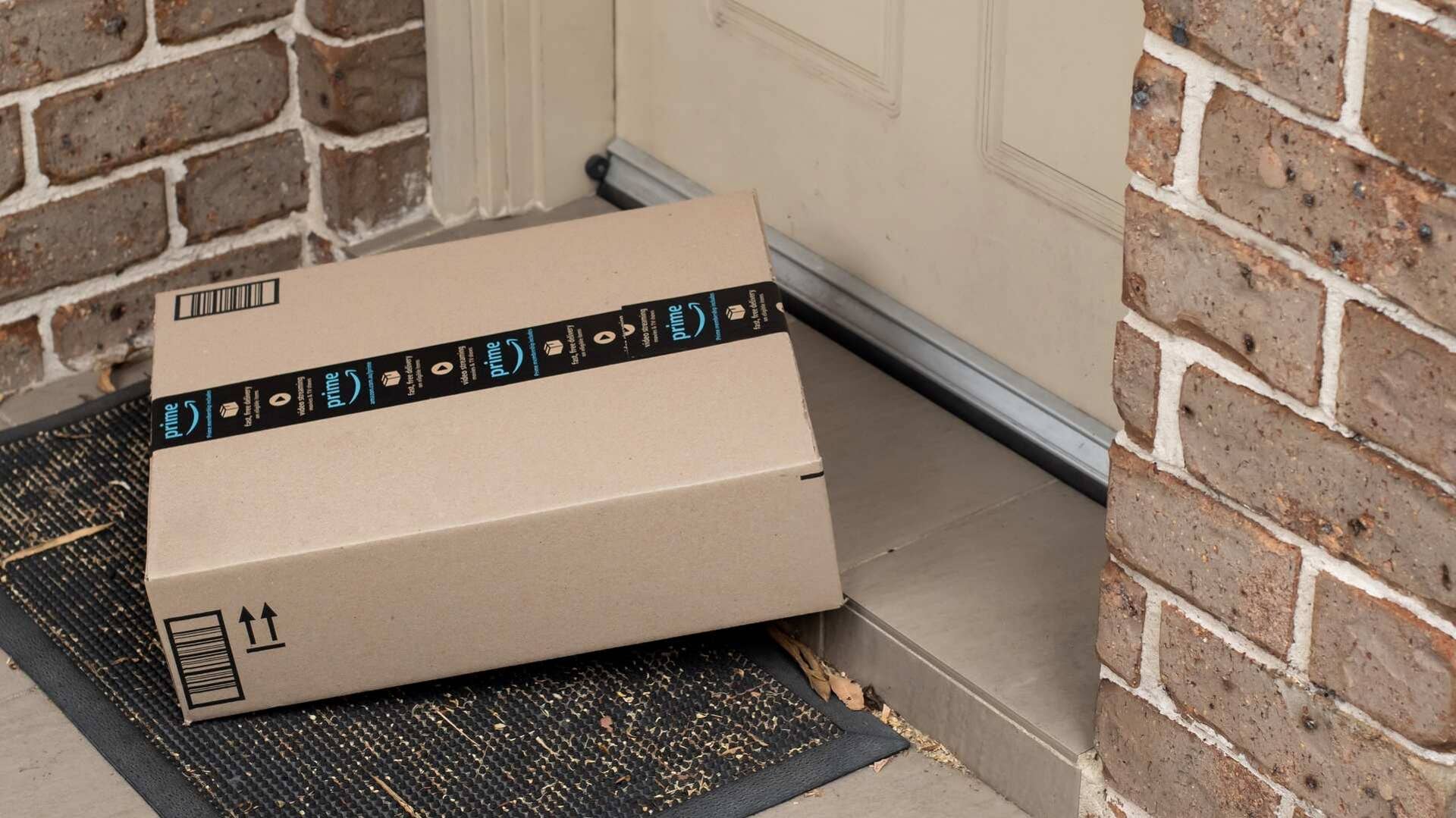
Package theft, or porch piracy as it’s known, has become a growing problem, according to the latest report issued by Omnisend.
“Combining its original research with FBI crime data, the report found that Americans have suffered a lossl of roughly $12.8 billion as a result of about 228 million stolen parcels last year alone,” the study showed.
Porch piracy is effectively becoming a hidden cost center of e-commerce logistics
Walmart, Amazon, and Target are hit hard by theft
Walmart and Amazon are the largest retail delivery companies in the United States, according to data from IDriveLogistics.
“Amazon, Walmart, and Target are building and scaling their own logistics networks, and they’re doing it fast. Amazon already delivers more packages in the U.S. than UPS. Walmart’s Spark Driver and Target’s Shipt are moving deeper into neighborhoods across the country. These companies are turning delivery into a core part of their retail strategy,” the report showed.
More Retail:
- Another mall retailer quietly closed over 150 locations
- Ultra wealthy shoppers flock to this 63-year-old rugged retailer
- 72-year-old mall retailers to close more stores in 2026
That also means that these companies are shouldering a lot of the burden for packages getting stolen.
While most losses were absorbed by ecommerce businesses. About 62% of victims received a refund or a free replacement, costing retailers an estimated $7.9 billion in 2025. A further 16% were offered a discount or store credit.
“When you have 228 million stolen packages with retailers quietly absorbing $7.9 billion of that loss, it stops being a consumer inconvenience and starts being an industry-wide cost of doing business,” said Marty Bauer, ecommerce expert at Omnisend.
The U.S. Postal Service Officer of the Inspector General warned in a 2025 white paper that package theft has become a systemic issue.
“Package theft is a significant challenge for the entire parcel delivery industry, impacting consumers, retailers, and delivery providers alike. With at least 58 million packages stolen in 2024, theft creates substantial financial burdens and operational disruptions across the delivery and ecommerce ecosystems,” according to the Package Theft in the United States white paper.
That creates a problem for retailers.
“The prevalence of theft may also erode consumer trust in ecommerce merchants, postal operators, and private delivery providers, particularly as these entities strategically navigate the rapid growth of ecommerce and its associated demands,” according to the white paper.
That dynamic helps explain why retailers are increasingly absorbing losses rather than adding friction to delivery.
Consumers carry some of the theft cost
While many retailers did reimburse consumers for losses, 24% of retailers refused responsibility entirely, leaving those customers to absorb the loss.
That could cost those retailers future orders.
“The brands that come out ahead are the ones that make resolution easy. Clear refund policies and flexible delivery options are not just a nice-to-have. For a growing share of consumers, they determine where the next order goes,” Bauer said.
The experience changes how people shop. After being hit:
- 23% of victims order online less often.
- 18% limit purchases to retailers with easy refund policies.
- 12% shift to lockers or in-store pickup.
- Still, 48% report no change to their habits at all, a sign that for many Americans, package theft has become an accepted cost of online shopping.
Source: Omnisend
Shutterstock
Porch pirates thrive on quick drop-off
GlobalData Managing Director Neil Saunders sees stolen packages as inevitable and, perhaps, unsolvable.
“Porch piracy is partly a consequence of fast and simple delivery – which requires items to be dropped off quickly and sometimes left unattended and unsecured. The alternative, which is to obtain signatures and take packages to secure locations, is not what the consumer wants; it is also not what the industry can facilitate given the unit economics of delivery,” he posted on RetailWire.
Saunders does see some viable solutions.
“Harsher punishments for thieves may help, but the solution lies in better drop security: locked boxes, garage delivery (which you can do via Amazon Key), and so forth,” he added.
Tanya Thorsin, a retail marketing executive, think the theft problem creates an opportunity for brands.
“Porch piracy puts a spotlight on something retail leaders know well: the customer experience does not end at checkout. It ends at delivery,” she wrote on RetailWire.
Brands, she noted, can build stronger relationships with customers based on how they handle delivery and missing packages.
“The brands that lead here will not just replace packages. They will design a smoother, smarter experience around real customer behavior, by market, by order value, and by risk. That is how you protect margin, strengthen loyalty, and turn fulfillment into a competitive advantage,” she shared.
Antonio Colicchio, the founder of The Returns Guy, a consultancy focused exclusively on helping retailers reduce, optimize, and rethink returns. pointed out that online retailers have created their own problem.
“In-store, if something is stolen from your car after purchase, you don’t go back for a refund; you accept the loss. E-commerce has trained a different expectation,” he posted on RetailWire.
There are, he added, viable solutions.
“The path forward isn’t blanket policies; it’s precision. Track incidents, understand customer lifetime value, and decide when to make the exception vs. when to stand firm,” he wrote. “And precision should evolve behavior. If you’ve already received an exception, the next order shouldn’t look the same; require a more secure delivery (signature, pickup, etc.).”
Related: Kroger quietly builds a massive gas edge over Costco, Sam’s Club