Once upon a time, a household making $100,000 a year in America was a long way from the classic dollar-store client.
That line is becoming increasingly blurred.
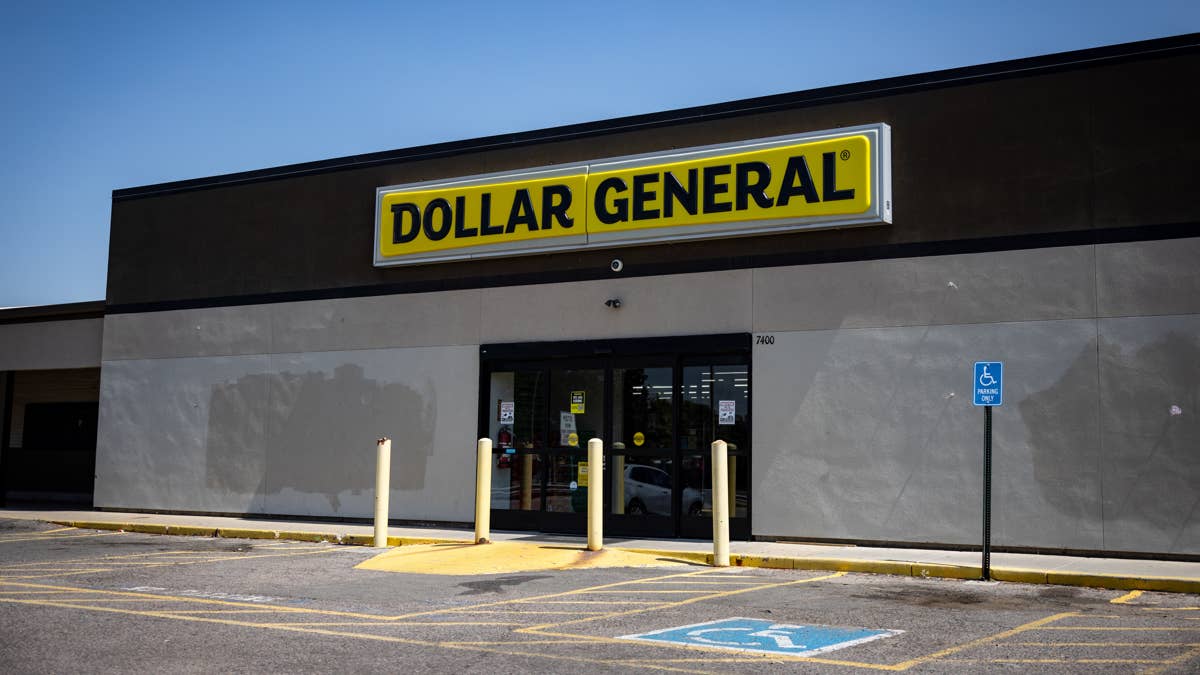
Dollar General (DG) says it is seeing more high-income shoppers, those making over $100,000 a year, walk into its stores, according to Axios. Rival Dollar Tree (DLTR) also says its recent sales growth is coming from middle- and upper-income households.
Those changes are part of a broader wave sweeping American buying. Consumers aren’t necessarily giving up on spending. They are just a lot more mindful about where they spend.
Dollar General’s latest results provide some compelling proof.
Quarterly net sales increased 5.2% to $11.29 billion, while same-store sales climbed 3.5%. Customer traffic rose 2%, and profit jumped to $2.48 per share. The company subsequently raised its full-year outlook.
But maybe the most telling number isn’t even on Dollar General’s income statement.
It’s $1.
Dollar General has increased its variety of dollar-priced items to about 2,000, and sales of those goods rose nearly 16% in the second quarter, or more than four times the pace of overall same-store sales.
That tells a remarkably simple story.
Even Americans who earn considerably more money are becoming harder to convince to pay more, Axios reported.
Dollar General sees six-figure households hunting for bargains
The trend of sales growth among middle- and higher-income consumers shopping at both Dollar General and Dollar Tree is significant, since dollar stores have typically been linked with those living on considerably tighter budgets.
Just because a family with six-figure income shops at Dollar General doesn’t mean they can’t afford Walmart, Target, or a regular grocery store.
It can, however, mean something more consequential for the retail industry: They don’t want to pay more if they don’t have to.
Related: Home Depot is making a big bet on cautious consumers
For years, inflation has shifted the benchmark customers use to decide whether something is pricey.
A household making more money than it did five years ago doesn’t feel better about paying for groceries, home products, gas, insurance, and other needs, because those expenses have risen, too.
That makes it a golden opportunity for retailers who can persuade shoppers that they are receiving a discount.
Dollar General is leaning into it hard.
The company currently offers about 2,000 $1 products and plans to increase that assortment by roughly 40% before the 2026 holiday season, Business Insider noted. Its Value Valley assortment is already available at more than 9,000 locations.
The strategy is an experiment that asks an interesting question: How cheap does something have to look before even a relatively affluent shopper changes stores?
Dollar General’s recent figures show that a $1 item can still evoke a strong response.
Dollar Tree confirms broader trend
If Dollar General were the only discount chain reporting the pattern, it would be easier to dismiss as company-specific.
It isn’t.
Dollar Tree’s net sales surged 7% to $4.89 billion in the second quarter, and sales at stores open at least a year rose 3.7%.
The average transaction size climbed 3.3%, and consumer traffic increased 0.4%, its Q2 2027 report shared.
Middle- and high-income households helped boost its performance, the business said.
More Retail:
- Home Depot is making a big bet on cautious consumers
- Another state just banned a controversial retail pricing practice
- JPMorgan just flagged a slow-builAIRLINESding food crisis
This implies that two of America’s biggest discount stores are seeing signs of value shopping by people further up the economic ladder at around the same time.
Dollar Tree’s profitability also took off.
Operating income was $690 million compared to $231 million in the prior year, according to its second-quarter report.
That said, a lot of the rise was because of tariff refunds. Dollar Tree said the net impact added $1.31 per share to second-quarter earnings and that gross margin was helped by 680 basis points.
So investors should not read the headline profit increase as all organic operating improvement.
Sales tell a cleaner consumer story. Dollar Tree now expects $20.5 billion to $20.7 billion in full-year sales, with comparable sales increasing 3% to 4%. The company also plans roughly 400 new stores.
Dollar General’s $1 bet turns the retail strategy upside down
There’s another interesting aspect of Dollar General’s plan. For years, inflation has provided cover for retailers to push up prices.
Now Dollar General is making a noticeable move in the opposite direction.
Its $1 merchandise rose around 16% last quarter, compared to the same-store sales increase nationwide of 3.5%. The shop wants more $1 goods on its shelves.
That is not charity, however. Ultra-cheap things can be a draw to get people in the door, who then purchase higher-margin merchandise along with the item that caught their eye in the first place.
It’s an old retail play that has new currency in an economy where consumers have suddenly become rather price-sensitive.
Dollar General has benefited from people seeking cheaper options closer to home due to inflationary pressures and increasing fuel prices, The Wall Street Journal reported.
The retailer is confident enough to raise its outlook. Dollar General now projects full-year earnings of roughly $7.80 to $8 per share.
Best Buy shows why consumers may keep hunting for cheaper prices
Another retailer reporting this week showed the flip side of the equation.
Best Buy (BBY) had an unexpectedly good quarter, with revenue of about $9.8 billion and a comparable sales increase of 4.1%, according to Reuters. The company boosted its outlook for full-year revenue and earnings.
But behind those results was a caution on prices.
Memory chips are becoming more expensive, which is making computers and other gadgets more expensive. Best Buy’s earnings call coverage noted that in computing, average selling prices were up a mid-teens percentage, while unit volumes were down high single digits.
This is an important distinction.
A retailer can claim larger dollar sales while customers take home less stuff.
It’s another example of why the current consumer economy is difficult to read from headline spending figures alone. Americans are still spending. They’re just becoming increasingly sensitive to what they get for every dollar.
Six-figure shoppers at Dollar General send a message
That’s why Dollar General’s move into higher-income customers matters beyond Dollar General’s stock.
What’s remarkable is not that financially challenged households demand cheap things. They always have. It’s just that the bargain hunter is now climbing the income ladder.
If households earning more than $100,000 are increasingly treating Dollar General as a totally typical place to shop, America’s bargain stores may be nailing something way more significant than a transient traffic bump.
They might be altering how many people see themselves as a customer of a dollar store.
And if consumers know the cheaper choice is perfectly fine, it can be much tougher to convince them to voluntarily spend more somewhere else.