Aon’s largest-ever acquisition adds $17 billion in borrowed funds, and the deal’s earnings payoff is not immediate. Shareholders who had counted on steady buybacks and predictable earnings growth are now facing a very different capital allocation picture.
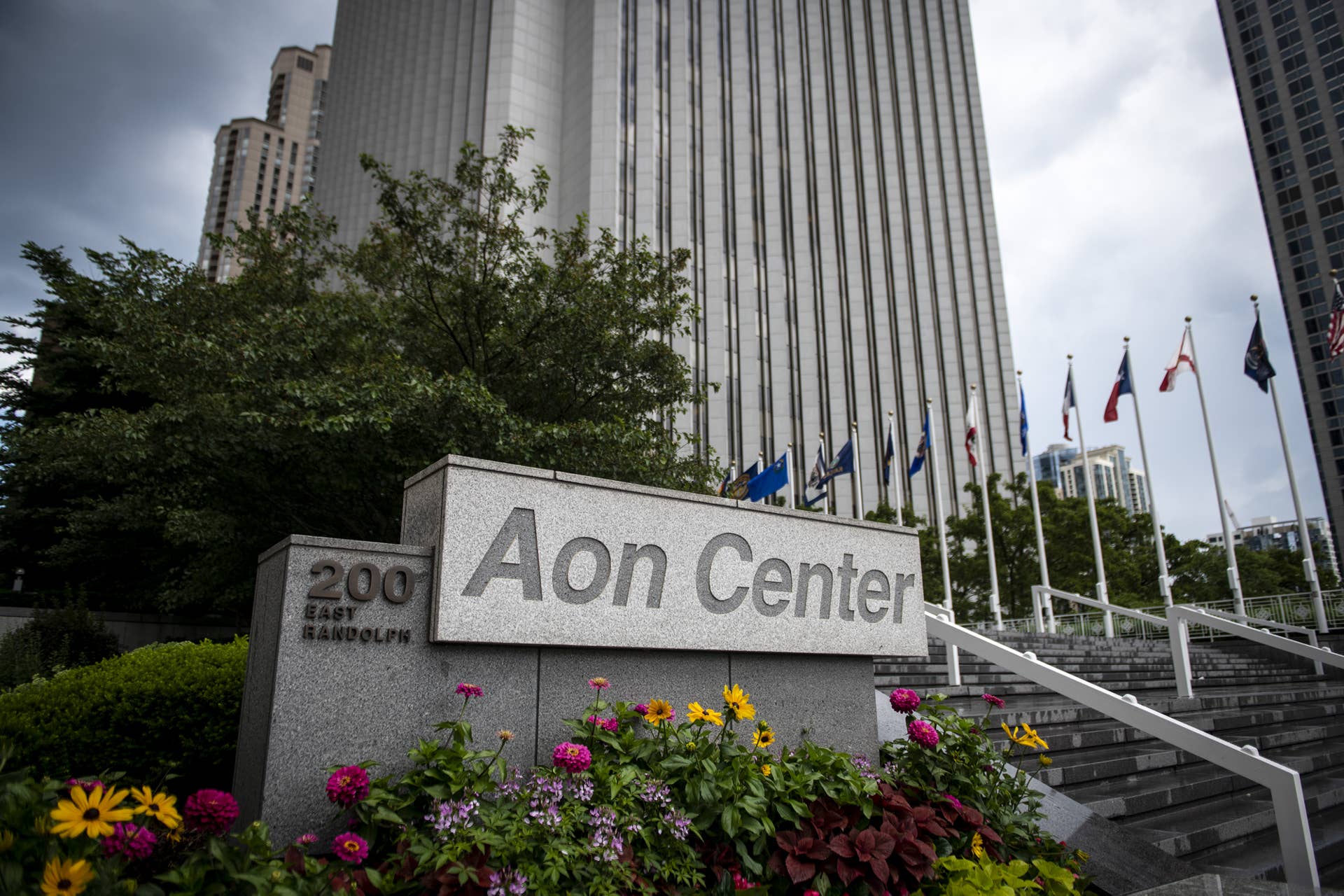
Aon confirmed on August 31, 2026, that it will acquire USI Insurance Services from private equity firm KKR in an all-cash transaction.
After accounting for certain tax attributes, the net purchase price comes to $16.7 billion, the company disclosed in a regulatory filing.
This is the second multibillion-dollar middle-market insurance acquisition Aon has pursued in three years, following its $13 billion purchase of NFP in 2024.
Shares of Aon dropped about 7% on the first trading day after the announcement, erasing roughly $5 billion in market value from a pre-announcement market capitalization of about $75 billion, CNBC reported.
The financing structure and the path to profitability introduce costs that analysts, including S&P Global and Cantor Fitzgerald, have flagged as material to the deal’s impact on shareholders.
Aon’s leverage will nearly double at closing
Aon plans to issue $17.5 billion in new debt to fund the acquisition and prefund $1.3 billion of 2027 maturities.
The financing includes a $4 billion term loan and $13.5 billion in senior notes across multiple maturities, S&P Global Ratings action reported via Investing.com.
That borrowing will push leverage to an estimated 4.8 times adjusted earnings before interest, taxes, depreciation, and amortization at closing. That is nearly double the 2.8 times ratio the company carried before the announcement, Stock Titan reported.
S&P Global Ratings responded by revising Aon’s credit outlook to negative from stable, while affirming the company’s A- issuer credit rating. The agency warned it could downgrade Aon if leverage does not decline within two years of closing.
Moody’s affirmed Aon’s existing ratings but shifted its outlook to stable from positive, citing leverage and integration concerns, Investing.com reported.
The deal will also freeze share buybacks for at least the near term, even though approximately $7.7 billion in repurchase authorization remained as of June 30, 2026, according to the Securities and Exchange Commission.
USI gives Aon a foothold in a $40 billion insurance segment
USI ranks as the tenth-largest insurance broker in the United States, with about $3 billion in annual revenue, more than 10,500 employees, and nearly 200 offices, AON stated in the filing.
The company specializes in middle-market commercial insurance, a segment Aon estimates at more than $40 billion and covering over 200,000 businesses.
More Wall Street:
- Wall Street’s AI trade faces its biggest valuation test
- The next Wall Street shift is already underway
- Wall Street sends strong 4-word verdict on the stock market
Combined with NFP, the merged middle-market platform is expected to generate $6.5 billion in revenue. USI Chairman and CEO Mike Sicard would become Aon’s president and global leader of the Middle Market operation following the close.
Sicard framed the combination as a growth catalyst, saying he looks “forward to uniting the strengths of USI, NFP and Aon to deliver a new standard of content, capabilities and service to our clients.”
The synergy math and what it costs to get there
Aon has valued the acquisition at 14.5 times USI’s synergized trailing twelve-month adjusted EBITDA. However, that multiple includes $395 million in projected annual savings that have yet to materialize.
Ryan Tunis, Managing Director at Cantor Fitzgerald, noted that the pre-synergy multiple sits closer to 22 times, compared with the 12 times that KKR paid for USI in 2017, Investing.com reported.
He called the limited upside from a deal of this size a disappointment for investors who had viewed Aon as a predictable organic growth story with reliable share repurchases.
Aon has disclosed approximately $1.1 billion in combined transaction, integration, and retention costs tied to the deal. That includes $160 million in transaction costs and a $400 million program to retain USI’s producer base during the transition.
Those costs will flow through Aon’s financials over the integration period, compressing margins before the projected savings take hold.
Meyer Shields, Managing Director at Keefe, Bruyette & Woods, noted to Business Insurance that while producer retention is the most expensive line item in brokerage acquisitions, Aon’s retention budget is large enough to serve as a meaningful safeguard.
<strong>It will take a lot of money to retain everyone from this deal, but $400 million is a lot of money</strong>
Aon expects the acquisition to become accretive to adjusted earnings per share in 2028, a timeline that implies dilution through 2027.
How Wall Street is repricing Aon after the deal
Several major firms lowered their Aon price targets within 48 hours of the announcement. Piper Sandler cut its target to $349 from $391, maintaining a Neutral rating and citing the time needed to prove out synergy projections, Investing.com confirmed.
BMO Capital dropped its target to $360, while Mizuho reduced its estimate to $398 but held its Outperform rating.
On the bullish side, Keefe Bruyette & Woods raised its target to $417 from $412, projecting stronger margins and faster organic growth by 2028.
TD Cowen reiterated a Buy rating with a $416 target, signaling confidence in the long-term thesis. Still, the majority of firms that updated targets lowered them.
The watch-items Aon shareholders face through 2028
The central question hanging over the deal is whether Aon can reduce leverage and deliver projected synergies quickly enough to justify the price, a concern that both S&P Global and Moody’s have underscored in their recent outlook revisions.
2028 stands as the earliest realistic checkpoint for the deal thesis.
Its trajectory will depend on quarterly integration costs, debt reduction from the 4.8x leverage peak, and producer retention across USI’s office network, which underpins Aon’s projected revenue synergies.
Credit agency downgrades hinge on whether Aon’s deleveraging pace meets the two-year window S&P has outlined.
Related: Wells Fargo to Sell Commercial Insurance Business to USI