Apple (AAPL) is embedding artificial intelligence more deeply into something millions of people wear every day, posing a dilemma that may be as crucial as what the technology can really do: Will people trust it?
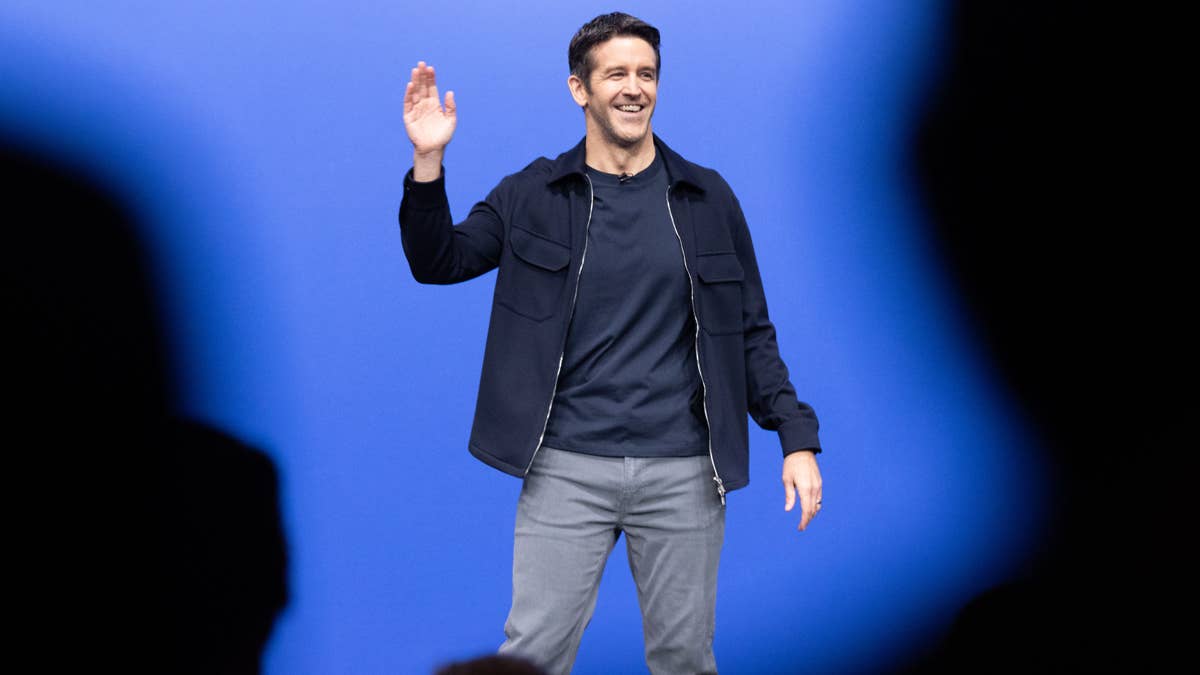
New CEO John Ternus, who formally replaced Tim Cook on Sept. 1, recently confronted that question when he was asked about the reaction to AI glasses, including gadgets that critics have called “pervert glasses.”
Earlier this year, Apple announced Ternus as his successor, ending Cook’s lengthy stint as CEO but retaining him on as executive chairman.
The issue is no longer hypothetical. Apple Watch Series 12 will have audio intelligence that can listen for speech, recover 15 seconds of conversation, and summarize daily conversations.
Apple claims its technology doesn’t store or access raw audio.
Investors should note Apple’s privacy-first stance as wearables become an important AI battlefield, and Meta Platforms (META) has shown customer demand.
Apple Watch AI will listen, but Apple says it won’t record
Apple’s new Audio Intelligence features blur the lines between a timepiece and an always-on AI assistant.
Live Rewind lets users double-press the Digital Crown to see the previous 15 seconds of a conversation as a text snippet. Siri Recap creates titles and high-level notes from conversations, while Sound Recognition listens for alarms, sirens, and doorbells.
Apple has placed many restrictions on such possibilities.
The new S11 chip has a Secure Exclave that’s segregated in hardware to handle audio independently from the rest of the system and promptly destroy it. Siri Recap doesn’t tag particular speakers, but Live Rewind makes a ding and shows an on-screen notification when it is on.
More sophisticated Apple Intelligence queries may use Private Cloud Compute, Apple’s cloud AI architecture. Apple maintains that it uses any personal data transmitted to the system exclusively to perform the request and that even Apple cannot view it later.
The same Audio Intelligence features are coming to Apple Watch Ultra 4, which starts at $799. Series 12 starts at $399. Both are available Sept. 18.
Apple has billions riding on its wearable strategy
Wearables may not be Apple’s biggest business, but they already constitute a meaningful cash source.
Apple generated $7.88 billion from Wearables, Home and Accessories in its June quarter, up 6% from $7.40 billion a year earlier. Revenue from the category reached $27.28 billion during the first nine months of fiscal 2026, up 2%.
The larger corporation also enters the Ternus period with a strong financial position. Apple announced June-quarter sales of $109.4 billion, up 16%, and diluted earnings per share soared 29% to $2.02. It set yet another record for its installed base of active devices.
Apple invests heavily to keep that ecosystem current. R&D spending was $11.73 billion in the June quarter and $34.04 billion through nine months of fiscal 2026.
The investment is rising in AI but Apple’s problem is different from that of pure software businesses. It requires AI capabilities that can take advantage of the closeness of wrist-worn gadgets without wrecking a privacy reputation built up over years.
Meta shows both the opportunity and the cost of wearable AI
Millions of AI glasses have been sold by the company, and Ray-Ban Meta is the world’s best-selling AI glasses product, it says.
The glasses put cameras, microphones and Meta AI into an everyday frame, letting users record video or ask questions about what they’re seeing.
More Tech:
- Anthropic-powered AI model sends shocking message to employee
- Rocket Lab clears 1st hurdle in its biggest satellite deal
- Apple’s $54 billion iPhone machine may be about to break its biggest ritual
The company is booming, but profits are lagging. Meta’s Reality Labs posted $431 million in second-quarter revenue, up 16%, with the business citing increased sales of AI glasses as a partial driver of the growth. But the division lost $4.62 billion in operations in the quarter and $8.65 billion in the first half.
Those stats give Apple’s privacy approach more than a philosophical position. Meta has shown that wearable artificial intelligence may create consumer demand, but also that establishing the category needs massive investment and presents tough societal problems.
Apple is betting it can get into that more personal age of AI without asking people to give up the privacy standards tied to its brand.
What remains unanswered is whether the folks standing next to an Apple Watch user will see the difference the same way.
Related: Bank of America’s unique take on Apple stock as Ternus takes reins