AT&T is adding new customer promises to its “America’s Best Guarantee” as it lags behind rivals in a crucial performance area.
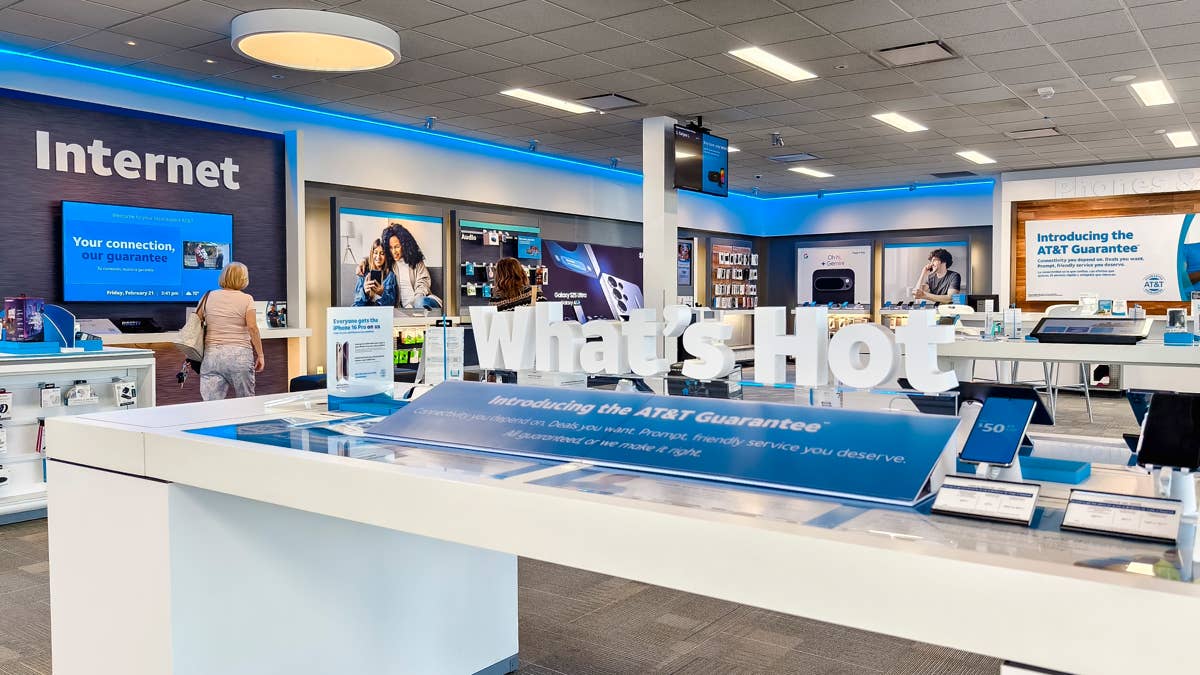
The carrier first introduced its AT&T Guarantee in January 2025. At the time, it promised to “set a new bar in customer experience covering network, customer care and offers,” according to a press release.
To accomplish this, AT&T vowed to “work diligently” to resolve fiber internet service outages lasting 20 minutes or more and wireless outages lasting 60 minutes or longer, with affected customers receiving an automatic credit equal to one day of service.
The company also promised more customer deals, a five-minute target for connecting callers with tech support experts, and same-day or next-day technician appointments for fiber internet equipment assistance.
AT&T promises customers better tech support
Amid heightened wireless competition, AT&T is now expanding its “America’s Best Guarantee” to “deliver a faster, simpler experience,” according to an Oct. 15 press release. This includes doubling down on its promise to speed up tech support for its customers.
The carrier is now guaranteeing that customers who call AT&T will be connected to a live expert within “5 minutes or less,” and if not, they will be offered a callback at a time they choose.
Also, customers who pair AT&T Fiber or AT&T Internet Air and wireless will have “one dedicated technical expert to assist from start to finish.” It said that if it falls short of these promises, the “Guarantee proactively makes it right with a benefit.”
Related: AT&T puts $3 billion behind expanding a key service for customers
AT&T said it chose to expand its guarantee after a recent survey by Harris Poll found that 60% of Americans flagged being transferred from one agent to the next as a top pet peeve. Also, more than 3 in 4 Americans said 15 minutes is the most they’re willing to wait to be connected to customer support.
“Customers want support that is simple, fast, and transparent,” said Jenifer Robertson, executive vice president of AT&T Consumer, in the press release.
“This is about more than speed — it’s about removing friction and earning trust in every interaction,” she continued. “We’re setting a clear standard for the experience customers should expect and holding ourselves accountable when we miss it.”
AT&T trails rivals in customer satisfaction
The move from AT&T comes after a recent J.D. Power survey found that the carrier falls behind its top rivals in customer satisfaction.
According to the survey, the average customer satisfaction score for postpaid mobile network operators is 612. T-Mobile ranks first place with an above-average score of 636, while Verizon takes second place with a 606 score, and AT&T ranks third with 596.
Several mobile virtual network operators (MVNOs) surpassed most of the big three wireless carriers in customer satisfaction.
In the MVNO postpaid segment, the average customer satisfaction score is 641. Consumer Cellular ranks No. 1 in this category with a score of 720, followed by Google Fi Wireless (673) and Spectrum Mobile (627).
More AT&T News:
- AT&T customers threaten to leave after latest warning
- AT&T rolls out major upgrade for customers, challenging T-Mobile
- AT&T drops 3 new phone plans to keep customers from switching
Carl Lepper, an industry analyst and senior director of TMT and utilities practice at J.D. Power, said in the survey release that the big three wireless carriers have been ramping up their efforts to improve the customer experience “across multiple fronts,” which is successfully boosting customer satisfaction throughout the industry.
He said the use of artificial intelligence in customer support is one of the factors contributing to this shift.
“One trend to watch is the increased presence of AI in the phone-based customer support function, which is driving high levels of customer satisfaction when it works, but is currently only working about half the time,” said Lepper.
“Based on how effectively carriers integrate AI into their operations, we could see the technology start to influence the overall customer experience in a meaningful way.”
As AT&T focuses on improving its live customer support, its rivals have been doing the same while increasingly incorporating AI.
For instance, last year, Verizon began leveraging Google Cloud’s AI to help resolve customer issues. The technology also updates customers via the My Verizon app, text messages, or callbacks on how those issues are being addressed.
In addition, the carrier also began allowing customers to speak with a live agent 24/7 and access 24/7 live chat support.
On the other hand, T-Mobile has been making its customers more reliant on its T-Life app for support and key account changes. For example, it embedded an always-on artificial intelligence assistant into the app last year to help customers address account issues or questions about offerings.
Also, a leaked internal memo in May revealed that T-Mobile is aiming to make customers and employees 100% dependent on the T-Life app to conduct phone upgrades and add new lines to their accounts.