October’s inflation report delivered another unpleasant reminder to Americans looking for some financial relief.
Prices are still climbing, and the Federal Reserve might have to make borrowing a lot more expensive to slow them down.
The consumer price index (CPI) increased by 0.4% in October, topping economists’ 0.3% forecast. For households who’re already stretching their budgets to cover groceries, utilities, and housing, those numbers offer little comfort.
Clorox CEO Linda Rendle even described a far more selective shopper, saying during the company’s Nov. 2 earnings call that “consumers continue to seek value.” That disappointment also lands at an inopportune time for Wall Street, which is trying to recover from another bout of market choppiness.
Now, in a Nov. 10 research note shared with me, Bank of America has issued a more troubling warning about the Fed’s next move. The banking giant said the inflation surprise has opened the door for more tightening, potentially arriving sooner than previously anticipated.
Bank of America sees deeper inflation problem Americans can’t easily escape
Bank of America economists argue that price pressures are spreading across more of the economy.
Core CPI, which excludes food and energy, increased 0.3% for the third consecutive month, exceeding the 0.2% consensus forecast.
The bank identified three worrying developments. Broader inflation across spending categories, additional unusually large price increases, and renewed pressure on goods prices are collectively exerting considerable pressure.
“Goods prices are becoming a problem (again),” Bank of America analysts wrote.
More Fed:
- Scott Bessent just reframed the case for a December rate hike
- Fed Chair Kevin Warsh reveals October surprise inside interest-rate pause
- How a Fed interest rate pause would impact Main Street investors
Core goods prices rose 0.2% in October and increased at a 2.1% annualized pace over the past three months, impacting households, even as used-car prices declined. The bank also identified electronics as a source of pressure, potentially reflecting demand associated with artificial intelligence and higher production costs.
Services weren’t offering much relief. either.
Core services inflation ran at a 4.2% annualized pace over three months. Excluding rents, the rate accelerated to 5.5% in October from just 1% in July. Airfares and lodging contributed to that increase, adding pressure to travel budgets.
Consequently, BofA is now raising its estimate for October core personal consumption expenditures inflation, the measure more closely tracked by the Fed, from 0.23% to 0.32% monthly.
It’s now estimating annual core PCE inflation at 3.3%, still well above the Fed’s 2% goal.
The concern is that inflation is becoming tougher to contain even as some individual prices decline. That leaves the Fed facing a potentially uncomfortable decision in December.
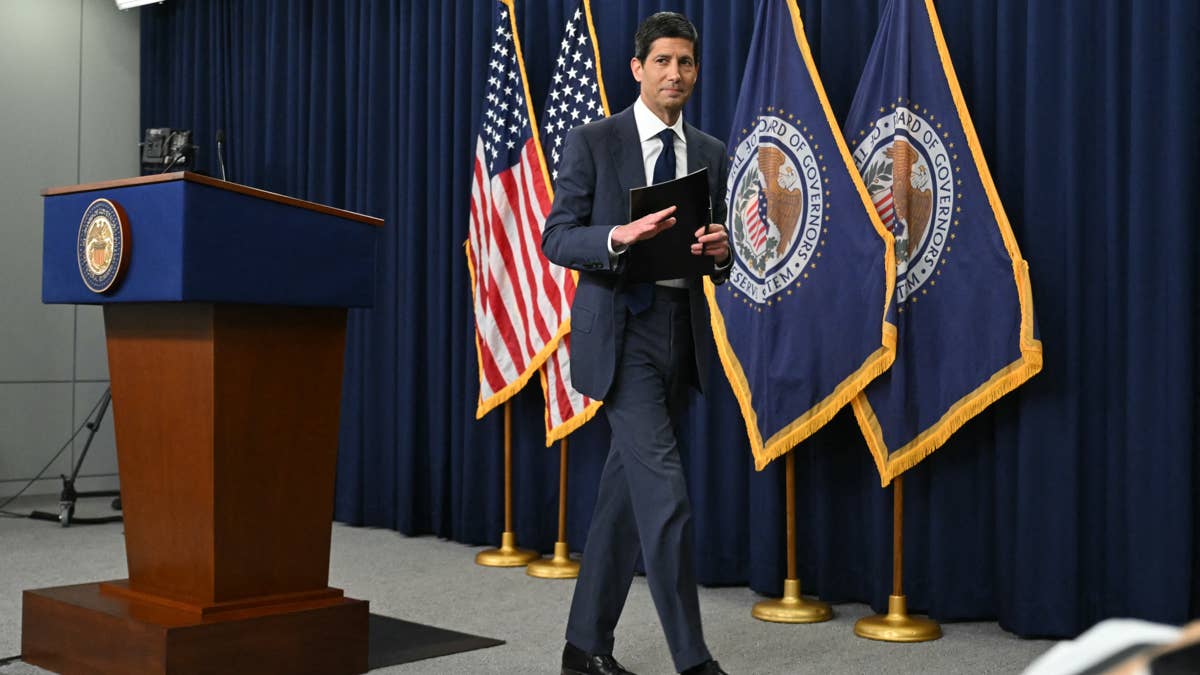
Bank of America warns the Fed may need a much bigger December rate hike
The key forecast from the report is that BofA expects a quarter-percentage-point rate increase in December. But its economists now believe the risk of a half-point hike has increased substantially.
In the Nov. 10 report, BofA warned: “The Fed seems to be falling behind the curve on inflation, and the Oct hold is looking like a policy mistake.”
That change comes at a point when Federal Reserve Governor Christopher Waller signaled that policymakers might need to move more aggressively.
Speaking before the CPI report, Waller said a core inflation reading around 0.3% or higher could justify considering a half-point rate hike in December, as reported by Yahoo Finance. He also warned that increasing rates by only a quarter point could threaten the Fed’s credibility.
October’s core CPI reading hit that benchmark.
Bond traders responded quickly. According to Bank of America, markets shifted from pricing in approximately 21 basis points (0.21%) of December tightening before the report to 29 basis points (0.29%) afterward, with greater expectations of a larger move.
The bank also sees growing risk that the Fed might need another increase in January rather than March.
For Americans, the difference matters.
Higher interest rates make credit cards, business loans, and mortgages more expensive, making the Fed’s December 8–9 decision all the more important in exerting more pressure on household budgets and stock markets.
Wall Street faces another rate shock as the S&P 500 struggles to recover
Nov. 10’s hotter CPI report rattled a stock market that’s already under a lot of pressure.
The S&P 500 lost 29.01 points, or 0.38%, while the Nasdaq fell 0.74% and the Dow shed 157.86 points, or 0.30%, the Associated Press reported.
Moreover, elevated bond yields make stocks a lot less attractive, primarily for expensive AI and tech companies whose prices depend on future earnings. Homebuilders also face pressure as elevated borrowing costs discourage buyers.
That’s remarkably pertinent for 401(k)s and S&P 500 index fund investments where major tech stocks carry significant weight.
Investors need to review their exposure to high-growth stocks, prioritize companies with strong cash flows and manageable debt, and avoid reacting impulsively to one inflation report.
As we look ahead, the bigger concern is whether additional rate hikes in 2027 could prolong pressure on stock valuations, corporate borrowing, and household budgets, potentially delaying a broader market recovery.
Related: Jim Cramer questions his famous Nvidia investing rule