Nvidia (NVDA) stock has clearly been on every investor’s radar over the past three years.
However, the market’s now moved beyond the usual demand discussions and is now fixated on its tremendous runway.
That changes the dynamic in a big way and will shape the stock’s long-term trajectory, especially since it leaves little room for disappointment.
For context, if you’d invested $10,000 in Nvidia stock and left it for three years, you’d be sitting at a jaw-dropping $52,300.
Nevertheless, a ton of future growth is already priced into the stock, and investors buying Nvidia today are paying roughly 35 times forward non-GAAP earnings, according to Seeking Alpha.
Bank of America analysts just had a fresh read on that opportunity after hosting Nvidia CFO Colette Kress at its Global Technology Conference.
Moreover, Nvidia investor-relations executive Stewart Stecker gave analysts a look at how the tech giant is thinking about demand, supply, and the next product cycle.
For perspective, in one of his recent posts, TheStreet’s resident tech expert and reporter Vuk Zdinjak broke down the AI giant’s biggest announcements from the GTC Taipei event.
During the event, Nvidia confirmed that its new Vera Rubin AI platform has entered full production, backed by hundreds of partners helping ramp up manufacturing across the globe.
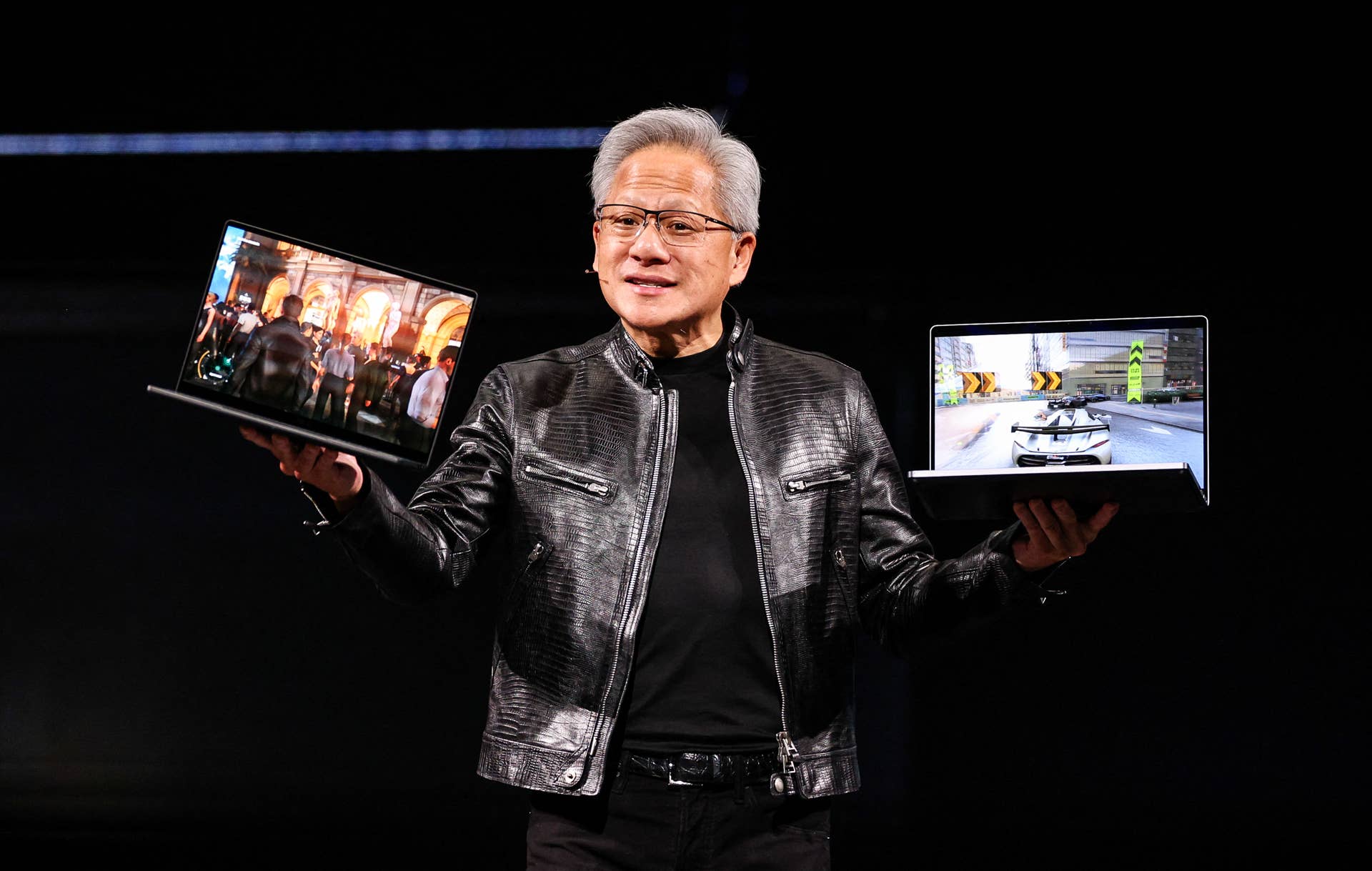
Additionally, the RTX Spark was introduced, a new superchip built for Windows PCs, that can efficiently run AI agents and the latest AI models locally.
BofA analysts now view Nvidia as more than just a leader in GPUs.
They paint a picture of a uniquely diversified company, powered by a full-stack approach that continues to widen its competitive edge as AI use cases evolve
Moreover, after sitting down with management, BofA analysts believe the growth runway is expanding.
That compelled the firm to effectively reset its expectations on the stock.
Wall Street price targets for Nvidia stock
- Morgan Stanley set a $288 price target on Nvidia stock. .
- Bank of America set a $350 price target on Nvidia stock. .
- UBS set a $280 price target on Nvidia stock. .
- JPMorgan set a $280 price target on Nvidia stock. .
- Goldman Sachs set a $285 price target on Nvidia stock. .
- Cantor Fitzgerald set a $350 price target on Nvidia stock.
Source: MarketBeat.
Bank of America sees Nvidia’s AI runway getting even wider
As mentioned earlier, BofA analysts feel Nvidia is far from being just a GPU story.
More Nvidia:
- Nvidia is losing an industry that saved it from bankruptcy
- Nvidia CEO makes surprising admission on OpenAI and Anthropic
- Goldman Sachs just found a reason to like Nvidia stock again
In fact, they argue that the tech giant has spread its tentacles into CPUs, AI systems, software, networking, and several other areas.
Consequently, Nvidia’s content per gigawatt is likely to rise sharply with every product generation, from $40 billion per GW for Blackwell to $60 billion to $80 billion per GW for Vera Rubin and Rubin Ultra, and potentially $100 billion per GW with Feynman.
The reset rests on three big takeaways:
- CPU opportunity is expanding: Nvidia expects $20billion in Vera CPU sales in the back-half of fiscal 2027, split evenly between head-node sockets and standalone agentic AI sockets.
- AI system value is rising: Vera Rubin includes 7 chips across 5 racks, compared to Blackwell’s main compute rack.
- Demand visibility looks strong: Nvidia’s $124 billion purchase commitment underscores robust demand and supply visibility ahead.
Additionally, BofA analysts describe Nvidia as being the “king of diversity,” noting its sales mix is split evenly between hyperscalers and ACIE (AI Clouds, Industrial, and Enterprise).
The ACIE segment is forecasted to grow even faster over time, backing up the view that Nvidia’s moat is broadening.
Moreover, BofA analysts reiterated their Buy rating on the stock, with a $350 price target, based on 26 times calendar 2027 estimated earnings, excluding cash.
That multiple sits well within Nvidia’s historical 25x to 56x forward-year price-earnings range.
At around $205, the target points to a whopping 71% upside, a bold call to say the least for a business valued near $4.97 trillion.
If Nvidia rises to $350 per share, its market cap could approach $8.5 trillion, assuming its share count remains largely unchanged, an insane level no other company has ever achieved.
Bank of America analysts flag Nvidia downside risks
- BofA analysts flagged Nvidia’s legacy consumer-driven gaming segment as a laggard.
- They pointed to growing competition from the top public companies, internal cloud projects, along with private AI firms involved in accelerated computing.
- China is another thorn in its side, with export-related restrictions potentially weighing more heavily than expected.
- Analysts pointed to concerns over Nvidia’s newer enterprise, data center, and auto markets producing lumpier, unpredictable revenue.
Nvidia stock returns vs. the S&P 500
- Over the past month, Nvidia stock returned 4.38%, compared with 1.71% for the S&P 500.
- Over the past six months, Nvidia stock returned 12.44%, compared with 7.47% for the S&P 500.
- Year to date, Nvidia stock returned 9.97%, compared with 7.86% for the S&P 500.
- Over the past year, Nvidia stock returned 46.51%, compared with 24.32% for the S&P 500.
- Over the past three years, Nvidia stock returned 423.60%, compared with 72.77% for the S&P 500.
- Over the past five years, Nvidia stock returned 1,066.78%, compared with 74.56% for the S&P 500.
Source: Seeking Alpha.
Related: Morgan Stanley resets Nvidia stock forecast after key event