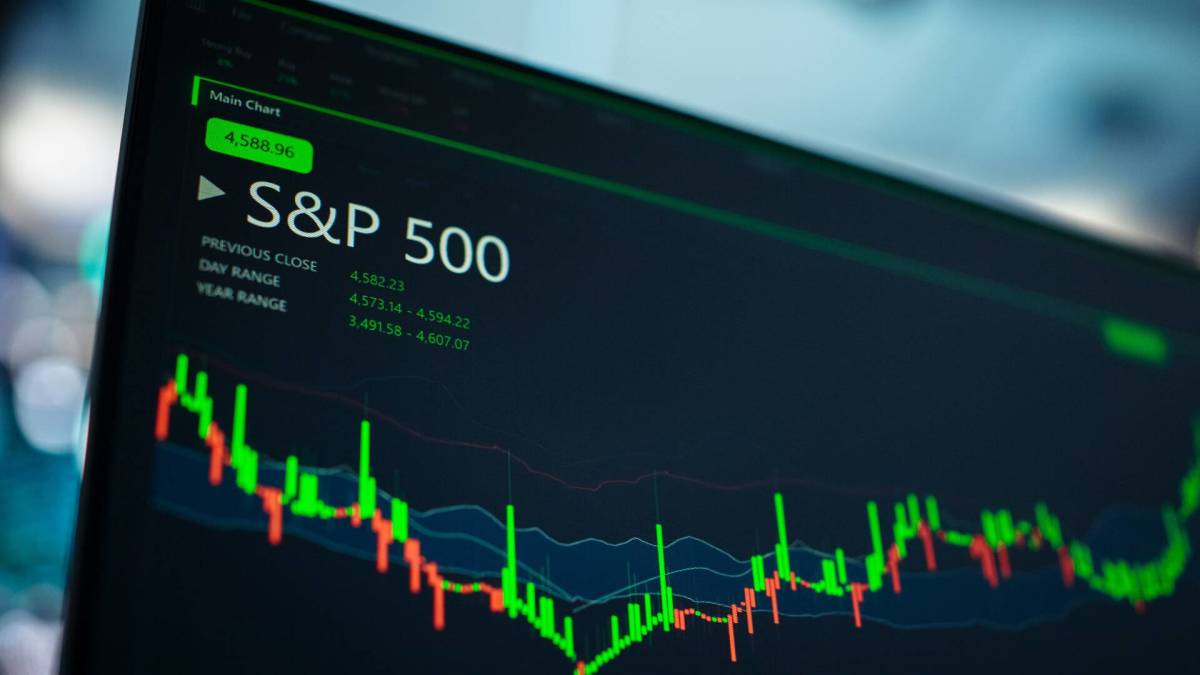
Many investors feel that the safest long-term bet is to invest in an S&P 500index fund like the SPDR S&P 500 ETF (SPY). To put it in perspective, SPY has gained almost 70% in the past five years, at the time of writing, Tuesday morning, March 17, according to Yahoo Finance. While the S&P 500 is volatile in the short term, only a collapse of the US economy can really wipe out long-term gains.
However, when geopolitical tensions make the market more volatile, some investors are looking for what may seem like smarter bets. The ongoing military operation in Iran has caused oil prices to soar, and investors are asking themselves questions like “Is S&P 500 pricing in surging oil prices?”
If you are one of them, you are in luck. In a research note titled “S&P 500 Relative Value Cheat Sheet,“ shared with me, Savita Subramanian, Equity & Quant Strategist at Bank of America Securities and her team answered many of these important questions.
Shutterstock
Bank of America reveals what is priced in the S&P 500 and what is not
The team performed a back-of-the-envelope analysis of the price ratio of the S&P 500 to WTI oil. Results indicate that the S&P 500 is still trading higher in WTI terms than at any other point in history, except for COVID and the dot-com bubble.
Analysts concluded that when it comes to the conflict with Iran, the S&P 500 has priced in de-escalation but hasn’t priced in oil prices staying higher for a longer period. They recommended buying S&P 500 Energy stocks rather than S&P 500 index funds.
However, there is one important thing to keep in mind when following analysts’ advice.
Subramanian wrote: “Trading ideas and investment strategies discussed herein may give rise to significant risk and are not suitable for all investors. Investors should have experience in relevant markets and the financial resources to absorb any losses arising from applying these ideas or strategies.”
Related: UBS economists issue stark warning on U.S. economy
The team believes the S&P 500 has priced in higher tax receipts, but a big bill for short-term equity gains has not been priced in; this is why they advise selling Discretionary stocks. Analysts said that the Consumer Staples sector has priced in the risk of lower demand thanks to lower Immigration. However, they see labor inflation not being priced in and recommend buying stocks from the Consumer Staples sector.
Bank of America formulates S&P 500 Relative Value Cheat Sheet
The team used their tactical model to rank sectors based on momentum, earnings revisions, and valuation. They said this methodology highlights attractive short-term sector opportunities for more tactical investors.
Top 5 ranked industries highlighted as opportunities according to the Momentum and Value framework are:
|
Industry |
Sector |
|
Passenger Airlines |
Industrials |
|
Metals & Mining |
Materials |
|
Personal Care Products |
Consumer Staples |
|
Air Freight and Logistics |
Industrials |
|
Diversified Telecommunication Services |
Communication Services |
What does the Bank of America advice tell us about the US economy?
Seeing Bank of America turn bullish on Energy is not surprising considering the circumstances. The advice not to invest in S&P 500 index funds seems very sound, especially if you believe the AI bubble is real.
I wrote about the AI bubble in my article, “AMZN, MSFT, NVDA, SFTBY setting $100 billion on fire.” The reason why you’d avoid investing in an S&P 500 index fund if you believe the AI bubble is real is simple — The Magnificent Seven represent 32.6% of the S&P 500 as of February 2026, according to Motley Fool.
MoreEconomic Analysis:
- Ernst & Young drops blunt reality check on the economy
- Federal Reserve official blasts latest interest-rate pause
- IMF drops blunt warning on US economy
Even if you don’t believe in the AI bubble, you should be aware that surging energy prices will hurt the AI industry. Energy stocks boomed while tech stocks crashed during the dot-com bubble. There is a chance history will repeat itself if the de-escalation doesn’t happen quickly.
I recently wrote about Apple’s entry into the cheap laptop market in my article “Apple’s latest product is a game-changer.” Since I wrote about it, I’ve had the pessimistic thought that such a move by Apple signals a recession.
To understand why that might be the case, we need to remember that this is the company that sells its Apple Watch Ultra 3 for $799. They have just released a laptop that costs $200 less than a watch. Make that watch price make sense now.
Related: Goldman Sachs doubles down on bold S&P 500 forecast