Tween retailers have all but disappeared from the marketplace in recent years.
Older generations will remember stores like Delia’s, Limited Too, and Wet Seal, that specifically catered to that 9- to 12-year-old demographic. For tweens in the late ‘90s and early ‘00s, there was nothing better than shopping at these preteen-focused stores, where everything was fashionable, adhered to parental modesty standards, and was perfectly sized to fit growing, changing bodies.
But for today’s tweens, those trendy, age-appropriate retailers simply no longer exist. Or, like Delia’s, they operate as online-only brands, robbing shoppers of that in-person joy-of-discovery element.
Retail experts have pointed to a number of factors that led to the decline of the tween-focused brand.
“Birth rates have continued to drop down,” Jane Hali Senior Research Analyst Jessica Ramírez told Retail Dive. “So it’s not a market that necessarily is thriving. And a lot of these companies, I mean, they just went out of business.”
Leela Ramdeen, vice president of strategy at Refuel Agency, suggests that many of these once-stalwart brands simply failed to adapt to changing consumer preferences.
“I think some of them just didn’t change their inventory,” she told Retail Dive. “It’s got to evolve as well. Not saying you completely depart from what made you you, but I do think that some of the common threads that caused them to move back is because of their product line.”
Whatever the reason for their disappearance, these tween brands are slowly making a resurgence. In 2024, Limited Too relaunched at Kohl’s, targeting a Gen Alpha and Millennial audience. Walmart is now selling Justice, and Aeropostale has partnered with Amazon for an all-new, tween-centered storefront.
Earlier this month, another beloved tween brand announced it would be entering into its next, Gen Alpha-focused chapter: Claire’s.
A brief history of Claire’s and its bankruptcies
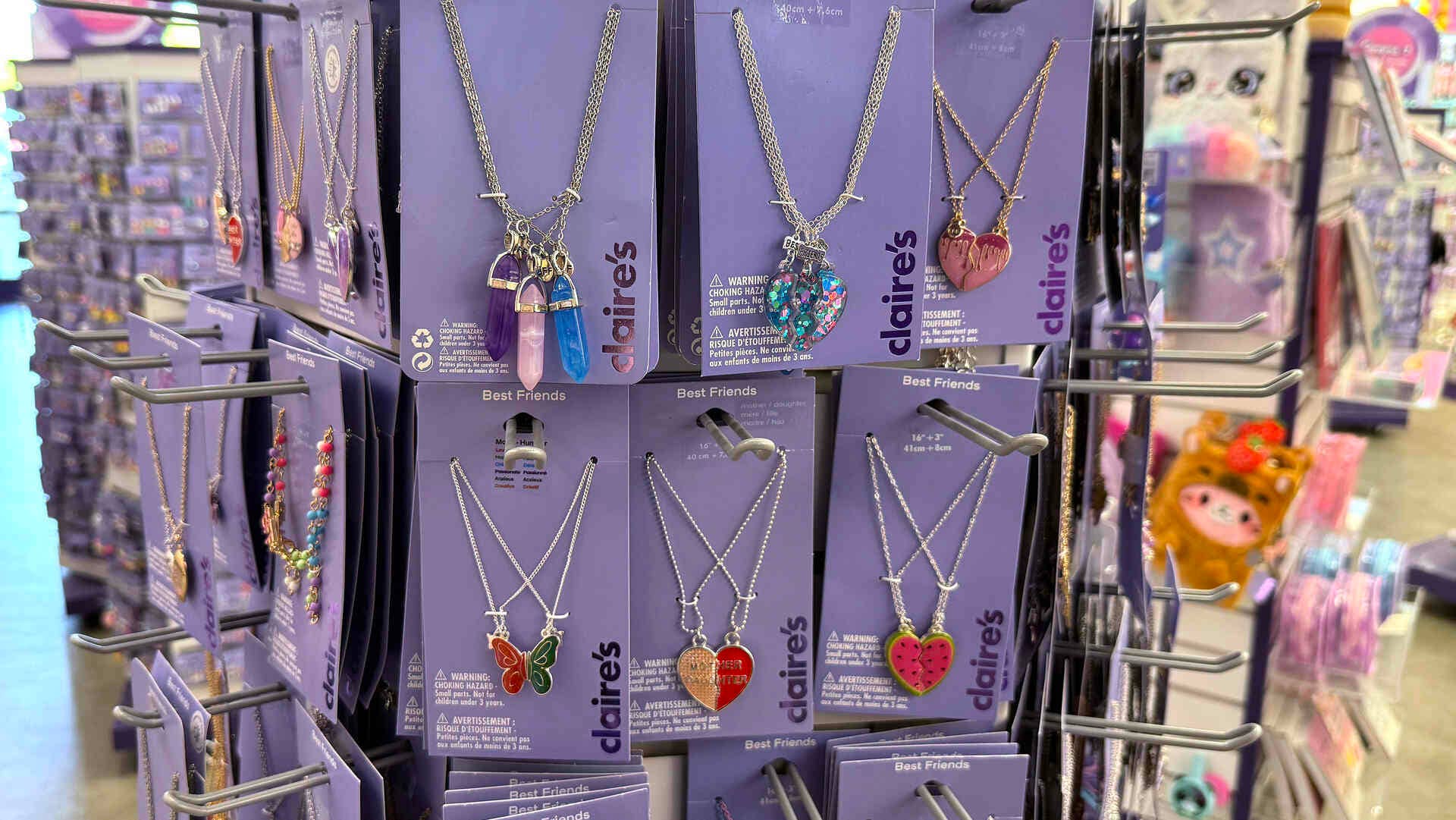
Many will remember Claire’s as a mall-based retailer of accessories and the preferred ear-piercing destination for generations of kids.
The company actually started as a midwestern chain of boutiques and didn’t become a nationwide retailer until the mid-’70s, when it was purchased by Rowland Schafer. By the ‘90s, there were more than 1,000 Claire’s locations, according to the Wall Street Journal.
Young shoppers flocked to the stores for their brightly-colored, budget-friendly accessories. At the close of the millennium, Claire’s purchased Afterthoughts, another mall accessory chain, folding it into its Icing line that appealed to a slightly older demographic.
In 2007, the Schafer family accepted a $3.1 billion buyout that took Claire’s private. By that time, the retailer had grown to upwards of 3,000 locations, according to Business Insider. After the sale, things chugged along as normal for a while, but in 2018, the chain filed for Chapter 11 bankruptcy, saying it was $2 billion in debt.
“The retail industry as a whole has been challenged by shifts in consumer purchasing preferences and habits,” Claire’s said in a bankruptcy filing, as reported by Business Insider.
The chain emerged from bankruptcy a few months later, having cleared $1.9 billion of debt. Unfortunately, it didn’t remain in the black for long, and in August 2025, the company filed for bankruptcy for a second time.
A month later, Ames Watson took over Claire’s business operations in North America. Since the takeover, the private company has closed hundreds of Claire’s stores and has worked with executives to formulate a turnaround strategy that could bring the tween retailer back to relevance.
Sullivan/Getty Images
Claire’s next chapter
In May, Claire’s announced its first big campaign under Ames Watson ownership, “A Girl SMR at Claire’s.”
“With the launch of its summer campaign, ‘A Girl SMR at Claire’s,’ Claire’s is stepping into a new chapter centered on celebrating girlhood in all its expressive, imaginative, and joy-filled forms,” the company said in a statement.
“Rooted in Gen Alpha’s obsession with ASMR [Autonomous Sensory Meridian Response], tactile fidgets, and all things sensory, the campaign brings the first social and AI native generation into an IRL universe built around activating the five senses: touch, taste, sound, sight, and smell. It’s a counterbalance to their screen-filled upbringing and an invitation to explore girlhood through feel-good, hands-on fun,” it continued.
Anchoring Claire’s new identity is the Sensory Shop, a line of collectibles that includes slimes, squishies, bejeweled accessories, and body care products. Select locations will also feature ASMR recording stations, giving shoppers the chance to create their own ASMR content.
More retail:
- Iconic retailer has (old) new plan to win customers back
- After major changes, 157-year-old candy company returns to the stage
- Walmart announces unique strategy to drive sales
Throughout the summer months, Claire’s says it will be launching several exclusive collaborations that “tap into the continued rise of blind box culture and the ‘squishy hunting’ community — turning product discovery into a sharable, collectible experience that keeps consumers coming back for more.”
“Gen Alpha is rewriting the rules of modern girlhood, and Claire’s is evolving with them,” Claire’s Chief Brand Officer Michelle Goad said in a statement.
“This new era is about creating a world where girls can explore, express, and experience joy through every sense. The Summer Sensory Shop and our ASMR-powered campaign are just the beginning of how we’re building a brand that feels as dynamic and imaginative as they are.”
Gen Alpha’s shopping habits
Claire’s focus demographic for this next iteration is Gen Alpha, or those born between 2010 and 2024. While these shoppers don’t yet have the disposable income of older generations, their shopping habits are already being studied, and are notably different from their predecessors.
According to a recent Numerator study:
- Gen Alpha shoppers primarily spend their allowances on snacks (59%), toys (55%), and entertainment (34%).
- By their tween years, those priorities have shifted to apparel (42%), electronics (42%), and skin care & beauty (30%).
- Unlike their Millennial parents, who largely prefer online shopping, Gen Alpha likes a more tactile experience, with 66% saying they prefer to shop in-store.
Source: Numerator
“Companies that enhance in-store engagement with interactive, family-friendly activations while also investing in tailored online experiences will be best positioned to win long-term loyalty,” the study concluded.
With its new campaign, Claire’s is betting that the future of retail isn’t found on a screen but in the tactile corners of the mall.
If Ames Watson can successfully deliver on the relaunch, Claire’s could be positioned to be the leader of a tween-sector renaissance.
Related: Victoria’s Secret eyes Bath & Body Works turf with fragrance push