Warren Buffett built arguably the greatest investing record of all time by staying within his circle of competence, and for decades, technology sat outside it.
Berkshire Hathaway’s (BRK.A, BRK.B) acquisition criteria effectively cover that caution: “Simple businesses (if there’s lots of technology, we won’t understand it).” That made his move into Google’s parent, Alphabet (GOOG), in Q3 2025 all the more striking.
Now, Berkshire CEO Greg Abel is opening up about how that surprising bet came together.
Buffett rode off into the sunset, retiring as Berkshire’s chief executive on Dec. 31, 2025, Reuters reported, with Abel taking over on Jan. 1, 2026. Buffett remains the chairman, though, and his familiar investing strategy still shapes the investing juggernaut.
For Berkshire and Buffett, it’s always about buying understandable companies with durable economics, capable managers, and valuations that offer attractive long-term returns.
Alphabet was unmistakably Buffett’s call, though, as he had previously expressed regret over not buying the stock sooner.
In a CNBC interview, Greg Abel has now revealed what swayed Berkshire to cross Buffett’s guarded technology line and grow its Alphabet wager.
Why Alphabet finally crossed Buffett’s technology barrier
Abel made it clear in the interview that the Alphabet investment wasn’t inherited by another Berkshire manager and originated purely with Buffett.
“Warren initiated that probably close to 15 months ago or a little bit more,” he told CNBC. Berkshire continued scooping up shares of the tech giant as Buffett and Abel discussed the position, pointing to deliberate accumulation rather than a one-off trade.
More Warren Buffett:
- Warren Buffett reveals he broke his own investing pattern
- Warren Buffett has a blunt take on today’s market
- Warren Buffett pulls no punches on stock market for 2026
Perhaps the more revealing step came in late May, when Abel received a call asking if Berkshire would want to participate in an upcoming stock offering. “Really no terms or amount were set,” he said. Abel called Buffett and recommended a $10 billion block at a 6.5% discount, and the transaction went through.
Buffett’s continued role as a sounding board underscores that his investing discipline remains critical to Berkshire’s decision-making process.
In the thesis, Abel was mostly guarded but offered some tidbits.
Berkshire could see the early effects of AI inside companies, including how the technology can be used and what benefits it delivers. “We all are seeing and feeling the impact of AI,” he said. That firsthand evidence “brought incremental interest.”
Google stood out as one of the most scalable ways to own that shift. Abel called it “a significant player,” while arguing that “there’s a lot more to Google” than the AI argument alone.
The crux of the matter is that Berkshire isn’t simply chasing AI excitement. Alphabet passed the demanding Berkshire test because the firm saw tangible commercial benefits across its business, then paired the evidence with a robust, cash-rich platform and favorable purchase terms.
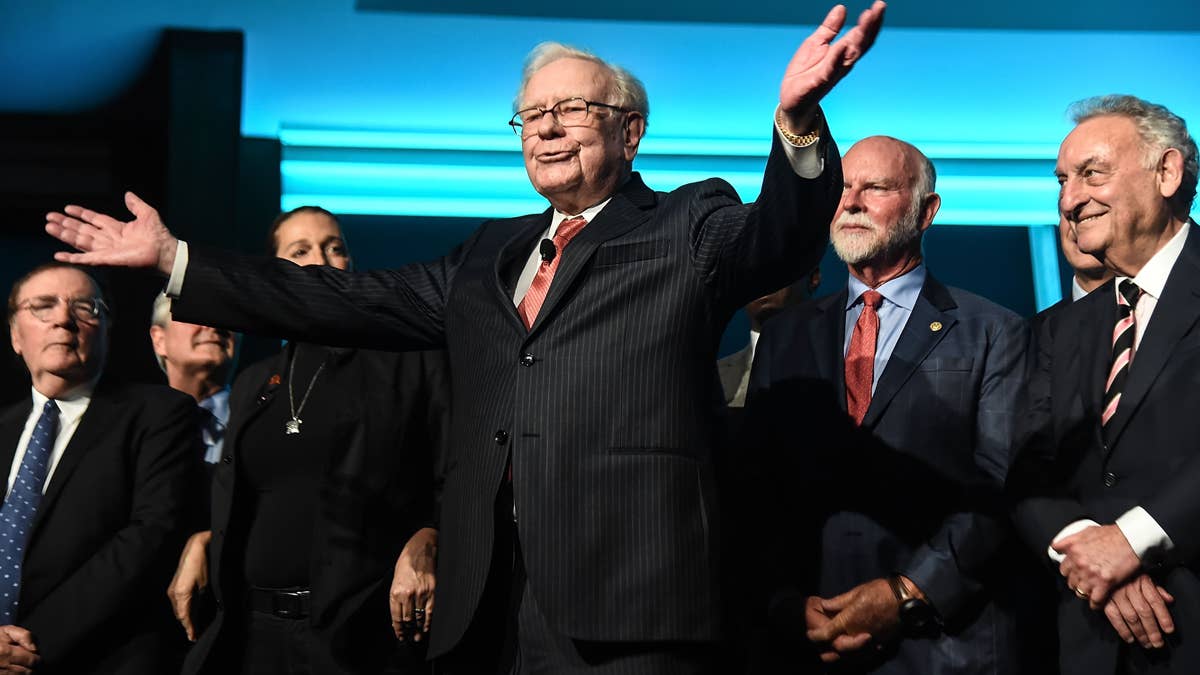
How Buffett’s Alphabet bet became a top-3 holding
Berkshire began building its stake in Alphabet during Q3 2025, between July 1 and Sept. 30, although its 13F doesn’t disclose an exact purchase date.
The firm initially reported 17.85 million Class A shares, valued at $4.34 billion as of Sept. 30. The position grew to nearly 57.8 million shares by March 31, 2026, before Berkshire added another 48.1 million shares during Q2, including a $10 billion private placement announced June 1.
By June 30, Berkshire owned 106 million Class A and Class C shares worth $37.8 billion, an 83% quarterly bump in share count, making Alphabet its third-largest U.S.-listed equity holding.
As of June 30, 2026, Berkshire’s publicly traded U.S. stock portfolio was valued at around $299.3 billion. Its 10 largest company-level positions represented around 91% of the portfolio:
- Apple (AAPL): $66.0 billion, or 22.04%
- American Express (AXP): $51.3 billion, or 17.14%
- Alphabet (GOOGL, GOOG): $37.8 billion, or 12.62%
- Coca-Cola (KO): $32.5 billion, or 10.86%
- Bank of America (BAC): $27.5 billion, or 9.20%
- Chevron (CVX): $14.0 billion, or 4.67%
- Occidental Petroleum (OXY): $12.9 billion, or 4.30%
- Chubb (CB): $11.7 billion, or 3.90%
- Moody’s (MCO): $11.2 billion, or 3.73%
- Kraft Heinz (KHC): $7.7 billion, or 2.57%
- Sources: Berkshire Hathaway’s SEC Forms 13F for Q3 2025 and Q2 2026, and Alphabet’s June 1, 2026, securities filing
Why AI’s power bottleneck could become Berkshire’s next growth engine
In the interview, Abel also talked about one of the biggest bottlenecks for AI in the electricity sector.
“I’ve sort of always had a strong view that energy would be the constraint,” he said, as developers announce data centers.
One of the hottest talking points in the AI space, especially amid the backlash against data center construction, is energy. It is clearly a difficult challenge, requiring transmission lines, substations, and site infrastructure to be built quickly enough to connect new facilities.
“We can produce the energy,” he said. The question is “how long it would take to get the sites prepared” to serve them.
That good thing is that it fits Berkshire’s strengths. Berkshire Hathaway Energy currently owns regulated utilities and infrastructure, along with enough capital to finance grid expansion. And unlike speculative AI bets, investments can efficiently convert electricity demand into decades of regulated returns, which assumes the economics to protect existing customers.
Iowa is already offering some compelling evidence. Abel said that data centers represented about 8% of Berkshire’s electricity load there last year. He called the buildout a “significant opportunity for Berkshire and Berkshire Hathaway Energy.”
That said, newer projects need to cover their own costs and avoid leaving customers to pay for facilities that might never be built.
As Abel stressed, growth “has to be done on the terms and conditions” Berkshire requires. AI creates demand, but utility discipline determines whether Berkshire can capture the upside.
What Buffett’s endorsement changes for Alphabet investors
Berkshire’s endorsement effectively reframes Alphabet stock as more than just an AI trade.
Buffett and Abel are collectively signaling that they’re seeing a durable business beneath the technology. Search cash flows, cloud scale, pricing power, and a superb balance sheet that’s capable of funding the AI buildout.
Alphabet Class A shares closed at $337.12 on Sept. 2, up 7.7% in 2026 but down 5.8% over one month and 9.4% over three months, according to Seeking Alpha. The past few months have been especially difficult amid deteriorating investor sentiment toward AI.
Interestingly, its current price is also below the 351.81 Berkshire paid for Class A shares in June, showing investor concerns over heightened CapEx.
Valuation needs nuance.
Alphabet trades around 16.9 times trailing earnings, which seems cheap for a company growing Q2 sales at a 24% clip. Yet one-time investment gains inflated recent profit, which makes the roughly 22-times forward multiple more useful.
However, its valuation becomes a lot more palatable if Cloud’s 82% growth and $514 billion backlog convert into durable cash flow. On the flip side, it becomes a lot more demanding if 2026 CapEx of $195 billion to $205 billion suppresses free cash flows longer than expected.
Berkshire’s investment reduces doubts about Alphabet’s long-term quality, but execution and cash returns remain at the forefront of the discussion.