Money works only because almost everyone agrees to believe in it at the same moment. Pull that shared belief away, and the paper in your pocket is just paper.
The U.S. dollar carries the largest version of that belief on the planet. Close to 80% of the world’s oil trades are invoiced in dollars, a habit that traces to a 1974 understanding between Washington and Saudi Arabia, according to Responsible Statecraft. That setup, known as the petrodollar, quietly turned every barrel of crude into a reason for the rest of the world to hold American money.
For most of the past decade, America’s rivals have worked to break that habit. China launched a yuan-priced oil contract. Russia and Iran struck deals in rubles, yuan, and gold. During the recent war, Iran pushed hardest of all, declaring that only tankers from countries paying in Chinese yuan could move through the Strait of Hormuz. The dollar, it seemed, was being shown the door at the world’s most important oil chokepoint.
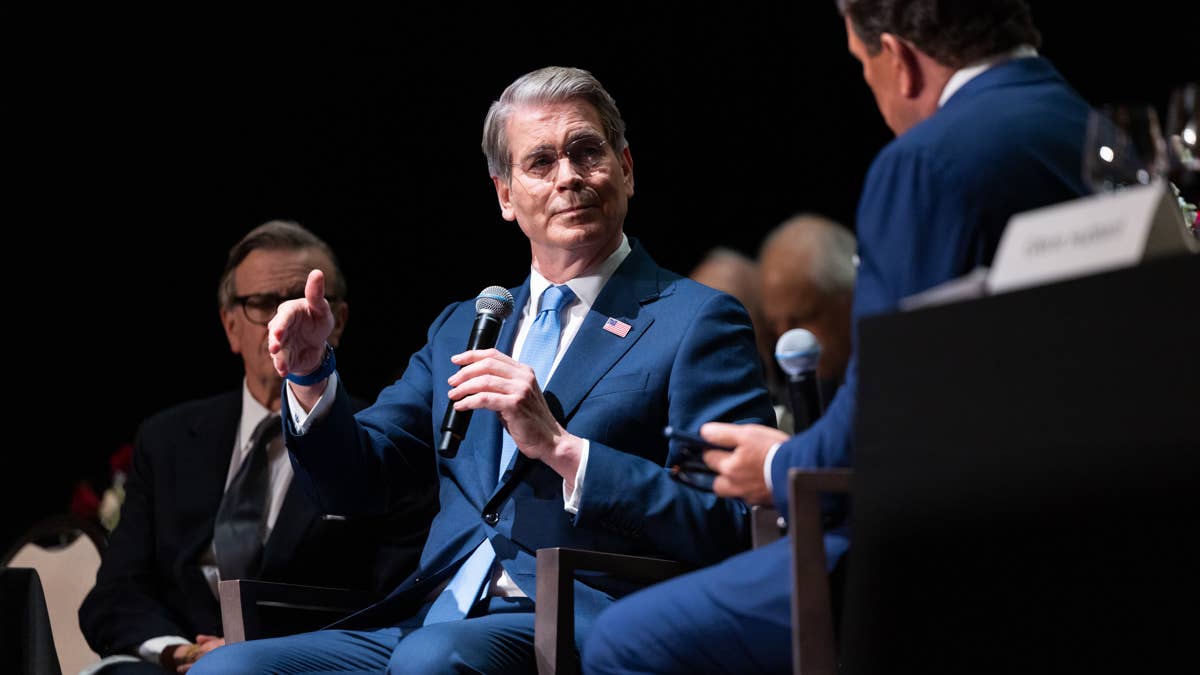
Then Treasury Secretary Scott Bessent sat down with CNBC on Wednesday, June 24, and said the door had swung back open. Iran, he revealed, will invoice its oil in dollars again.
What Bessent actually said on CNBC
“We’re seeing in the Iranian negotiations, the Iranians will be invoicing in dollars,” Bessent said on CNBC’s “Squawk Box,” according to CNBC. Everything the administration is doing is “pushing the dollar,” Bessent argued, reasserting its place at the center of global trade.
More Oil & Gas:
- Iran peace deal resets gas prices
- Oil prices face sudden $150 spike after vital route shuts
- White House makes promise on Strait of Hormuz and oil
The contrast with the recent past was the whole point. Iran had been “selling discounted oil to China and not getting dollars,” Bessent said. Now, he claimed, that revenue would run back through the dollar system.
The shift did not appear out of nowhere. Iran and the U.S. signed a memorandum of understanding on June 17, and on June 22, the Treasury issued a 60-day general license letting Iran produce, sell, and deliver oil, with payment allowed in dollars. The license expires Aug. 21 unless it is renewed.
“Dollar dominance is essential,” Bessent said, per Foreign Policy.
Related: Oil prices reset as White House rethinks Iran Plan (again)
Why the petrodollar matters for your money
Here is the part that rarely makes the headline. The dollar’s grip on oil is not a piece of trivia. It is a quiet subsidy on American life. When the rest of the world needs dollars to buy energy, demand for those dollars stays high, which helps hold down U.S. borrowing costs and supports the currency sitting in your bank account.
When that demand slips, the cost shows up in places people feel. A weaker dollar makes imported goods pricier, feeds inflation, and can push mortgage and credit-card rates higher than they would otherwise sit.
It is the same hinge I traced in TheStreet’s earlier reporting on how the war has been reshaping prices at the pump. When I lined up Bessent’s claim against the petrodollar’s real history, the timeline told a more complicated story than a single television clip suggests.
- About 80% of global oil trades were invoiced in dollars as of 2025, a share rooted in the 1974 U.S.-Saudi petrodollar deal, according to Responsible Statecraft.
- An estimated 80% to 90% of Iran’s crude exports went to China, often at a discount and increasingly off the dollar grid, according to The Economy.
- The new license could unlock $8 billion to $9 billion in revenue for Iran from barrels stranded in the Gulf, former Treasury official Miad Maleki told CNBC, according to The Hill.
What the dollar deal does for Iran
The reassertion runs in two directions at once. Routing Iran’s oil back through dollars hands Washington a window into transactions it had lost, because dollar payments move through banks the U.S. can watch and, if it chooses, freeze. It also pries Tehran loose from China’s yuan-only orbit, which is likely the deeper game here.
But Iran still gets paid. “Production, sales, dollar payments, petrochemicals and protected shipping, all switched on at once,” Maleki told CNBC. “Together, they amount to a sustained reopening of Iran’s most important revenue stream.”
Related: Exxon, Chevron investors cautious after oil news
Not everyone is buying the victory lap.
“I don’t think we got played. I think we got coerced,” said Edward Fishman, a sanctions expert at the Council on Foreign Relations, per Foreign Policy. He argued the deal front-loaded the concessions to Tehran while leaving Washington with few real sticks.
Whether the dollar’s reign is really safe
There is a catch buried in Bessent’s framing. The dollar’s dominance has been slowly fraying for years, with China, Russia, and Iran steadily building payment channels that route around it, according to Foreign Policy. One oil deal does not undo that drift.
The politics are awkward, too. President Donald Trump has spent years talking down the dollar to help U.S. exporters, even as his Treasury chief now stands up to champion a stronger one.
Some analysts argue the petrodollar was never the true engine of dollar power in the first place. What actually sustains the greenback is the enormous web of global lending and borrowing done in it, not the invoicing choices of any single oil producer, Responsible Statecraft noted. By that read, one country’s billing currency is a headline, not the foundation.
What strikes me, after months of watching this war redraw the oil map, is how much of “dollar dominance” runs on confidence rather than barrels. Confidence can be talked up on a Wednesday morning. It can also leak away the moment the talking stops.
The number to watch is Aug. 21. That is when the 60-day license expires, and whether Iran keeps invoicing in dollars past that date will say more about the petrodollar’s health than any morning television hit. If the dollar payments hold and Gulf allies keep parking their reserves in U.S. Treasuries, Bessent’s bet looks shrewd. If Tehran drifts back toward Beijing’s yuan the moment the cameras leave, the bombshell will have been a press release.
For the saver in Ohio and the investor in Arizona, the stakes are simpler than the geopolitics. The strength of the dollar in your wallet is being negotiated right now, inside a deal most people will never read, and the next two months will start to show who is winning.