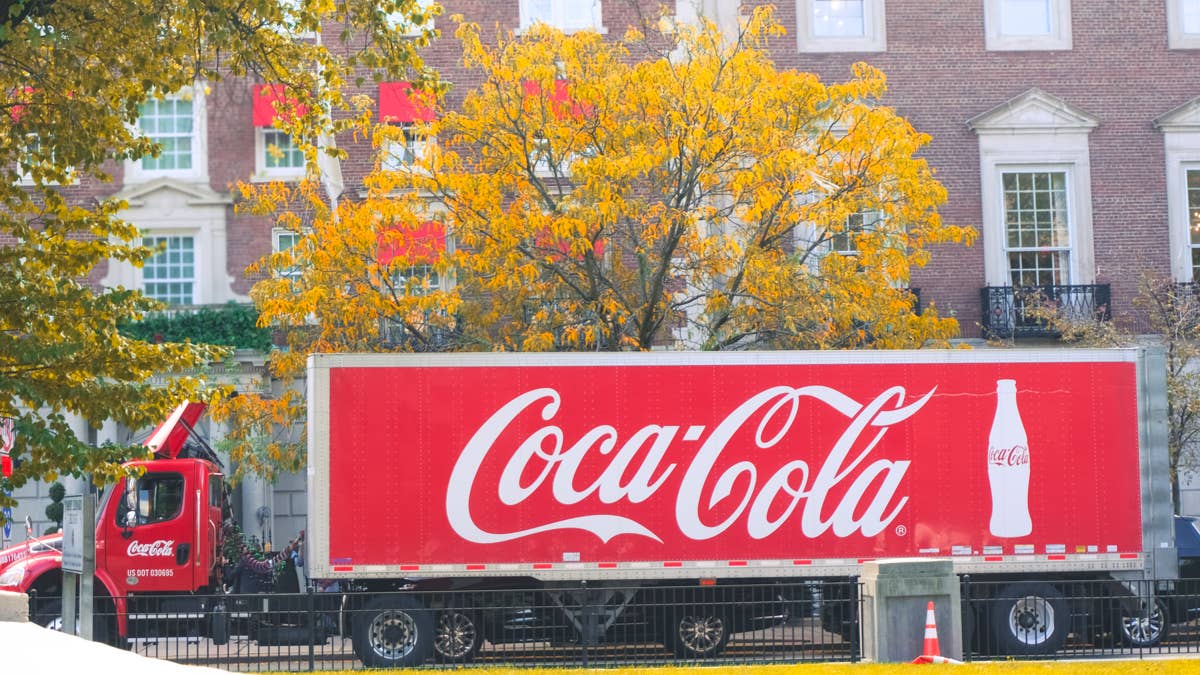
Coca-Cola (KO) has spent nearly a century tying itself to Christmas.
Its decades of Santa advertising, starting in the 1930s, helped popularize and cement the jolly, red-suited Santa Claus most people picture today.
That connection sells a lot of soda every December.
Now the beverage giant wants a second holiday to call its own, and it is handing the job to Fanta.
The plan runs deeper than a seasonal ad. Fanta is building its own cast of Halloween characters and rolling them out worldwide.
The aim is to make the brand as automatic to October as its sister brand is to December.
For anyone who owns Coca-Cola stock, or is considering it, this move signals how the company plans to grow beyond its classic red can.
What Coca-Cola’s Fanta Halloween strategy actually does
On Aug. 24, Fanta released a cinematic trailer for what it calls Fanta’s Haunted Universe, Marketing Dive reported.
The full campaign launches Aug. 26 across more than 50 markets.
The big change is ownership.
In past years, Fanta rented famous horror characters like Chucky and Beetlejuice from studios such as Universal Pictures and Warner Bros. This time, it created four of its own: a sports-car-driving vampire, a werewolf DJ, a cyborg Frankenstein, and a jack-o’-lantern scarecrow.
Ibrahim Khan, Fanta’s global vice president of marketing, told told Marketing Week that the brand wants to move from borrowing other people’s characters to building its own long-term platform.
Why owning the characters matters for Coca-Cola’s margins
Renting Hollywood characters is expensive. Studios charge licensing fees, and those fees eat into the profit Coca-Cola keeps on every seasonal can.
A licensing fee is the money a company pays to use someone else’s intellectual property, like a movie character.
Cut the fee, and more of each sale stays with the company. That is the core financial case.
Related: Convenience store giant takes on Coca-Cola and Pepsi
By creating its own characters, Fanta can widen gross margins on Halloween products, since the profit no longer gets split with an outside studio. It can also reuse the cast every year without a new deal each fall, turning a one-time campaign into a repeatable asset it controls, AdWeek reported.
The scale is already real. Fanta’s Halloween effort delivered 10 billion impressions last year, according to Marketing Dive.
How Fanta helps smooth Coca-Cola’s slower autumn
Soft drink sales tend to peak in summer heat and cool off as the weather does. That autumn dip is a quiet problem for any beverage company.
Fanta’s Halloween push helps fill part of that slower stretch before the end of the year season, when the flagship Coca-Cola brand leans on Santa to drive volume.
Fanta is one of Coca-Cola’s billion-dollar brands, so even a modest lift in seasonal volume can add up across 50-plus markets.
The Gen Z angle Coca-Cola is quietly chasing
Younger shoppers treat Halloween as a major event, from costumes to candy to social posts.
Fanta appeals more to younger people than the classic Coca-Cola drinker, which makes the holiday a natural fit for reaching Gen Z.
Building loyalty early has a long payoff.
A teen who bonds with Fanta at Halloween can stay a customer for decades, which lowers what the company spends to win that shopper over time.
What the Fanta Halloween bet targets
- Early loyalty: Reach younger drinkers during a holiday they already care about
- Repeat engagement: Games, collectible cans, and events pull fans back more than once
- Owned content: Characters the company keeps and reuses each year
- Global reach: One campaign scaled across more than 50 markets at the same time
Where AI fits into Coca-Cola’s cost math
Coca-Cola said it built this campaign with an entertainment studio called GRAiL, using new technology inside a human-led creative process.
Producing a cinematic world usually means large agency budgets and long timelines.
Using AI tools during research and production lets the company create and adjust global visuals faster and at lower relative cost.
For shareholders, that hints at a broader shift. Cheaper global campaigns can show up as discipline in operating margins over time.
What the numbers say about Coca-Cola now
The strategy arrives while KO stock sits near record territory.
Shares traded around $91.99, up about 33% year to date and roughly 4% over the past five days, Google Finance data shows.
The business is holding up. In the second quarter of 2026, Coca-Cola posted adjusted earnings per share of $0.97 and revenue of $13.38 billion, both beating expectations.
Revenue rose about 7% from a year earlier, and the company’s management raised its full-year organic revenue growth outlook to about 5%.
More Coca-Cola Stocks:
- Coca-Cola’s stock buybacks and what the latest program means
- Dividend King Coca-Cola is suddenly acting like a growth stock
- Does Coca-Cola pay dividends? Its yield and payout explained
- Coca-Cola’s stock splits: history (& prospects) explained
Coca-Cola also remains a reliable income payer. It lifted its dividend for the 64th straight year in 2026, to $2.12 per share, with the next payment due Oct. 1.
That streak keeps sending large checks to top holders, including Warren Buffett’s Berkshire Hathaway.
Analysts have grown more positive since the quarter.
UBS analyst Peter Grom raised his target to $104 from $98, while JPMorgan’s Andrea Teixeira and RBC Capital both moved to $96.
How Coca-Cola stacks up against the S&P 500
A holiday campaign only helps if the stock rewards patient holders.
Coca-Cola’s roughly 33% gain year to date has run well ahead of the S&P 500, which is up in the high single digits over the same stretch.
That is unusual for a defensive consumer name, which typically trails the market in a strong year.
The stock is acting like a growth name, and the Fanta plan fits that shift toward brand building over steady soda sales.
The risks investors should consider first
The plan is smart on paper, but it is not a sure thing.
Santa Claus works because generations grew up with him.
Invented characters have to earn their place in a crowded holiday, and shoppers may not embrace corporate mascots the same way. If they fail to catch on, the money spent creating them may not pay off.
There is also a difference between attention and sales.
A campaign can rack up billions of online impressions and still fall short if the products do not win prime shelf space in grocery and convenience stores.
Coca-Cola faces broader pressure too. Rising costs for aluminum and other inputs can squeeze margins, and consumer staples stocks can lag when investors chase faster-growing sectors.
What Coca-Cola investors should watch next
For most readers, this is not a reason to rush in or out. It is a signal about how the company plans to keep growing.
A few things are worth tracking:
Signals that show if the Fanta bet is working
- Shelf presence: Strong placement in major retailers, not just online buzz
- Repeat use: Whether Coca-Cola brings these characters back next year as a fixed platform
- Margin trends: Whether owned IP and AI production show up in gross and operating margins
- Volume growth: Measurable seasonal volume, since transactions matter more than impressions
Coca-Cola does not need this campaign to work for the stock to hold up. The dividend, the cash flow, and the classic brand carry it on their own.
But if Fanta can own Halloween the way Coca-Cola owns Christmas, the company gains a second reliable season and a template it can repeat for years.
That is the kind of slow, compounding edge long-term shareholders tend to reward.
Anyone considering KO should weigh that potential against a valuation already near record highs, and decide whether a steady grower at a full price fits their goals.