BJ’s Wholesale is planning a major change to its in-store offerings as it sees customer behavior shift.
In the second quarter of this year, the warehouse club saw its comparable club sales (including gasoline) increase by 11.9% year over year, according to the latest earnings report. Its membership also grew to a record 8.5 million.
As sales grew, BJ’s overall customer visits rose by 4.9% year over year, slightly outpacing Sam’s Club’s 4.7% increase, according to recent Placer.ai data. The stronger demand comes as BJ’s has been working to offer members lower prices using tariff refunds it received from the government.
“Traditional grocers have been raising prices, creating an even more favorable backdrop for our value proposition,” said BJ’s Wholesale CEO Bob Eddy on an earnings call on Aug. 21. “We continue to gain share, and as our price gaps improve, unit share has become an even clearer signal of member preference.”
BJ’s cuts its in-store assortment
As BJ’s sees increased demand, Eddy said the company plans to revamp its in-store assortment by reducing SKUs (stock-keeping units), or individual product varieties.
“We find ourselves over-SKUed,” said Eddy. “It has been a longstanding opportunity. We have had efforts to cut SKU count in the past, and I would argue we didn’t prosecute that opportunity in the right way. We just cut SKUs, which cut sales, and then we added some SKUs back.”
He said the company is now in the process of “removing unnecessary choice” from its stores, a change members will gradually notice.
Instead of carrying multiple versions of the same product, BJ’s will narrow its selection, concentrate sales among the remaining versions, and add new, innovative items in untapped categories.
Eddy said the company has already made these changes in its beverages and active nutrition categories, which are already yielding positive results.
Related: BJ’s Wholesale plans major store changes as customers pull back
“Think about in traditional soda, we do not carry cans and 1-liter and 2-liters of the same product anymore,” said Eddy. “We are adding in healthy soda, like Poppi and things like that. That is the idea around the building.”
He said these changes will roll out over the next few years, with the next waves happening in September and toward the end of the year.
“Our goal really is to take about 20% of our SKUs out over the next couple of years, and that will sort of happen ratably,” said Eddy. “That will largely get the chain down to where we find ourselves in new clubs, maybe a little bit lower than that.”
“Our average number of SKUs in a legacy club is about 7,500 or so at this point,” he continued … “I would like to get it down to about 6,000 – 6,500 SKUs, I think is the right place for us over time.”
Eddy said that this “ongoing effort” will be “powerful” and assured that BJ’s will be “sensitive” to its “members’ needs,” which will affect what will be cut from stores.
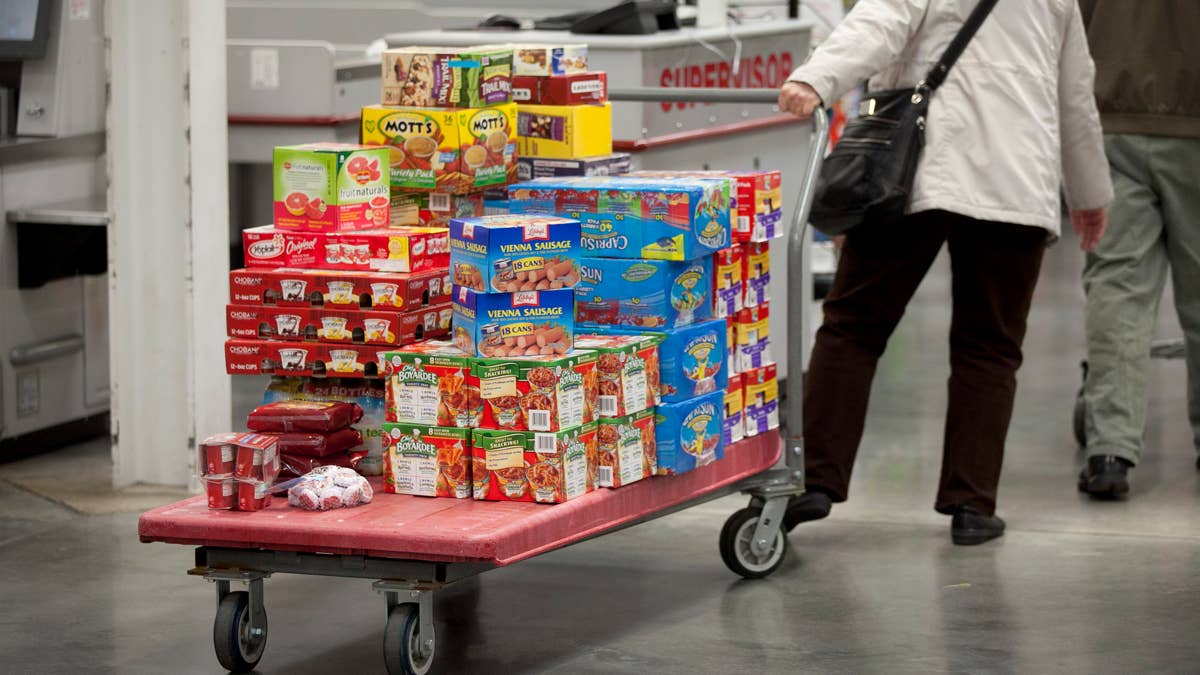
BJ’s sees demand rise from a growing group of customers
The changes come as BJ’s is seeing consumer demand reach unexpected levels, mainly due to more members flocking to its locations to escape elevated gas prices during the second quarter.
The company’s comparable fuel gallon sales were up double digits, surpassing its first-quarter results, as it offered members more gas discounts.
“Sales, membership, margin dollars, and the bottom line all came in ahead of our expectations,” said Eddy. “Adjusted EPS was $1.36, up 19% year-over-year. To put that in perspective, we earned more in this single quarter than we did in the entire year we went public back in 2018.”
Eddy said most of BJ’s sales growth came from higher-income shoppers, warning that the “K-shaped economy persists” despite seeing “sequential improvement” in the second quarter.
More Retail:
- Target sees unexpected shift in customer behavior
- Publix faces consumer boycott threat after store policy change
- Kohl’s drops generous offers as it tries to win back customers
“The vast majority of our growth continues to be driven by our higher-income members, which is consistent with what we’ve seen for some time now,” he said. “In an environment where consumers remain discerning with their dollars, we know our job is to make sure we’re putting the right products at the right value in front of every member who walks through our doors.”
While BJ’s has been lowering prices in its stores, it has also been introducing higher-priced items to its shelves to cater to its growing base of affluent shoppers, a change Eddy first teased in May.
This shift in member behavior comes at a time when consumer sentiment continues to decline nationwide, notably among lower-income consumers, amid economic uncertainty.
According to the University of Michigan’s Survey of Consumers data, consumer sentiment dropped by about 8% earlier this month.
“Although the early-month weakening in sentiment was pervasive across various demographic groups, notably large reductions were seen among older consumers, lower-income consumers, and those without a college degree,” said Joanne Hsu, a University of Michigan economist and director of the Surveys of Consumers, in a statement.
“These groups are all particularly vulnerable to any erosion of purchasing power stemming from inflation,” she continued. “Across all consumers, only 8% expect their income growth to exceed inflation in the year ahead, down from 18% in December 2024, a reflection of the belief that high prices will continue to be burdensome.”
In July, Bernstein analysts Zhihan Ma and Jeremy Miles warned in an analysis that the K-shaped economy isn’t going away anytime soon, according to a report from Investing.com.
“Although gas prices have started to moderate, inflationary pressure is likely here to stay,” said Ma and Miles in the analysis. “This means that low income consumers could remain under pressure, while middle to high income consumers remain value conscious.”
Related: Publix struggles to reverse concerning customer behavior