Wall Street analysts get paid to be right eventually, not immediately. That gap is where the damage usually happens to everyone else, because a rating that flips inside a single quarter tells you the conviction behind it was thinner than the original headline suggested.
For most of 2026, owning an oil major has not really been a bet on refining margins, Permian well economics or dividend coverage.
It has been a bet on a war.
The Iran conflict throttled the Strait of Hormuz, the passage that carries roughly a fifth of the world’s seaborne crude, and the integrated majors repriced around it. Exxon rose 41% in the first quarter and Chevron climbed 36%, with energy leading every S&P 500 sector while the broader index fell 4.6%, TheStreet reported at the time, citing Reuters.
Then the diplomacy started working, and crude handed back a large piece of that premium.
So when a major bank changed its mind on ExxonMobil (XOM), the direction of the call was not the surprising part. The shape of it was.
Why the oil war premium turned against Exxon
Crude oil futures spent the spring pricing in a supply shock that never fully arrived, and the unwind has been fast.
Crude fell to roughly $79 a barrel on Tuesday, July 28, a third consecutive session of losses, after President Donald Trump said the U.S. was engaged in productive talks with Iran, according to Trading Economics.
Here is the part that matters for your portfolio. Integrated majors are not pure price bets, but their upstream segments still carry most of the earnings swing.
More Energy Stocks:
- Iran de-escalation just hit energy stocks
- Morgan Stanley strongly resets GE Vernova stock target
- AI infrastructure stock surges after landing massive $2.8B win
When Brent runs, upstream profits run harder. When Brent unwinds, the refining and chemical businesses are supposed to cushion the fall, and the size of that cushion depends on how much of a company’s barrels it refines itself.
Exxon has a second variable that Chevron mostly does not. A meaningful share of its production sits inside the conflict zone.
What Bank of America actually changed in its Exxon rating
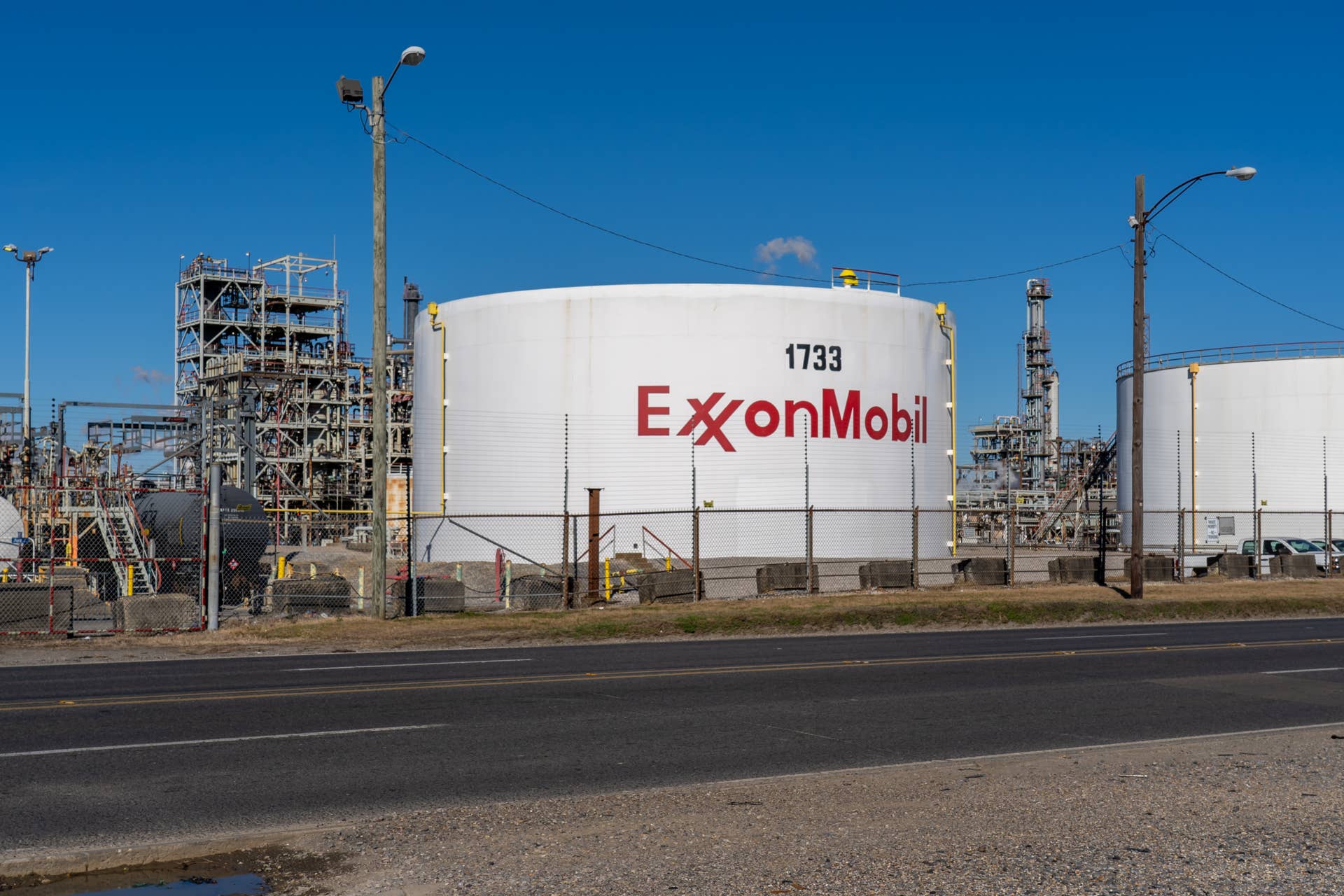
Bank of America downgraded ExxonMobil to Neutral from Buy on Tuesday, July 28, and simultaneously lifted its price target to $158 from $154, while keeping Buy-rated Chevron (CVX) as its preferred name, according to Seeking Alpha.
Read that again, because the two halves point in opposite directions. The bank now thinks the stock is worth more than it did in June and wants you to own less of it.
Related: Oil’s 4-month low hands Exxon, Chevron a fresh problem
That only makes sense if the price ran faster than the thesis. ExxonMobil climbed from $136.54 on June 26 to $156.94 by July 24, a gain of nearly 15%, according to Tickeron.
The upgrade six weeks earlier had a target of $154. The stock blew through it. Raising the target to $158 was housekeeping, not enthusiasm.
What struck me when I ran the two notes side by side is that the analyst is the same person. Jean Ann Salisbury upgraded Exxon to Buy on June 15 with a simple line, telling clients that “deal or no deal, we like the valuation for XOM here,” CNBC reported.
The deal now looks likelier, and the valuation no longer looks the same.
Why Chevron became the preferred oil major
Here is the counterintuitive core of the downgrade, and it is the reason I think this call deserves more attention than a routine rating change.
Bank of America is not warning that war is bad for Exxon. It is warning that peace is.
The bank flagged downside risk if a Middle East ceasefire arrives, noted that about 20% of Exxon’s production is currently offline in the region, and said uncertainty in Qatar limits how much of that volume comes back, according to GuruFocus.
That leaves Exxon squeezed from both sides. A ceasefire pushes crude lower, which hits the price side of the equation, and the volume recovery that should offset it is the part nobody can underwrite.
Chevron carries the same exposure to falling crude without the same trapped barrels. Bank of America had already argued the company offers better exposure to higher oil prices than Exxon because of its business mix, Stocktwits reported earlier this month.
A few numbers frame the trade my analysis keeps returning to:
- About 20% of Exxon’s Middle East production is currently offline, according to GuruFocus.
- Exxon trades at a price/earnings ratio near 23 against Chevron’s 32, according to 24/7 Wall St.
- Chevron reported negative free cash flow of $1.55 billion in the first quarter of 2026, according to 24/7 Wall St.
- Wall Street still rates Exxon 11 Buy, six Hold and zero Sell, with an average target of $169.18, according to Google Finance data.
The preference is relative, not absolute. Chevron is the more expensive stock with the weaker recent cash generation, and BofA still likes it better right now.
What Exxon’s July 31 earnings report could settle
Exxon reports second quarter results before the open on Friday, July 31, according to the company.
Management has already sketched the shape of the quarter. Second quarter earnings should land roughly $5 billion above the first quarter on stronger crude and better refining margins, with an unfavorable hedge timing effect costing about $3.9 billion that the company expects to unwind as Middle East supply disruptions ease, the Motley Fool reported.
So the print itself is not really the question. Exxon has beaten earnings estimates four straight quarters, and the war quarter is the easy one.
The question is what management says about the barrels that are not flowing.
If Darren Woods gives investors a credible timeline for restarting offline Middle East production, the downgrade ages badly and that $158 target starts looking conservative again. If he cannot, Bank of America gets to say it moved first.
For anyone holding Exxon for the dividend, and the streak now runs 43 consecutive years of growth, none of this is a reason to touch the position. Rating changes are trading signals, not retirement plans.
But if you bought Exxon this spring because a war made energy the only sector that worked, Friday morning is when you find out whether you own an oil company or a geopolitical option that is quietly expiring.
Related: Exxon Mobil signals massive profit spike but Wall Street is divided