Long-term Treasury bonds have delivered one of their worst stretches in modern history, with prices falling steadily since 2021 as inflation remained above the Federal Reserve’s target.
Investors who owned 10-year and 30-year government debt watched the value of those holdings erode quarter after quarter for five years running.
Now, one of Wall Street’s largest banks is making the case that the losing streak may be nearing its end, and the catalyst is not a rate cut or a recession.
Warsh’s inflation task force draws from the Volcker playbook
Bank of America’s Chief Investment Office laid out the argument in its July 20 Capital Market Outlook, a weekly report from the CIO Macro Strategy Team, alongside CIO Christopher Hyzy and Investment Strategist Kirsten Cabacungan.
The macro strategy section, credited to the CIO Macro Strategy Team, focuses on three economists Warsh chose to lead the “Inflation Frameworks” task force.
Greg Mankiw of Harvard University, Nobel Laureate Thomas Sargent of New York University, and William White of the C.D. Howe Institute each bring decades of research, arguing that the Fed lost its way by ignoring monetary aggregates.
More Bank of America:
- Bank of America warns America now has 2 economies
- Bank of America answers a tough stock market question
- Bank of America gives stock market investors a summer reality check
Mankiw published a 2024 paper indicating that Fed frameworks built on the Phillips Curve do not work in practice, the report noted.
He credited economist Jeremy Siegel with predicting the post-pandemic inflation surge by tracking M2, a broad measure of the money supply that includes cash, checking deposits, and savings accounts.
For the first time, the Fed’s semi-annual Monetary Policy Report released in July now includes a discussion of M2 in its evaluation of financial conditions, the BofA report stated.
The last Fed chairman to pay serious attention to money-supply data was Paul Volcker in the early 1980s, when he set targets for monetary growth that eventually broke double-digit inflation.
Why Warsh may accept 1% to 3% inflation as within target
BofA’s strategists argue that even without Warsh formally moving the target, the way the Fed interprets “2%” could shift.
They linked that framing to Belief #6 in Harvard economist Greg Mankiw’s 2024 paper, which argues that “a target of 2 percent is superior to a target of 2.0 percent.”
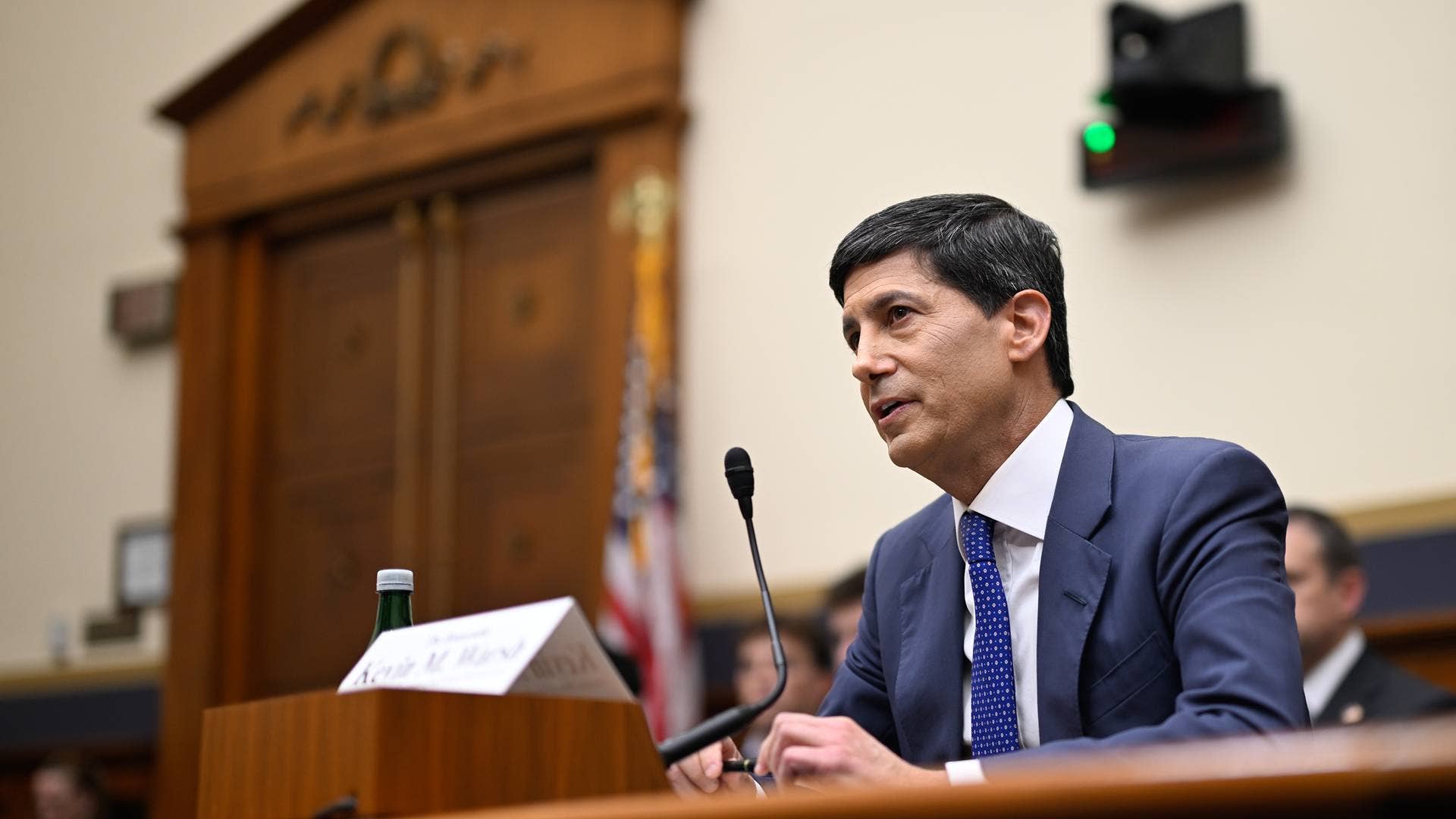
Federal Reserve Chairman Kevin Warsh said long-term inflation is primarily shaped by Fed decisions, CNBC reported.
While monthly price fluctuations are inevitable, especially in an unsettled world, underlying inflation over longer time horizons is determined largely by monetary policy.
Warsh said at the June press conference that any review of the 2% target is “outside the scope” of the task force until inflation is back at the goal level.
The implication, according to the report, is that the Fed would aim to keep inflation in a range of roughly 1% to 3%, allowing it to average around 2% over time.
That would mark a departure from recent policy, under which inflation ran persistently above 2% for five straight years because the Fed never allowed it to fall below target to compensate.
Morgan Stanley sees lower volatility at the long end of the curve
Bank of America is not alone in viewing the Warsh reforms as potentially transformative for bonds.
Jim Caron, chief investment officer of the Portfolio Solutions Group at Morgan Stanley Investment Management, told Fortune that the new chairman’s approach should reduce price swings in longer-dated Treasuries.
“If you can stabilize the volatility in the longer end by addressing the higher frequency of data in the shorter end… it could be a really good thing,” Caron explained.
He described the front end of the yield curve as a “shock absorber,” meaning two-year notes would absorb policy volatility, while longer-dated bonds settle into a calmer trading range.
That distinction matters for borrowers. Mortgage rates, corporate loan pricing, and auto financing all anchor to longer-term yields, so a more stable long end could eventually ease borrowing costs for households and businesses.
What the Volcker parallel means for bank stocks and bond funds
BofA’s investment implications section draws a direct comparison to the early 1980s Volcker era. Committing to a framework that explicitly controls inflation would likely end the five-year bear market in long-term Treasury bonds, the report stated.
It would also make financial sector stocks more attractive for the long run, and that conclusion aligns with the firm’s broader positioning.
BofA’s Chief Investment Office currently favors Financials, Industrials, and Consumer Discretionary sectors, with an overweight recommendation on equities overall.
A credible commitment to lower inflation would push long-term yields down over time, delivering price appreciation on top of current income for holders of 20-year-plus Treasury funds, according to BofA’s CIO Macro Strategy Team.
Inflation and geopolitics remain the wild cards
The BofA report does not ignore the risks. Cabacungan wrote in the Market View section that the durability of any shift depends heavily on whether inflation pressures stay contained.
Renewed military tensions in the Middle East and their impact on oil prices remain a threat to the inflation outlook, the report warned.
Second-quarter consumer price index inflation averaged roughly 3.8% year over year, well above the Fed’s stated target, with energy costs contributing significantly.
Warren Buffett offered a measured endorsement of Warsh in a July 15 CNBC “Squawk Box” interview, saying he believes the new chairman “will do the best he can at achieving the job he was assigned to do, which is 2% inflation and maintaining maximum employment.”
Whether the task forces produce a genuine structural shift or merely cosmetic changes to Fed communication will determine if the bond bear market truly ends, or simply pauses before its next leg down.