Every new piece of car technology eventually runs into the same awkward question. When it works, the carmaker takes the credit. When it fails, who takes the blame?
For self-driving software, the industry settled that question years ago, and it settled it in the carmaker’s favor. The marketing promises a machine that can handle the road. The fine print says you, the human in the seat, are still responsible for everything that happens.
That gap between the promise and the paperwork has filled courtrooms. Families who trusted the software and crashed anyway have spent years arguing that the company, not the driver, should pay. The carmakers have spent just as long arguing the opposite.
Tesla (TSLA) has become the face of that fight. Its Autopilot and Full Self-Driving systems are sold as the future of getting around, yet the company’s legal position has stayed remarkably consistent. The driver is in charge, so the driver is liable.
Then a rival did something Tesla has never been willing to do. On May 28, BYD (BYDDY) stood in front of a crowd in Shenzhen and said it would pay for the crashes.
Why self-driving crashes keep landing carmakers in court
Advanced driver-assistance systems, or ADAS, are the half-step between cruise control and a true robotaxi. They steer, brake, and change lanes, but regulators still classify most of them, including BYD’s and Tesla’s, as Level 2. That label means a human has to supervise at all times.
The trouble starts when drivers treat Level 2 like full autonomy. They trust the system, look away, and the result lands in a courtroom.
More Automotive:
- Hyundai admits deadly defect caused more injuries than previously known
- Consumer Reports names 5 popular EVs with the best real-world range
- Uber targets 50,000 robotaxis in major Rivian, Nvidia deals
The biggest example came out of Florida. A jury ordered Tesla to pay about $243 million over a 2019 crash in which a Model S on Autopilot struck a parked vehicle and killed a young woman, according to NBC News.
Tesla blamed the driver, who had reached for a dropped phone. The company called the suit “a fiction concocted by plaintiffs’ lawyers,” according to a statement reported by NBC News.
A federal judge upheld that award in February 2026, leaving the verdict in place as Tesla appeals.
Related: Tesla’s biggest Chinese rival just got hit by an ugly reality
What BYD is promising drivers about self-driving crashes
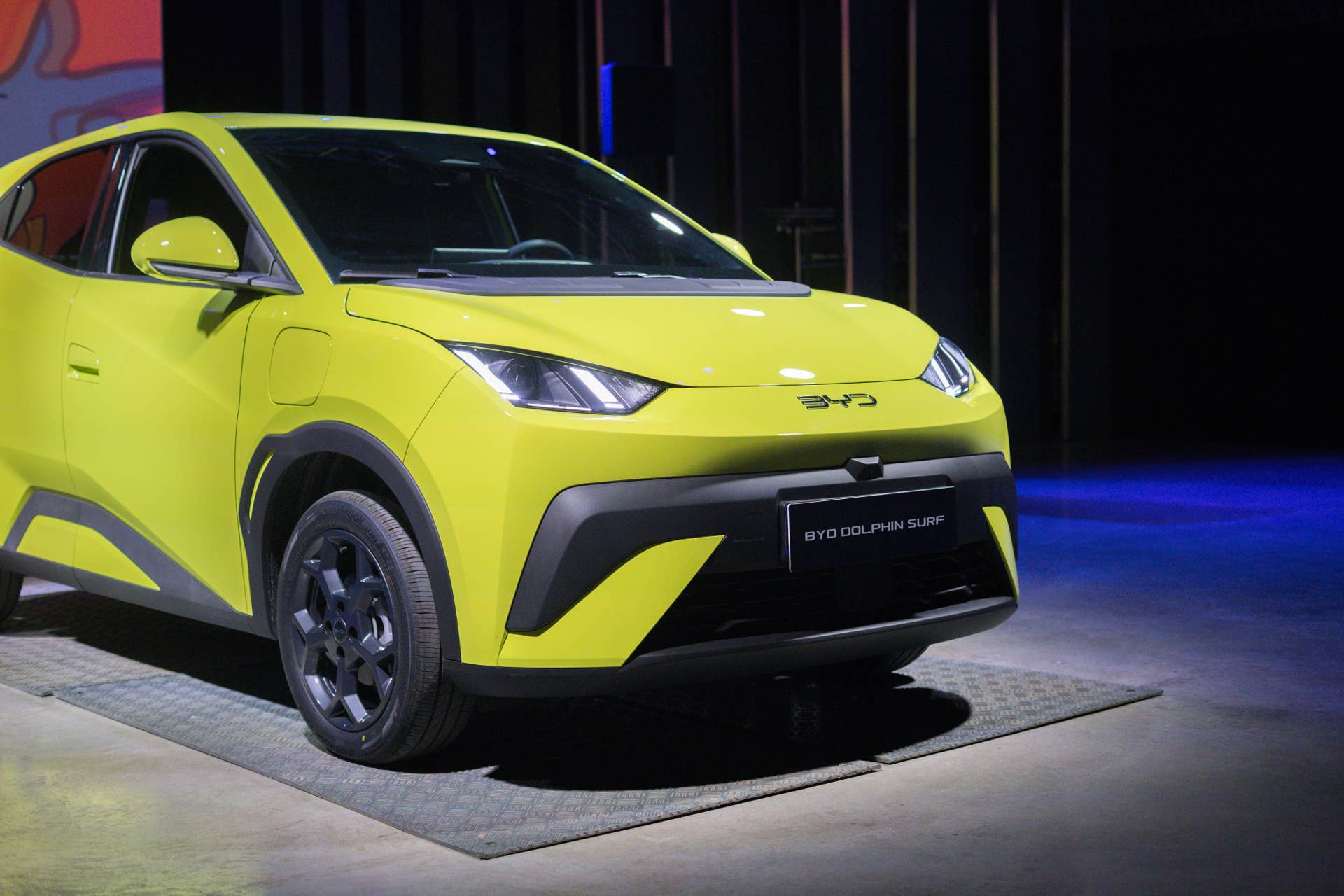
BYD took the industry’s default answer and threw it out. At its May 28 strategy event, the company said it would cover the cost of at-fault accidents that happen while its God’s Eye urban navigation feature is driving the car, according to Reuters.
God’s Eye is the system that handles city and highway navigation, traffic-light recognition, and automated parking on BYD cars.
The terms are unusually generous. There is no cap on the payout, drivers do not have to buy a separate insurance product, and a claim will not raise their premium the next year, according to Electrek.
Coverage runs for one year and applies to the God’s Eye A and B systems. Existing owners get it after an over-the-air software update, and the policy follows the car, not just the first buyer.
The risk is real because the technology is still officially Level 2. BYD chairman Wang Chuanfu said taking on that liability anyway shows the company’s “absolute confidence in its own technology,” according to Electrek.
How the two bets compare
- BYD will cover repairs, third-party damage, and injury costs with no payout cap when God’s Eye is driving, according to Electrek.
- Smart-parking use jumped from 21% to 93% after BYD took on liability for that feature, according to Electrek.
- BYD runs 3.15 million cars with assisted driving, generating 200 million kilometers of data a day, according to Electrive.
- A Florida jury ordered Tesla to pay about $243 million over a fatal Autopilot crash, according to NBC News.
Why Tesla keeps fighting this same battle in court
Tesla’s position has not moved. Its owner’s manual still tells drivers they are responsible for the car at all times, whether Full Self-Driving is switched on or off.
That stance is not unusual. It is the whole industry’s stance. When the software performs, it is a selling point. When it crashes, it is the driver’s mistake.
Federal safety regulators are circling the same problem. The National Highway Traffic Safety Administration, or NHTSA, opened an investigation into more than 2.8 million Teslas over Full Self-Driving in October 2025.
When I read BYD’s fine print against that backdrop, the shift is hard to miss. The company is not just marketing trust. It is putting money behind it.
The catch matters, too. BYD’s promise applies only in China, only for a year, and only when the system is used within the rules, which leaves the company room to argue about what counts as proper use.
BYD also frames this as confidence, not charity. Wang said the goal is “zero traffic accidents,” according to Reuters, and the company says its assisted-driving system already cuts crashes sharply.
Tesla’s exposure, by contrast, is now measured in nine-figure verdicts.
What BYD’s gamble means for your next car and Tesla stock
Here is why this matters whether you are shopping for a car or holding the stock.
For buyers, the question has always been whether to trust the software. BYD just changed the cost of that trust. If the carmaker pays when the system fails, the feature stops feeling like a risk you are renting and starts feeling like one the company stands behind.
That is a real change for the millions of drivers who have quietly wondered who eats the bill after a software-caused fender bender.
The price gap sharpens the point. BYD charges about $1,770 for the God’s Eye hardware, while Tesla’s comparable software runs roughly $9,400 in China, according to Electrek. One company is charging less and promising more.
For Tesla shareholders, my read is that the danger is not the lawsuit the company already lost. It is the new benchmark. BYD has turned “the driver is always responsible” from an industry rule into a competitive weakness.
It also lands while BYD is outselling rivals at home, which gives the pledge real weight rather than the look of a marketing gimmick.
The promise stops at China’s border for now. The real test is whether BYD extends it, and whether regulators and rivals elsewhere treat it as a stunt or a standard.
If it becomes a standard, the next carmaker that hands you a warning instead of a guarantee is going to have a much harder time selling you the future.
Related: BYD’s new EV draws 30,000 orders at a price US buyers can’t touch