More than 120 million travelers land in the United States each year on flights arriving from abroad.
Returning American citizens account for roughly 85 to 90 million of those inbound journeys, with foreign visitors making up the remainder, based on flight records from the Bureau of Transportation Statistics.
That high volume continues this year, with seven to eight million U.S. citizens flying home each month during peak travel periods, according to monthly data from the National Travel and Tourism Office.
Flying to the United States was anything but smooth and simple when Covid struck, upending international routes almost overnight. Boarding an overseas flight quickly became defined by mandatory testing, screening checkpoints, and sweeping health declarations overseen by the Centers for Disease Control and Prevention.
While those pandemic-era restrictions eventually disappeared, fresh overseas health risks are now bringing similar border paperwork back to airline check-in counters.
CDC adds new travel rule to prevent Ebola
Starting Nov. 3, 2026, at 11:59 p.m. EST, travelers flying to the United States from another country must sign a statement confirming that they have not been in the Democratic Republic of the Congo (DRC) during the previous 21 days.
The Centers for Disease Control and Prevention (CDC) introduced this rule on Oct. 22, 2026, to help prevent Ebola from entering the United States through air travel.
The rule applies to all passengers, including U.S. citizens, permanent residents, and visitors from other countries. It also applies to people who are only connecting through a U.S. airport on their way to another destination.
Travelers must complete the statement before boarding their flight. Anyone who does not complete it will not be allowed to board, unless they have an official exemption.
The CDC Order prohibits “the boarding of any passenger who is not otherwise subject to an exemption on any aircraft destined to the United States from a foreign country, unless the passenger presents signed attestation in paper or digital format confirming that the passenger has not been present in the Democratic Republic of the Congo (DRC) during the 21 days prior to boarding a flight to the United States,” according to the official document.
Travelers should know that even a short stop in the DRC counts. This includes connecting through an airport in the country, even if you stay inside the airport or on the plane.
If you have been in the DRC, you must wait until Day 22 after leaving before you can fly to the United States, unless you qualify for an official exemption.
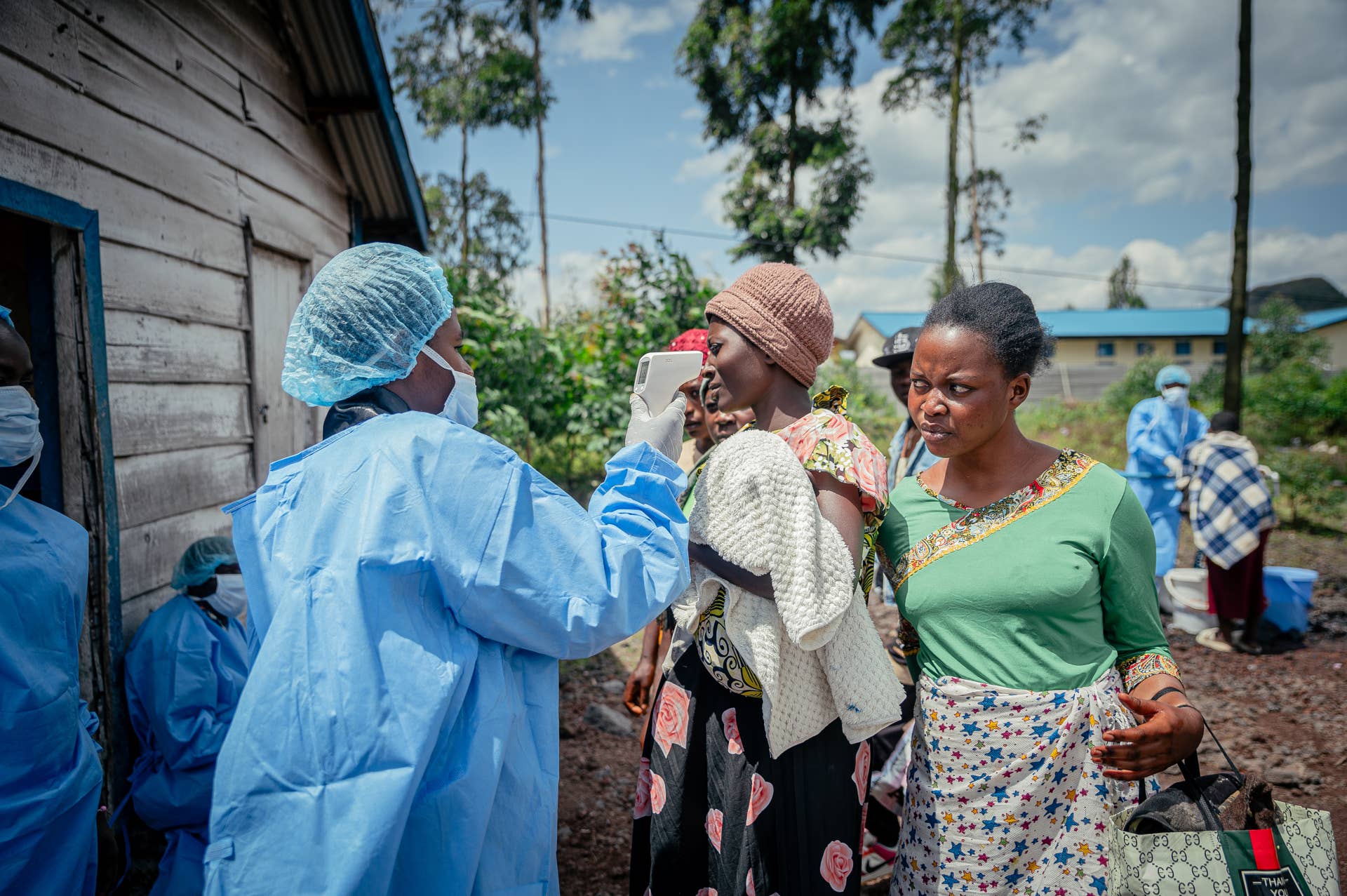
Travelers should know:
- Complete the required statement before boarding your flight.
- Answer truthfully. Knowingly providing false information could lead to fines or criminal charges.
- Every passenger needs a separate statement. A parent or guardian must complete it for a child under age 18.
- The rule applies to air travel only, not land border crossings or travel by sea.
- Check the latest CDC guidance before your trip in case the requirements change.
It’s not like Covid: what to know about Ebola
In May 2026, an Ebola outbreak was confirmed in the DRC and in Uganda. More importantly, the Bundibugyo strain of Ebola is one for which there is no vaccine or specific treatment, according to the World Health Organization (WHO).
As of Oct. 25, the DRC has reported a total of 9,964 confirmed cases, including 4,841 related deaths (from data up until Oct. 24).
“This outbreak is spreading substantially faster than previous Ebola outbreaks and is now the second-largest Ebola outbreak on record,” the CDC wrote.
The DRC is the epicenter of the outbreak and accounts for the vast majority of confirmed cases, far more than Uganda or any other affected country.
Ebola disease is caused by an infection with an orthoebolavirus, primarily found in sub-Saharan Africa. This virus can cause serious and often deadly diseases, with a fatality rate that has ranged from about 25% to 90% in past outbreaks and averages around 50%, according to the WHO.
In the current DRC outbreak, the reported deaths-to-confirmed-cases ratio is roughly 48.6% (4,841 of 9,964).
Ebola doesn’t spread the same way as respiratory viruses like the flu and Covid, meaning you can’t catch it from being near someone. People get infected through contact with the body fluids of an infected, sick, or deceased person.
CDC advised avoiding travel to Ituri and North Kivu in the DRC and nonessential travel to Haut-Uele and Tshopo. Travelers to other parts of the DRC or Uganda should take extra precautions and monitor for Ebola symptoms during travel and for 21 days after leaving.
Early symptoms of Ebola include fever, aches, pains, and fatigue, which can progress to diarrhea, vomiting, and unexplained bleeding, according to the CDC. Anyone who develops symptoms after traveling should seek medical care right away and tell the provider about their travel history.
A vaccine and specific treatments are available for the Zaire strain of the Ebola virus. Early medical care, including fluids and medicines to manage symptoms, can improve a patient’s chance of survival.
Related: American Airlines leaves empty seats while charging flyers more