Shrinkflation is on the rise, but Chili’s says its portion sizes are bucking the trend.
As costs continue to rise, many companies find themselves in the tricky position of having production expenses outweigh shelf prices.
There are two ways to rebalance those scales: companies can either charge the consumer more, or they can downsize the amount of product they’re offering for the already-established price.
Many restaurants have chosen the latter option. Just last week, I stopped into my favorite neighborhood pho spot for dinner, only to find that my favorite $15 lemongrass chicken bowl was not the vat I was used to, but a two-inch-deep soup bowl better suited for a multi-course starter.
Of course, I was disappointed — the portion size no longer feels worth the price, and the restaurant has lost its place in my regular rotation.
The U.S. Bureau of Labor Statistics says that of the two cost-adjustment actions, shrinkflation is more common because consumers tend to be more sensitive to increased prices than to downsized products.
And while that may be true to an extent, many shoppers are fed up with getting less bang for their buck. Almost half (48%) of global consumers find shrinkflation unacceptable, according to one study by market research firm Ipsos.
For diners in that camp, who are tired of handing over their hard-earned money for a lackluster burger or kiddie-sized portion of pasta, Chili’s says it’s still committed to serving up hearty portions at a reasonable price point.
Chili’s says diners are frustrated with shrinkflation
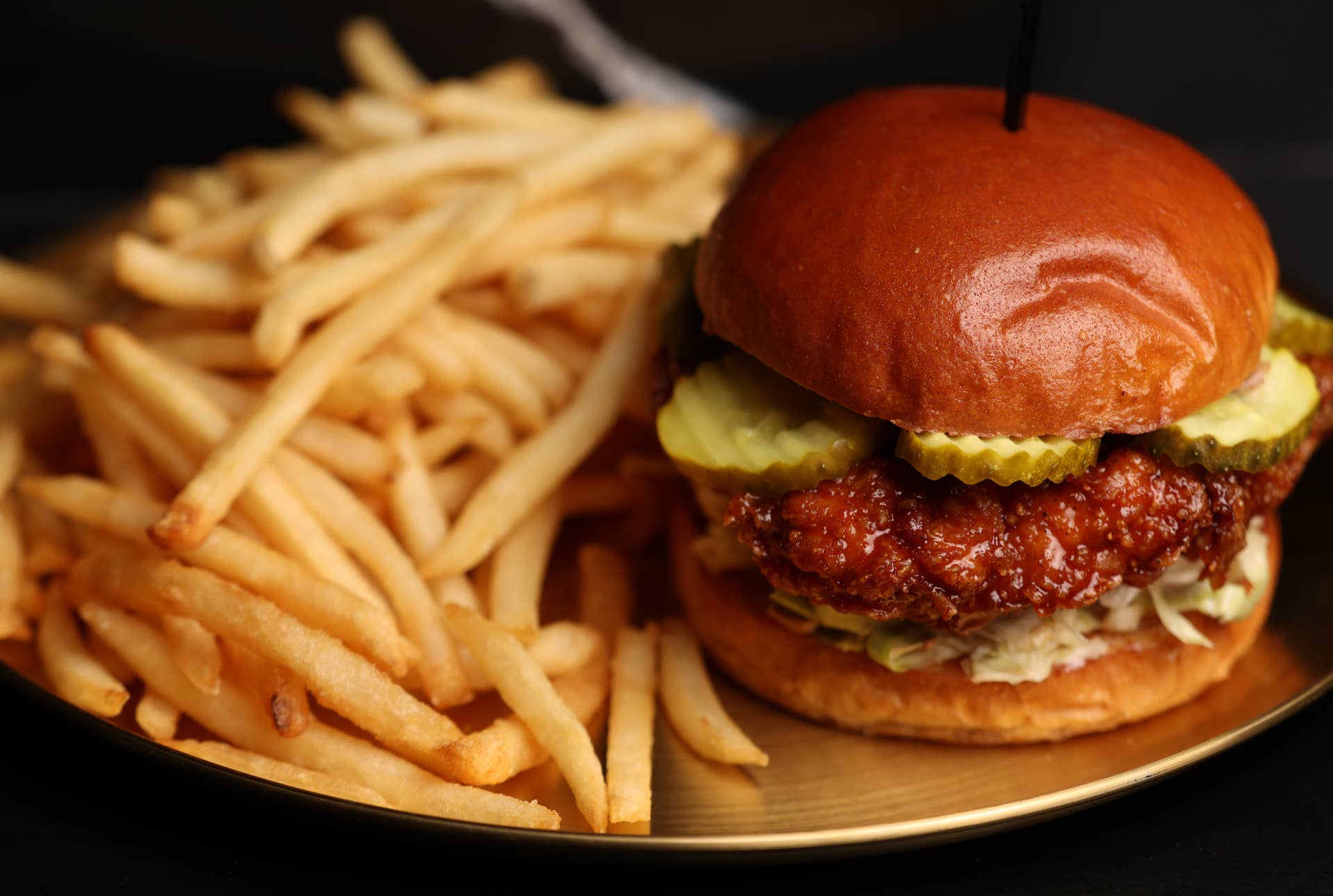
In April, Chili’s launched its chicken sandwich lineup. Advertised as a direct competitor to McDonald’s McCrispy, the fast casual chain bragged that its sandwiches were 80% bigger than the fast food chain’s.
“The sandwich platform was launched behind our Better Than Fast Food campaign, this time tapping into an insight we have seen among consumers frustrated with what they call shrinkflation, where portion size is reduced to offset rising input costs,” Brinker International CEO Kevin Hochman told investors on the company’s recent earnings call.
Brinker International is Chili’s parent company.
“We believe Chili’s over-the-top generous portions are a great way to resolve the biggest challenge facing our customers today,” he continued. “In a world of rising inflation, how do I get the best value for my money?”
While Chili’s isn’t putting a halt on price jumps — Brinker International CFO Mika Ware told investors they expect to see mid-single-digit increases over the next year — the company is committed to ensuring those jumps are worth it.
“Moving forward, you know, we’re always gonna make sure that we can price for inflation, but we’re gonna make sure we balance that with making sure value is there for our guests,” Ware told investors.
Getty Images
Restaurant value is about more than prices
A new report from Deloitte indicates that Chili’s is on to something with this value/price strategy.
There is a widely held belief that restaurants that offer the lowest-priced items are generally perceived as having the best value. In reality, Deloitte says, value perception is dependent on a lot more than that, especially for fast-casual chains like Chilis.
“In the restaurant sector, price explains 67% of what consumers perceive as value, leaving 33% to be influenced by non-price factors,” the report read. “Brands that consistently provide more value than expected for the price are thriving.”
For fast-casual chains, there are five key factors that play a role in diners’ assessment of value: food and service quality, food appearance and temperature, portion size, staff attitude, and speed. Of those factors, food quality and portion size are the biggest differentiators between restaurants that have a high value perception and those with a low value perception.
These MVP brands consistently outperform competitors and position themselves for faster revenue growth.
Chili’s says its strategy is paying off
Chili’s is already seeing the benefits of not giving in to shrinkflation and retaining its value perception with customers due to its generous portion sizes.
In its most recent earnings report, Brinker International reported a 4% increase in same-store sales growth for Chili’s. This marked its 20th consecutive quarter of same-store growth.
Hochman told Business Insider that this growth can be tied to Chili’s focus on providing the fundamentals like quality food, quick service, and clean restaurants.
More restaurants:
- Pizza Hut shuts down 49 restaurants
- Dunkin’ re-enters major market after nearly a decade
- Texas Roadhouse bets diners will pay more for one big reason
“These are the things nobody talks about,” he told the outlet. “But the everyday stuff, that makes us better and better, that’s kind of been our secret sauce.”
Lumped in with these fundamentals is Chili’s portion sizes and how those match up with what’s advertised to diners.
“If you go to a competitor and the same burger is a dollar less than ours, but it doesn’t look like it did in the ad, it doesn’t matter whether it was a dollar less,” Hochman told Business Insider. “In my mind, that’s money I should have spent somewhere else.”
“If we can have a superior product that tastes great and is a great value, people are going to come,” he added. “And then if we can execute it, they’re going to come back.”
At a time when many diners feel like they’re paying more and getting less, Chili’s refusal to compromise on portion sizes has kept it popular with diners and helped grow its bottom line.