On June 16, Brent crude was still sliding.
The global oil benchmark traded around $81.47 a barrel that morning, down 1.7% and at its lowest level since March 10, Reuters reported.
That extended June 15’s sharp selloff, when Brent settled 4.76% lower after President Donald Trump said the U.S. and Iran had signed a memorandum aimed at ending the Gulf war and reopening the Strait of Hormuz.
Investors had been scrambling, pricing oil as essentially a crisis trade. The market expected restricted Hormuz flows, tight supplies, and geopolitical risk to keep crude prices under a heavy premium.
Citi is now challenging that view.
The bank cut its Brent crude forecast, according to Reuters, arguing that the agreement could allow trade flows through the Strait of Hormuz to resume and normalize by mid- to late July.
For perspective, Hormuz is one of the world’s most critical oil chokepoints, and a reopening shifts the market from supply-shock pricing back to supply-and-demand pricing.
Moreover, Citi’s forecast cut actually builds on the same oil-market reset story I covered about Goldman Sachs last week. Goldman lowered its 2027 Brent view to $80 from $85, arguing that stronger supply and weaker demand could outlast the current war premium.
Nevertheless, the question now centers clearly on whether oil’s war premium is fading faster than investors expected.
Why Citi slashed its Brent crude forecast
Citi is moving swiftly to remove the war premium from oil.
The bank just slashed its Brent crude forecast to $75 a barrel for Q3 2026 and $70 for Q4 2026, with a longer-term view near $65 in 2027.
That’s a steep reversal following months in which traders treated Middle East supply risk as the main factor holding crude prices higher.
More Oil and Gas:
- Early Chevron stock investors now earn 12.1% dividend yield
- Chevron, Shell ink more surprising Venezuela deals
- AAA gas prices reveal a new trend for Americans
Citi previously lifted its Brent base-case forecast to $110 for Q2 2026, $95 for Q3 2026 and $80 for Q4 2026, after assuming Strait of Hormuz disruptions would last longer.
The new call, therefore, cuts Q3 by $20 a barrel and Q4 by $10 a barrel.
The logic has changed because the U.S.-Iran breakthrough appears to lower the risk of a lasting disruption of Hormuz.
If shipping flows normalize by mid- to late July, oil can stop trading primarily on geopolitical fears and return to supply-and-demand fundamentals.
That softer setup is important for investors, as lower Brent prices cool gasoline, transport, and inflationary pressures.
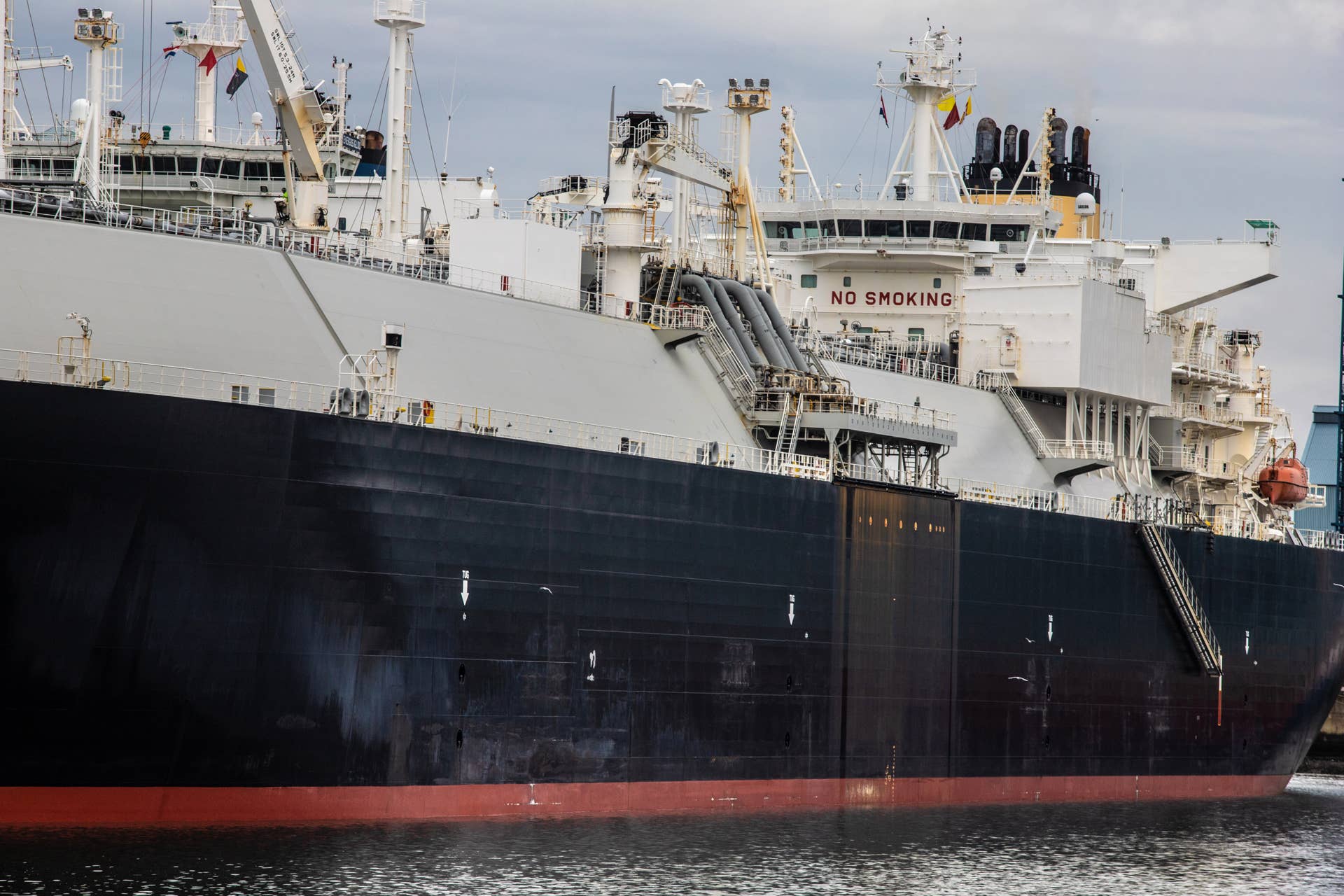
Boer/Bloomberg via Getty Images
Why easing Hormuz fears matters for oil prices
Hormuz fears matter a ton because the Strait isn’t just another shipping route.
It’s the world’s most important oil chokepoint, as mentioned earlier, with about 20 million barrels per day moving through it in 2024, according to the U.S. Energy Information Administration (EIA).
That is why crude reacted so quickly when the U.S.-Iran breakthrough lowered fears of a longer disruption.
The move highlights how the recent oil rally was built on fear, not just supply and demand.
Citi’s new view adds to that pressure. The bank sees a 60% probability that the agreement leads to normalized Hormuz trade flows by mid- to late July.
It also said per-barrel prices could be $10 to $15 lower if the market fully priced in that shift. For investors, that turns oil from an inflation shock risk into a potential disinflation catalyst.
What Citi’s Brent call means for investors
Citi’s Brent cut matters, as oil prices feed directly into the inflation story that investors just cannot ignore.
The latest Consumer Price Index report showed U.S. consumer prices rose 4.2% in May from a year earlier, while energy prices jumped 23.5% and gasoline surged 40.5%.
Additionally, producer prices remained hot, with final-demand PPI up 6.5% over the past 12 months and goods prices rising 2.8% in May.
If oil keeps easing, investors will likely start pricing less pressure on gasoline, freight, airline fares, and corporate input costs.
That helps transports, retailers, airlines, and consumer-discretionary stocks, while also supporting tech, AI names, and other growth stocks that depend on lower rate expectations and higher valuation multiples.
Bonds are the other pressure point.
The May jobs report showed payrolls rose by 172,000 and unemployment held at 4.3%, giving the Fed less reason to panic about growth.
Chair Kevin Warsh’s first Fed meeting and press conference are now the next major catalyst, Reuters notes.
The question remains, however, about whether falling oil prices can cool inflation fast enough to prevent the Fed from sounding more hawkish.
Related: Elon Musk drops trillion-dollar message to SpaceX investors