After nearly two decades in business, a longtime bakery has closed its remaining storefronts following years of financial turmoil, a bankruptcy filing, and mounting pressure on its operations.
The company had once expanded beyond its local roots, distributing its products across multiple states and building a retail presence. Now, customers will no longer be able to visit any of its physical stores.
Founded in 2006, The Cookie Factory is a regional New York-based bakery known for its cookies, pastries, cakes, and baked goods.
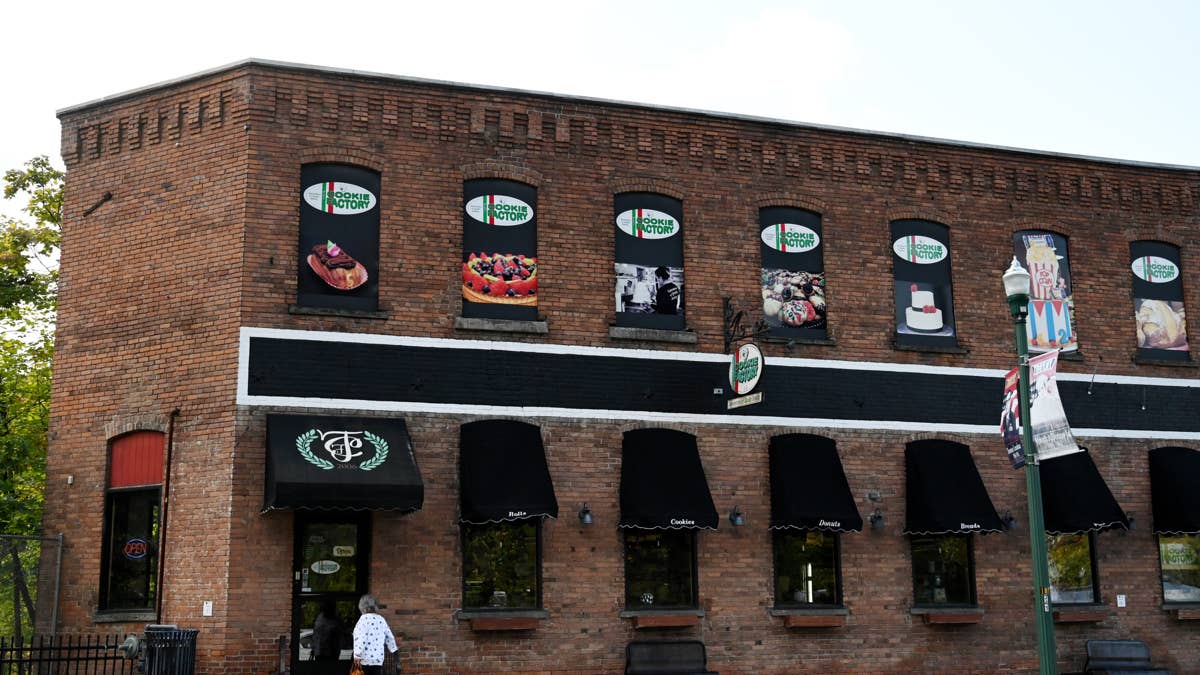
The Cookie Factory closes all physical locations
The Cookie Factory has closed all of its remaining retail locations, ending a 20-year run of physical stores. Its website is no longer available, which has also terminated the company’s nationwide shipping operations.
The affected locations are:
- Collar City: 520 Congress St, Troy, NY 12180
- Halfmoon: 1705 US-9, Clifton Park, NY 12065
The company had previously distributed its products beyond New York stores, with its baked goods available in as many as 25 states.
Although its retail locations have closed, The Cookie Factory’s products will continue to be sold at select retailers, including Hannaford Supermarkets, Stewart’s Shops, and other locations.
Related: Iconic seafood chain brings back controversial deal amid closures
The company owners, brothers Chris and Joe Alberino, announced the closure in a farewell message on Facebook.
“As we close this chapter, we do so with a tremendous amount of gratitude and an unbelievable collection of memories that we will carry with us forever,” the owners wrote in the statement.
The announcement came after the company had temporarily closed its stores for vacation from Aug. 17 through Aug. 24. The locations did not reopen.
Why The Cookie Factory is closing its stores
The Cookie Factory has not provided a specific reason for permanently closing its retail locations. However, the business has faced a series of financial and operational challenges in recent years.
The company’s financial problems became public in 2023, after a failed merger with a former business partner. The dispute was followed by significant unpaid bills and claims from suppliers and other creditors.
An entity affiliated with The Cookie Factory filed for voluntary Chapter 7 bankruptcy in September 2024 in the U.S. Bankruptcy Court for the Northern District of New York. The bankruptcy filing sought liquidation, but a judge subsequently allowed the bakery to continue operating while the case proceeded.
The bankruptcy proceedings detailed more than $2 million in claims involving lenders, vendors, and suppliers. The company’s financial difficulties were also compounded by fallout from a 2023 product recall, according to the filing.
The business faced another major setback in late 2024 when a portion of the roof at its primary commercial bakery facility on River Street in Troy collapsed, creating an additional operational challenge.
The financial pressure continued in 2025 and 2026. A foreclosure action involving the company’s Troy property resulted in a judgment of roughly $2.25 million, according to a 2026 court filing.
The company’s River Street commercial bakery was eventually sold at auction in June 2026.
With the company’s remaining retail locations now closed, The Cookie Factory’s physical retail presence has come to an end.
Rising costs continue to pressure food-service operators
The challenges facing The Cookie Factory come as food-service operators continue to deal with elevated costs and uneven customer traffic.
The National Restaurant Association estimates that total expenses for an average restaurant increased 36% between 2019 and 2026. Average hourly earnings for restaurant employees have risen 41% since February 2020, while average wholesale food prices are up 35% over the same period.
Those higher costs have continued to put pressure on restaurant profitability. The National Restaurant Association reported that 33% of operators said their restaurants were not profitable during the first half of 2026.
Consumer traffic has also remained uneven. The association said inflation-adjusted restaurant sales are projected to increase just 0.8% in 2026, while higher menu prices have accounted for much of the industry’s nominal sales growth.
For specialty dessert businesses, those pressures can be particularly important because products such as cookies, cakes, and other treats are generally discretionary purchases rather than everyday necessities.
Competition can add another challenge as consumers have more options for occasional dessert purchases.
Here’s some of my previous coverage of store closures:
- Dessert chain quietly closes locations, exits multiple markets
- Popular beverage chain closing multiple locations nationwide
- Popular frozen yogurt chain closes most locations
Business Insider Senior Reporter and industry expert Katherine Ortiz has previously pointed to customer visit frequency as a key factor in determining which specialty dessert concepts can sustain their businesses.
“How often people realistically want dessert is what ultimately determines which chains endure and which burn out,” said Ortiz.
“When too many concepts flood the market offering the same product for the same narrow occasion, the model goes stale, no matter how beloved the brand once was.”
For The Cookie Factory, years of financial problems, property-related setbacks, and operating pressure have now brought an end to its physical retail footprint. Its baked goods, however, will remain available through select retail partners.