With prices rising, budgets tightening, and increased job security fears, Americans have become cautious about where they buy their groceries.
How people actually feel was captured by the Food Industry Association’s (FMI) June Grocery Shopper Snapshot. Some of the data from the survey of 1,516 grocery shoppers includes:
- By a margin of 2 to 1, Americans say they are worse off, as opposed to better off, than they were one year ago with respect to their household finances.
- Only 26% of shoppers say they are living comfortably and can save money.
- Macroeconomic issues are weighing on shoppers as concerns about inflation (71% very or extremely) and the overall U.S. economy (66%) reached new highs.
- The job market is a concern for nearly half of grocery shoppers (49%).
Gas prices have also forced people to make changes.
“Americans’ concerns about gas prices spiked in the past six months, from 43% very or extremely concerned in December to 69% this month. A similar proportion of grocery shoppers (70%) say their spending on gas has increased in the first half of 2026,” FMI reported.
Against that backdrop, some clear winners have emerged in the grocery space, with one group of shoppers picking Costco, while two others opted for Walmart.
Costco and Walmart top new grocery survey
Costco was the grocery retailer where the largest share of higher-income Americans reported doing most of their grocery shopping, according to a recent YouGov survey.
“Eleven percent of respondents earning at least $150,000 a year said Costco was their primary grocery store. Fourteen percent selected “other,” while Kroger followed at 10% and Walmart Supercenter at 8%,” the survey showed,
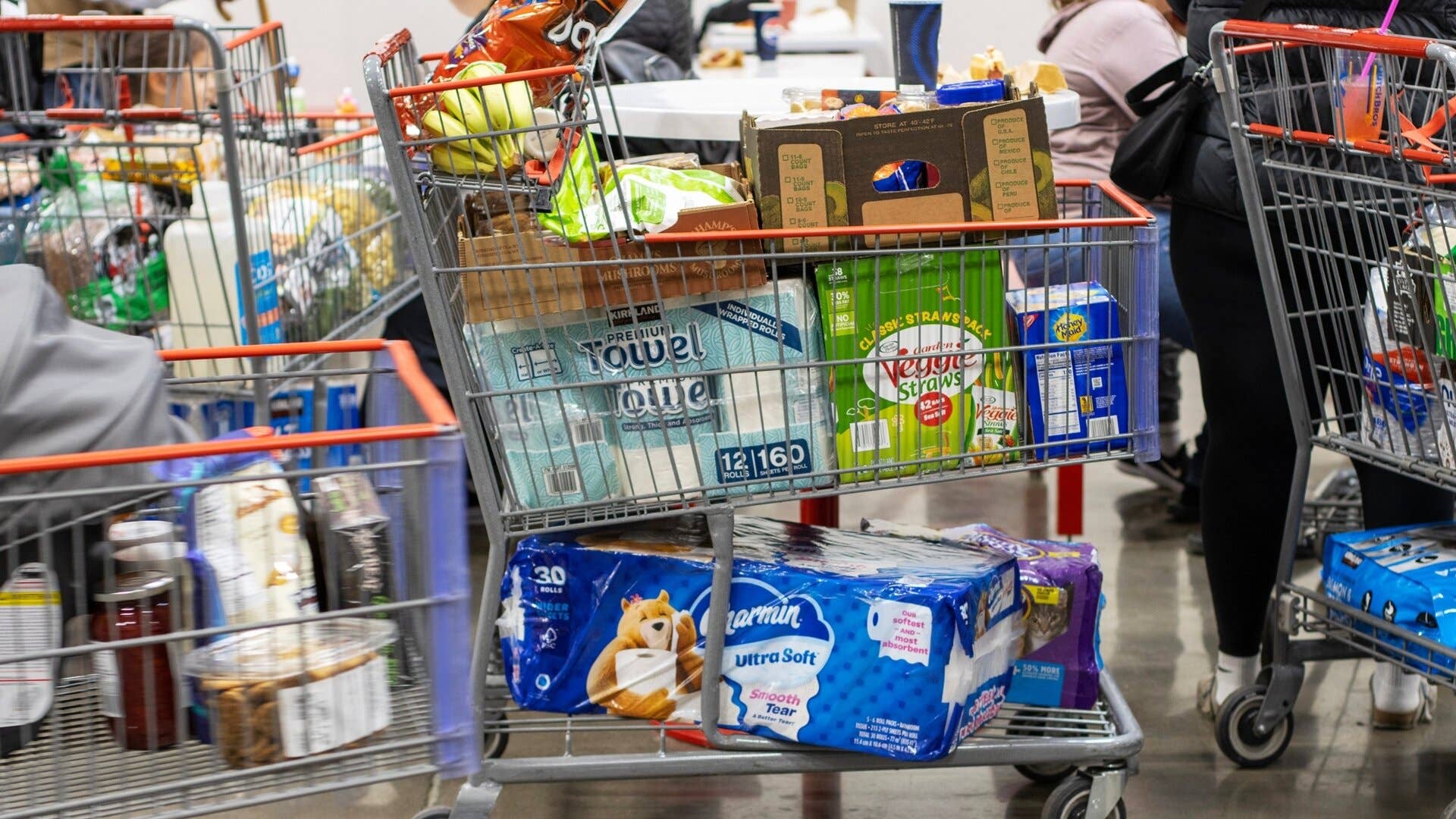
The warehouse retailer, known for its bulk goods and discounted prices, topped the rankings despite requiring shoppers to pay an annual membership fee.
California-based food industry analyst Phil Lempert explained to Fox News Digital why Costco was winning over these customers.
“Wealthier households typically are larger households,” he said. “So it fits perfectly with the model of Costco having larger sizes. Also, wealthier people shop more often, and what they want is value. One of the reasons they have more money is that they’re frugal.”
Just because a household has money does not mean its members shop at the priciest chains.
More Costco:
- Costco made several changes to get members to its warehouses more
- Costco drops a surprising new exclusive snack
- Costco solves major frustration for members
“Even though the hype says that these wealthier shoppers are going to the Erewhons and the Whole Foods of the world, not necessarily,” Lempert said.
Taken together, the FMI and YouGov surveys suggest consumers aren’t simply looking for lower prices. They’re concentrating more of their grocery spending at retailers that deliver the strongest overall value, even if shopping there requires paying an annual membership fee.
YouGov’s data is drawn from responses collected between June 2025 and June 2026, using a 52-week dataset updated weekly. Data is nationally representative of adults (18+) in the US and weighted by age, gender, education, region, and race.
Shutterstock
Shoppers have changed how they buy groceries
“The U.S. grocery sector grew in 2025, but growth was not volume-led. Grocery sales increased 1.2%, driven by price increases of 2.2%, while volume declined. The market grew in dollars, but shoppers bought fewer units,” according to McKinsey’s The State of Grocery North America 2026, released on June 17.
McKinsey’s reporting showed that shopping habits have changed.
“Consumers are no longer shopping one way for all needs but splitting trips across value stock-ups, fresh and prepared-food occasions, convenience-led delivery, wellness-driven baskets, and fill-in missions. National players continue to benefit from scale, value, innovation, and digital capabilities, while regional players remain powerful where they have distinctive fresh, prepared, and in-store propositions,” the consultancy wrote.
Consumers, the report noted, are looking at value in a different way.
“That represents the central shift in North American grocery: Advantage is moving from individual levers to connected systems. Value now depends on the connection between pricing, key value items, promotions, loyalty, personalization, and private brands,” McKinsey added.
Shoppers make value-based choices
As the person who cooks the most in my household, I remain a Fresh Market shopper, but I do look at what’s on sale when I walk into the store. And, while I have picked a pricier chain, I’m generally opting for something, at least the main protein I buy for the meal I’m cooking, to be discounted.
Gas prices have played a role in changing supermarket habits, as noted above, and a March survey from Snipp backed that up.
“Over 31% respondents said gas price increases have significantly or extremely impacted their household budget. Only 13% said they felt no impact at all. More telling: 66.4% have already changed their overall spending habits as a direct result with 20.6% making significant changes and 45.8% making moderate ones,” the data showed.
This is not a low-income phenomenon.
“The breadth of impact across the full income distribution means the pressure is showing up in household budgets everywhere,” according to Snipp.
People are spending more while also cutting back.
“A counterintuitive but important finding: 37.6% of shoppers report their weekly grocery spend has increased compared to three months ago, yet simultaneously, the majority are actively cutting back. The explanation: grocery prices are rising faster than shoppers can compensate through behavior change, so many are spending more while still trying to spend less,” Snipp added.