It’s easy to blame rising airfares on higher fuel prices, and those certainly aren’t helping.
Delta Air Lines CEO Edward Bastian explained that rising fuel costs could pave the way for higher prices going forward, not just while costs are elevated.
“Fuel has been the impetus for the industry to move quickly, to adjust the pricing environment. But given the fact that, you know, the market has accepted, these price points and we still consider, in the overall basket of consumer product and service that air travel is reasonably affordable,” he said during the airline’s third-quarter earnings call.
He made it clear that Delta’s customers have weathered the current economic downturn well.
“The health of our targeted consumers, the thing we mentioned about top 40% of U.S. households has accumulated $40 trillion of wealth,” he added. “And travel is one of their very top priorities.”
As more flights get cut, prices go up
While higher fuel costs provide a justification for higher prices, fewer choices have fueled demand.
For example, I recently booked a short flight from Fort Lauderdale to New York for a business meeting. There was only one nonstop that fit my limited travel window, and it was roughly twice what I paid for the same flight last year.
That’s anecdotal, but it matches what the airlines are saying.
United CFO Michael Leskinen said at a September industry conference that airlines aren’t seeing signs that demand is weakening, even with higher fares and fees.
More Airlines:
- Another low-cost airline files for bankruptcy protection
- JetBlue, Southwest Airlines, and Allegiant make pricing move
- Southwest Airlines kills routes to multiple markets
“There are some routes that were on the lower end (of profitability), they get pushed into not profitable when fuel spikes like this,” Leskinen said.
That’s something Delta’s Chief Commercial Officer Joe Esposito addressed during the Q3 call.
“When you look at the domestic system, quite a bit of capacity has come out as carriers have worked to improve their own margins and operations. So and in our hubs, competitive capacity is actually positioned down,” he said.
Fewer flights generally mean higher prices.
“This is an environment that is really challenging for the low-end customer who are trying to find low priced airfares,” Zach Griff, author of airline newsletter From the Tray Table told CNN. “The cheap fares are going away, and the fares are increasing too.”
Shutterstock/TheStreet
The death of Spirit Airlines removed a key price check
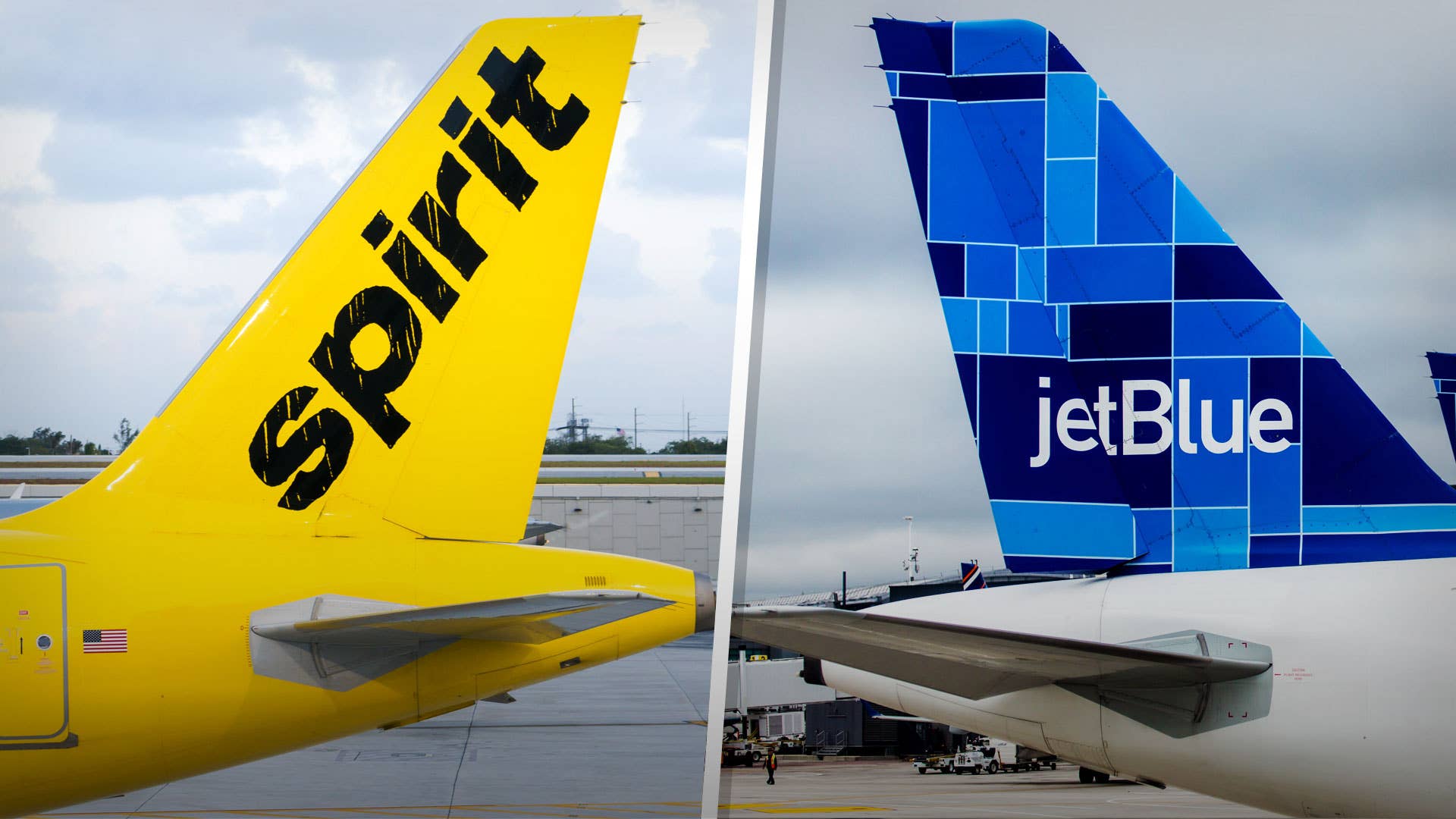
While discount carriers still exist, the loss of Spirit Airlines removed a key option for consumers that the U.S. federal government once argued helped keep prices down. The comments were made in response to Spirit’s attempted merger with JetBlue.
“The rest of the industry — including JetBlue — has been forced to respond to Spirit’s innovations and low prices. Spirit estimates that when it starts flying a route, average fares fall by 17%; JetBlue estimates that when Spirit stops flying a route, average fares go up by 30%,” according to a Justice Department Lawsuit.
Ultimately, the merger was blocked. Spirit Airlines later filed for Chapter 11 bankruptcy protection before eventually shutting down, eliminating a major source of low-cost competition in the airline industry.
Ultimately, the merger was blocked, leading Spirit Airlines to eventually shut down.
As a frequent Spirit Airlines customer, its loss actually led to me flying less because its prices sometimes made trips affordable that I otherwise would have passed on.
Spirit was often my lowest-cost option to Las Vegas, for example, and being able to hop on a $300 to $400 flight from Fort Lauderdale to Sin City made a quick weekend trip reasonable.
Yes, the seats were uncomfortable, and facing added charges for bags, seat assignments, soda, and more definitely justified the airline’s poor reputation. Still, the low price mattered to me, and likely many others.
Spirit’s existence also kept airfares down across carriers.
“A Business Insider analysis of domestic airline schedules and fare data from the aviation analytics company Cirium found that airfares rose an average of about $19, or 14%, across the roughly 90 routes Spirit exited between 2024 and 2025, as consumers faced fewer options,” Business Insider reported.
Fuel prices may justify longer-term price increases
While rising fuel prices have provided cover for raising prices, a drop may not mean prices go down.
“This year’s fuel spike has accelerated change across the industry. Resilient demand and greater focus on profitability are enabling the industry to recover higher fuel costs more quickly,” Bastian said.
He admitted that a drop in fuel costs, won’t necessarily be given back to flyers.
“Even when fuel prices eventually moderate and they will, we believe our underlying revenue strength is sustainable, giving strong preference for the Delta brand and the diversity of our high-value revenue streams,” he added.
So far, higher prices have not hurt the airline.
“Demand remains strong and broad-based as we enter the final quarter of the year. That strength is reflected in forward cash sales, which grew nearly 20% during the September quarter, the highest quarterly growth since 2022. These trends support our outlook for December quarter revenue growth of approximately 20% year-over-year on roughly 3% capacity growth,” Esposito said.
Related: Delta CEO has firm message for travelers worried about flight safety