Delta Air Lines is making big changes to its flight offerings, and the pattern points to a broader retreat from price-sensitive leisure markets.
The carrier recently made headlines for scaling back operations across its network, trimming routes out of New York (JFK) and completely exiting the St. Vincent market after less than a year.
Delta will make its final flight to St. Vincent on Sept. 5, 2026, and will not resume the route in December as originally planned, reported TheStreet’s travel journalist Veronika Bondarenko.
Now, the airline is grabbing attention again over this year’s move to drop some low-margin routes.
Delta Air Lines cancels two Las Vegas routes, reduces service on one
Earlier this year, Delta Air Lines cut Las Vegas flights from two destinations in California, with the last flight operated Jan. 11, 2026, according to data from AeroRoutes.
Delta Air Lines Las Vegas route cuts and reductions:
|
Route |
Service Adjustment |
Impact on Travelers |
|
LAS to Sacramento (SMF) |
Permanent cancellation of daily service |
Travelers redirected through Salt Lake City or Los Angeles hubs |
|
LAS to San Jose (SJC) |
Permanent cancellation of daily service |
Flight options eliminated; shift to regional connecting routes |
|
LAS to San Diego (SAN) |
Service frequency reduction |
Daily departures reduced from 2x to 1x, limiting schedule flexibility for business and leisure flyers |
Travel journalists at outlets such as TheTravel view these cuts as part of a broader retreat from low-margin leisure traffic to prioritize higher-yield, premium travelers.
Why has Delta canceled these Las Vegas routes?
A Delta spokesperson said the cuts were made to better “align with consumer demand,” according to The Points Guy.
On the operational side, these short-haul flights out of Sacramento and San Jose were hard to justify because price-sensitive travelers rarely purchased premium upgrades, according to TheTravel’s Justin Fenwick.
Related: A new low-cost airline is launching flights starting at $25
Importantly, the Las Vegas tourism industry has been declining for a while now. Visitor volume for the full year 2025 amounted to 38.55 million, marking a year-over-year decline of 7.5%, according to the Las Vegas Convention and Visitors Authority. This reflects 12 straight months of declining visitation.
The slowdown was already visible at mid-year. LVCVA data showed a 7% drop to 19.6 million visitors in the first half of 2025 alone, prompting Courtney Miller, managing director at aviation advisers Visual Approach Analytics, to write in an August 2025 report that the trend could signal a broader slowdown in U.S. leisure travel.
“When the belt gets tightened as travelers consider a slowdown, Vegas is one of the first places that feels the pain,” he wrote.
By scaling back its low-margin leisure routes, Delta is able to focus on longer transcontinental flights that warrant higher fares. While budget airlines could take over these short hauls, Delta can push its primary hubs and concentrate on higher-paying passengers.
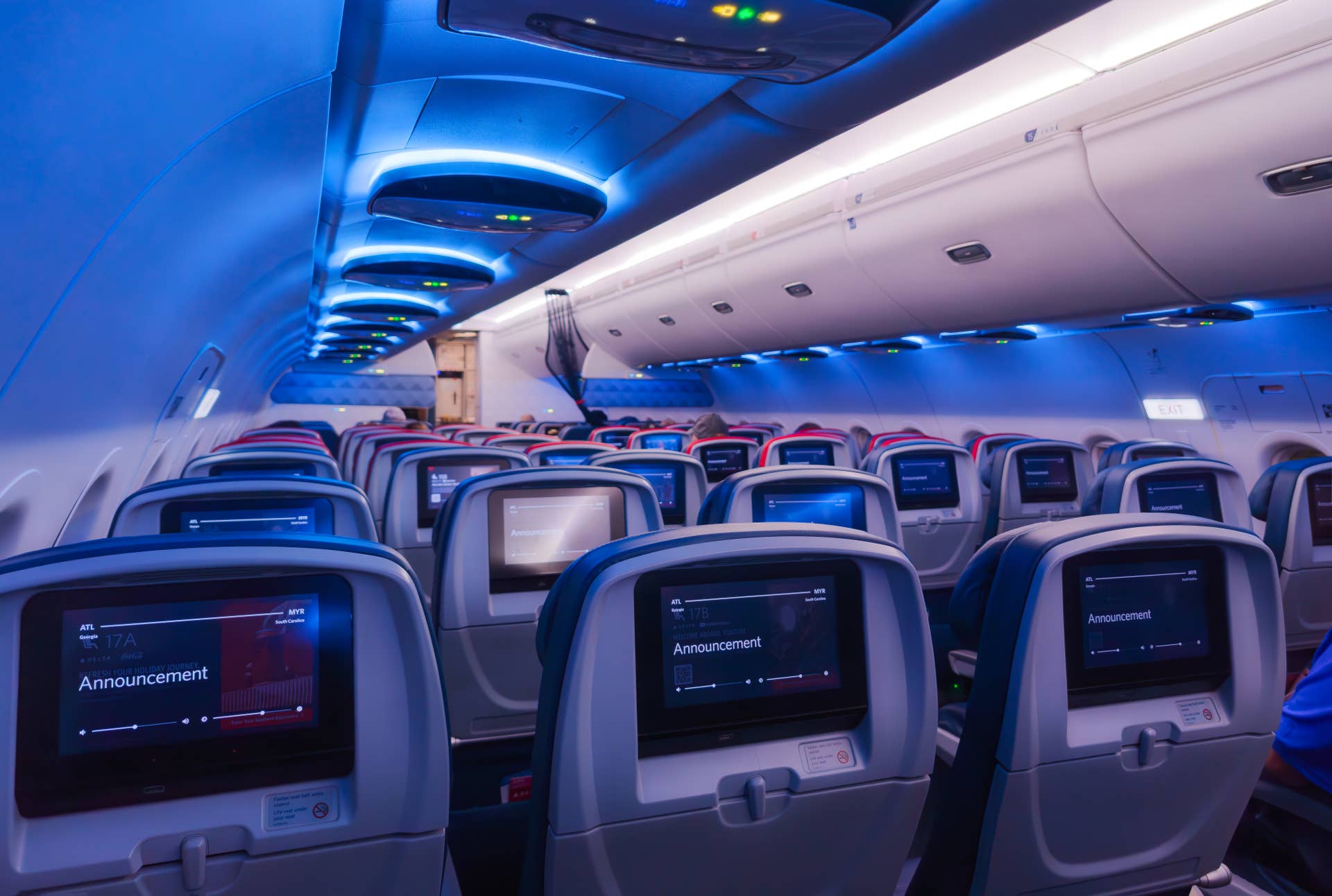
Delta is betting on premium flyers with recent upgrades
The Vegas cuts arrive alongside other network trims out of JFK and Delta’s exit from St. Vincent, suggesting the airline is taking a hard look at any route that doesn’t reliably deliver premium-fare traffic.
Additionally, rising fuel prices are putting pressure across the entire aviation industry.
“With the recent fuel price increases, every route is potentially on the chopping block,” Zach Griff, an aviation journalist and author of the travel newsletter From the Tray Table, recently told AFAR.
Delta’s premium bet shows up not just in what it’s cutting, but in what it’s adding.
Delta has also expanded its Premium Select cabin on flights between New York’s John F. Kennedy International Airport (JFK) and San Francisco International Airport (SFO), flown on Boeing 767 aircraft outfitted for a more upscale experience, according to The Points Guy.
Trimming short-haul, price-sensitive routes to Northern California while adding a premium cabin to longer-haul routes suggests another bet on premium travelers, instead of overall passenger volume.
Related: TSA says ‘yes’ to medical marijuana on planes, but there’s a catch