As consumer budgets tighten, the number of players in the bargain sector has continued to grow.
In the last few months alone, Amazon has launched its “Haul” category designed to compete with Temu and Shein, and Ollie’s has shared plans to open 100 new stores in 2026. The list of retailers looking to capture a piece of that price-conscious customer segment could go on and on.
But in an increasingly crowded market, one budget retailer stands head and shoulders above the rest: Dollar General.
Dollar General saw a 4.9% increase in same-store visits in January 2026 compared to the same period last year, according to data from Placer.ai. Some 25% of those shoppers are making frequent (defined as 4+ visits per month) trips to their preferred location, and an average trip lasts at least 20 minutes.
Those statistics seem jaw-dropping at a time when consumers are tightening their purse strings and more regularly turning to e-commerce platforms over brick-and-mortar browsing.
So what is Dollar General doing right to see this level of growth? A couple of different things.
Dollar General is expanding its grocery offerings
For starters, Dollar General (DG) has drastically increased its grocery offerings over the last year.
At the start of 2025, the company shared it would add about 100 new private-label products to its shelves.
These included everything from pantry staples like mustard and maple syrup to treat items such as flavored coffee syrups and ice cream.
Related: Dollar General makes key move Target, Walmart can’t beat
Select stores also began offering fresh produce, dairy, and meat products, which allowed Dollar General to more directly compete with retailers such as Aldi and Walmart.
An October 2025 report from Placer.ai found that these changes made a major difference in the number of visits Dollar General received. From Q2 2019 to Q2 2025, Dollar General saw a 3% increase in foot traffic, while traditional grocery retailers saw a 4% drop.
The fact that Dollar General’s grocery prices are typically lower than those of traditional grocery retailers also helps with customer attraction.
“Accessibility is the number one driver. We want to meet the customer where they’re at,” Dollar General Vice President of Food & Fresh Merchandising Allen Warch told Food52.
“We want to be a solution for real meals — whether that’s dinner tonight or filling a pantry for the week.”
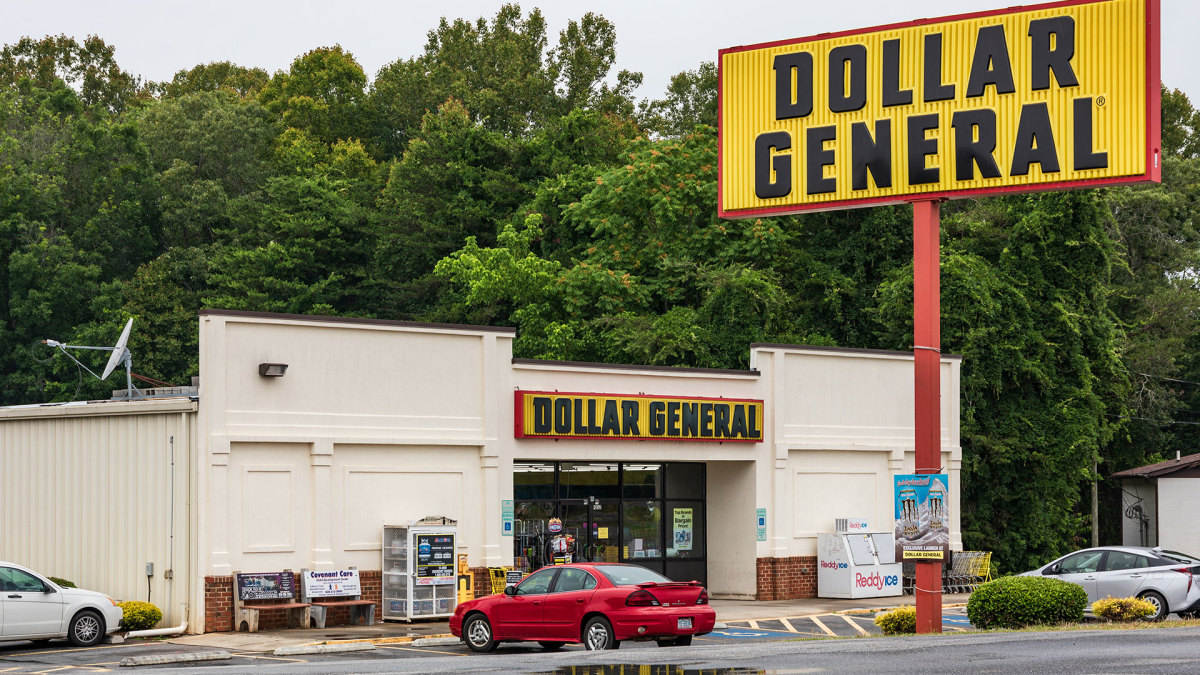
Shutterstock
Dollar General has chosen its locations carefully
The other thing Dollar General has done right is develop a clear strategy around where it places its physical locations.
“We are uniquely positioned to serve an underserved customer [in] rural America, where approximately 80% of our current store base serves towns of 20,000 or fewer people,” CEO Todd Vasos said during the company’s Q3 2025 earnings call.
Related: Dollar Tree ditches core customers for the rich
Because these smaller towns generally have fewer retail options than crowded metropolises like Chicago or New York City, Dollar General has made itself the default shopping destination for residents. This has allowed it to capture a larger market share than, say, a Stop & Shop in Boston.
It’s a strategy the company plans to continue over the next fiscal year.
“We plan to build on that strength in 2026 with plans to execute approximately 4,730 real estate projects in total, including 450 new store openings in the U.S.,” Vasos said on December’s call.
“We anticipate that the majority of our new stores next year will be in one of our 8,500 sq ft formats and will be predominantly in rural communities,” he continued.
5 states with most Dollar general stores, 2025:
- Texas: 1,949
- Georgia: 1,134
- North Carolina: 1,121
- Florida: 1,081
- Tennessee: 1,032
Source: Statista