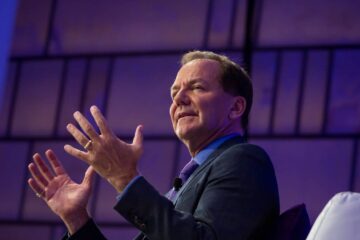
David Rosenberg called the 2007 financial crisis. He missed the 2022-2023 recession call he was confident about, and he admitted it publicly. Now he is back with a new warning, and this time he says the safety net that saved the economy in 2022 is gone.
The founder of Rosenberg Research posted a warning on X on September 16 saying the Federal Reserve is walking into a recession and does not know it. His argument centers on what happens historically when the Fed raises rates into an oil price shock, and why he thinks artificial intelligence will not protect the economy the way many investors seem to believe.
What Rosenberg said about the Fed and energy prices
“Not once in the post-WWII era, outside of 2022 when the American consumer was swimming in a $2 trillion pool of fiscal stimulus checks, has the Fed managed to avert a recession when they tightened policy into an energy price shock,” Rosenberg wrote on X.
He added: “Nobody, including the Warsh-led Fed, believes a recession is even a remote possibility. A big surprise is coming their way.”
More Fed:
- J.P. Morgan drops Fed rate bombshell over Warsh, inflation
- Fed interest-rate decision rocks Wall Street’s inflation fears
- BofA says Fed hike today would be one for the books
The argument is specific. In every postwar episode where oil prices spiked and the Fed was simultaneously tightening, the economy went into recession. The one exception was 2022, when Rosenberg himself called for a recession that did not arrive. He has since said he missed that call because he underestimated how much pandemic stimulus money was still working through the economy. He said that cushion no longer exists.
Rosenberg also said in a May 2026 interview that when you strip out AI capital expenditure, financial services and healthcare, the broader economy is already in a state of serious deterioration. He said 70% of first-quarter GDP growth came from AI spending alone. That concentration is central to his argument: an AI-led expansion is not the same as a broad-based one, and it may not hold up the same way when financing costs rise.
What the yield curve is telling investors right now
Rosenberg pointed to the 2s/10s Treasury spread as the signal to watch. As of September 16, the gap between the 10-year Treasury yield and the two-year yield was sitting at 27 basis points, narrowing from 33 basis points the day before. Rosenberg said in his post the curve was “only 30 basis points away from inverting.”
The 2s/10s spread has preceded every U.S. recession since the 1970s. It does not tell you when a recession starts. But it does tell you that bond markets are pricing in weaker growth or future rate cuts ahead. An inversion means the two-year yield is higher than the 10-year, which historically signals that short-term policy rates are too tight relative to longer-term expectations.
There is a complication worth knowing. Recessions have often begun after the yield curve turned positive again, not while it was still inverted. When the curve uninverts quickly, it usually means short-term rates are falling fast because investors expect the Fed to cut in response to economic weakness. That point of reinversion has historically been closer to when downturns actually begin.
The 30-year Treasury yield reached 5.11% in May 2026, its highest level since 2007, according to Axios, and has climbed further to around 5.3% as of September 16. Long-term yields staying elevated while the 2s/10s spread narrows is one of the patterns Rosenberg is watching.
Why Warsh faces a harder job than markets expect
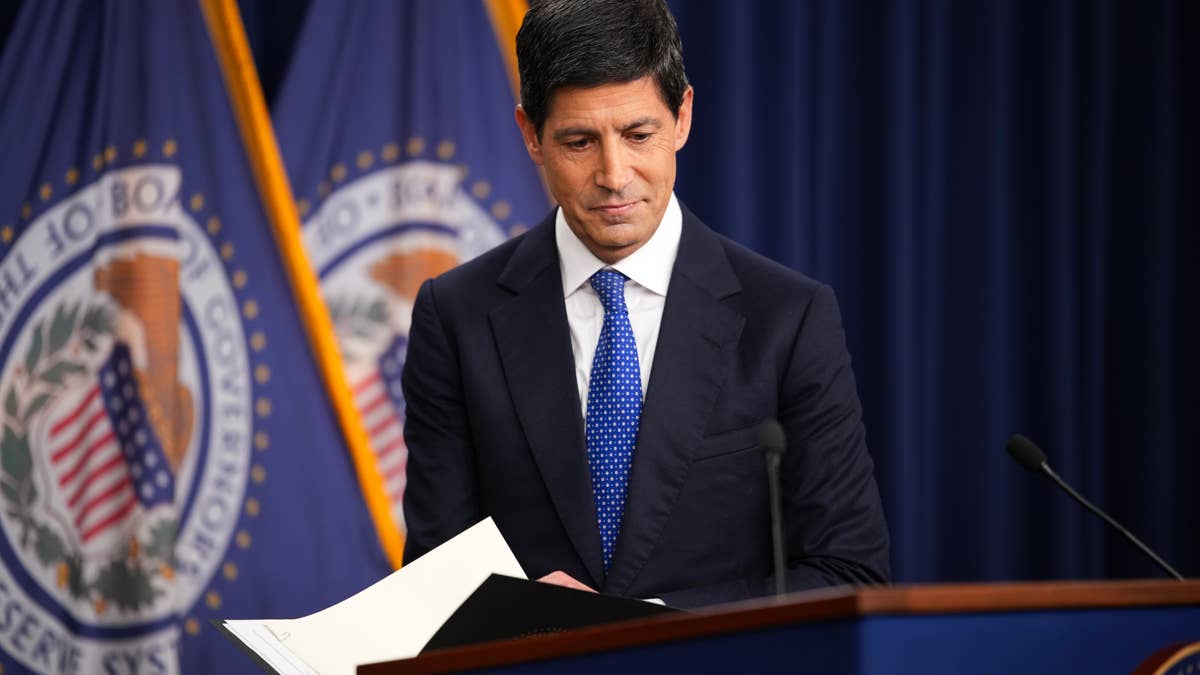
Kevin Warsh took over as Federal Reserve Chair in early 2026. In an August speech at Jackson Hole, he said the U.S. economy appeared to have strengthened. He cited rising business investment, strong corporate profits, healthy consumer spending, low unemployment and resilient credit markets.
Warsh also acknowledged inflation remained above the Fed’s 2% target. He cited a 12-month personal consumption expenditures inflation rate of 3.7% and a six-month rate of 4.1%, and said commodity prices and underlying inflation trends required close attention.
He described financial conditions as broadly nonrestrictive. Corporate credit spreads were low, loan issuance was strong and bank lending standards were relatively easy. That combination supports continued growth but also means monetary policy may not yet have slowed demand enough to bring inflation back to target.
Rosenberg’s argument is that Warsh and the market are both too relaxed about what happens next. Oil above $100 creates a policy trap: hike to contain second-round inflation effects and risk recession, or hold and let inflation expectations drift. Warsh chose to hike on September 16, as TheStreet reported, crediting a strong economy and competition for capital.
Why Rosenberg says AI cannot stop a recession
“As we saw with the Internet boom in the early 2000s, AI is not bigger than the business cycle,” Rosenberg wrote.
This is the part of his argument aimed at the prevailing market mood. Investors and many strategists have argued that AI spending is so large, so broad and so structural that it provides a floor under growth that previous technology cycles did not. Amazon, Alphabet, Microsoft and Meta collectively spent $303 billion on data centers in the first half of 2026 alone.
Rosenberg is not dismissing AI as a technology. He is saying that capital expenditure cycles end. They end when financing costs rise, when companies question returns or when broader economic conditions deteriorate enough to force cuts. The internet boom drove enormous capital spending in the late 1990s and early 2000s. It still ended. And when it ended, it did not prevent the recession that followed.
Warsh himself acknowledged in his August remarks that “major questions remain” about how much value from AI will flow to different parts of the economy and on what timeline. Rosenberg’s point is that those unanswered questions do not disappear just because the capital is already being spent.
Related: JPMorgan CEO doubles down on his inflation and economy verdict