SpaceX (SPCX) investors have had plenty to digest after the company’s historic IPO, which sent its valuation to near $2.1 trillion on its first trading day, according to The Wall Street Journal.
The stock priced at $135 closed near $160.95 and instantly became one of the most debated names on Wall Street.
Bulls saw a rare space infrastructure giant with Starlink, launch services, and Mars optionality.
On the flip side, the bears viewed it as a company trading at 94 times trailing sales after reporting $18.67 billion in 2025 revenue and $4.94 billion in net losses, Yahoo Finance confirmed.
Now, CEO Elon Musk has just upped the ante in a massive way.
Musk’s latest comments raised the stakes around SpaceX’s growth story, Seeking Alpha reported, giving investors a much bigger number to consider than many on Wall Street were likely modeling.
That creates tension, given SpaceX’s valuation is already stretched, but Musk just raised the growth bar yet again.
What Elon Musk said about SpaceX’s revenue potential
Elon Musk just put a massive number behind the SpaceX growth story.
“I think SpaceX might be able to reach approximately $1 trillion in revenue in 2030,” Musk replied to journalist and financial commentator Jon Erlichman on X (the former Twitter), according to Seeking Alpha. He added that he would be “surprised if revenue were not greater than $1 trillion in 2031.”
More SpaceX:
- Veteran hedge fund manager makes a brazen SpaceX bet
- Franklin Templeton CEO sends strong message on SpaceX
- ‘The Big Short’ investor describes SpaceX in three words
That’s a tremendous leap from where the company stands today.
SpaceX reported 2025 revenue of $18.67 billion, up from $14.02 billion in 2024, but it also posted a $4.94 billion net loss after earning $791 million a year earlier.
Morgan Stanley projections cited on X put SpaceX revenue at about $160 billion by 2028 and $330 billion by 2030, implying stellar growth.
Musk’s forecast goes above and beyond that.
To hit $1 trillion by 2030, SpaceX would need to grow revenue more than 50-fold from 2025 levels, adding more pressure to justify its $2.1 trillion post-IPO valuation.
Additionally, analysts are showering praise on SpaceX’s stock.
I covered Oppenheimer’s Timothy Horan, who slapped an ‘outperform’ rating and a $190 target, implying 18% upside from its latest close.
However, a few early ones were a bit more mixed.
New Street Research’s Pierre Ferragu put a $165 target on the stock, pointing to 3% upside according to Investing.com.
CFRA’s Keith Snyder reportedly initiated coverage of SpaceX at Sell with a $115 target, implying a 29% downside, Tipranks reported.
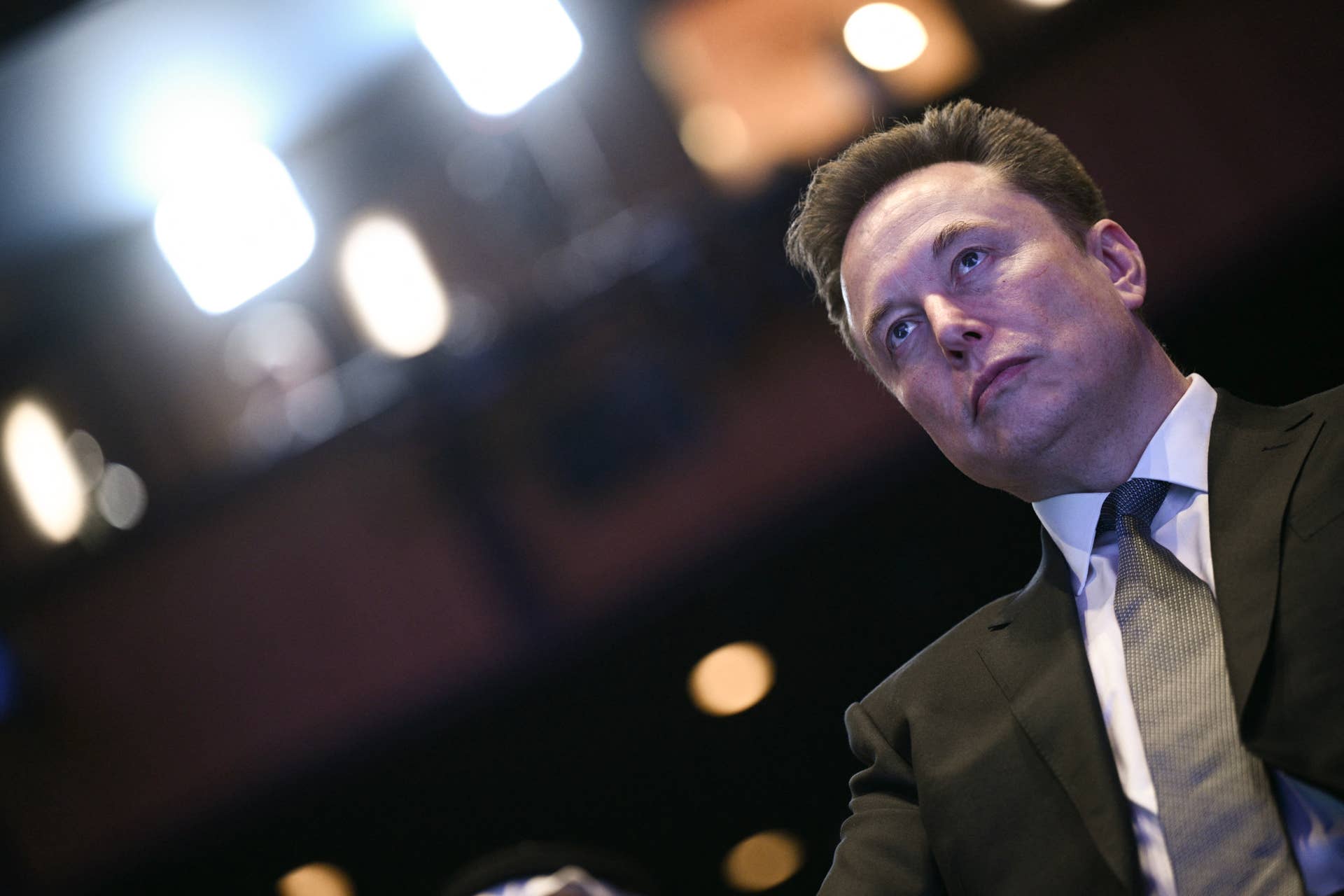
Smialowski/AFP via Getty Images
The key numbers behind SpaceX’s IPO
- Reuters reports SpaceX raised $75 billion in its IPO, giving it a huge capital cushion for Starship, Starlink, satellite growth, and Mars ambitions.
- Shares were priced at $135, valuing SpaceX at about $1.75 trillion before trading began, according to Reuters.
- The stock is being valued less like a rocket company and more like a space infrastructure and satellite network giant.
- SpaceX’s valuation reportedly rose to about $2.1 trillion after shares jumped nearly 20% on day one, The Guardian reports.
- The biggest risk is valuation: At $1.75 trillion and a reported 2025 revenue of $18.67 billion, SpaceX trades near 94 times trailing sales.
- The IPO pushed Elon Musk’s net worth past $1 trillion, tying his fortune even more closely to SpaceX’s public-market performance, Business Insider confirms.
Why Musk’s $1 trillion forecast raises the stakes for SpaceX investors
Musk’s forecast matters a ton for SpaceX, as it’s not being judged like a private moonshot.
Following its historic IPO, investors are weighing the business against the same public-market standards facing AI giants, mega-cap tech, and high-growth infrastructure stocks.
Revenue growth alone isn’t enough; the market is looking for proof that heavy spending can eventually turn into durable earnings power.
Musk’s call, though, breaks both ways.
It gives bulls a long-term target to underpin SpaceX’s valuation but also raises the bar at a time when investors are already sensitive to stretched multiples, higher capital costs, and crowded growth trades.
Wall Street was already debating whether SpaceX’s post-IPO valuation had run too far, but Musk is now suggesting the company’s opportunity may still be much bigger than the stock reflects.
For investors, it’s all about whether it can grow fast enough to justify the price.
Speaking of investors, my colleague Silin Chen wrote about how Cathie Wood’s Ark funds scooped up 3,291,184 SpaceX shares on June 12, a stake worth about $529.7 million based on the stock’s latest close of $160.95.
As I wrote recently, Wood was already a SpaceX backer before the IPO, and Ark had made SpaceX the largest holding in its internal venture fund.
Naturally, her bet adds another high-profile vote of confidence, even as valuation concerns continue to build.
Related: Cathie Wood may have timed her Elon Musk bet just right