Elon Musk has been fighting one of the most closely watched lawsuits in tech history. Now, just weeks before it goes to trial, he has made a pledge that changed the conversation entirely.
In an X post on Sunday, Musk said that if he wins his lawsuit against OpenAI and Microsoft, every dollar of the proceeds will go to charity. “Btw, the proceeds of any legal victory in the OpenAI case will be donated to charity,” he wrote. “I will in no way enrich myself.”
The case is scheduled to go to trial on April 27 in Oakland, California, with jury selection beginning that day and proceedings expected to run through May.
What the Musk-OpenAI lawsuit is actually about
Musk co-founded OpenAI in 2015 alongside Sam Altman and Greg Brockman, contributing approximately $38 million, roughly 60% of the organization’s early seed funding.
He says he did so on the understanding that OpenAI would remain a nonprofit dedicated to developing AI for the benefit of humanity.
More Tesla:
- Top-rated analyst drops curt 8-word take on Tesla stock
- Tesla investors may miss game-changing move
- Judge orders Tesla to make major change or halt sales in California
He left the board in 2018, citing potential conflicts of interest with Tesla’s AI development. Since then, OpenAI created a for-profit subsidiary in 2019, accepted billions from Microsoft, and completed a full restructuring into a Public Benefit Corporation in October 2025.
Musk argues that the transformation amounted to fraud. He claims Altman and Brockman induced him to fund and build the organization under false pretenses, then steered it toward a commercial model that enriched themselves and their corporate partners.
The $134 billion damages claim
Musk is seeking between $78 billion and $135 billion in damages from OpenAI and Microsoft, based on calculations from his expert witness, economist C. Paul Wazzan. The theory is that Musk’s early contributions entitled him to a proportional share of what OpenAI subsequently became.
U.S. District Judge Yvonne Gonzalez Rogers has already raised serious doubts about that number. At a pretrial hearing on March 13, she said a jury would likely see the damages methodology as “pulling these numbers out of the air,” and added she did not find it particularly convincing, Pymnts reported.
Despite those reservations, she declined to throw out the expert testimony, noting that doing so would effectively end the trial before it began. The jury will hear it all.
What OpenAI and Microsoft are saying
OpenAI has called the lawsuit “baseless” and described it as part of an “ongoing pattern of harassment” by Musk, who now runs xAI, a direct competitor to ChatGPT.
The company has also argued that Musk pushed for a for-profit structure at various points and left the organization after demanding a controlling equity stake or the CEO role, both of which the other founders rejected.
Microsoft, which holds a $135 billion stake in OpenAI, has denied any wrongdoing and said there is no evidence it aided and abetted any breach of obligations, noted Computerworld.
Why the charity pledge matters
The timing is hard to ignore. With trial less than six weeks away, the pledge reframes the entire narrative around the case.
For months, OpenAI has portrayed the lawsuit as the work of a disgruntled competitor trying to hobble a rival while building his own for-profit AI company. Musk’s pledge undercuts that argument directly. It is difficult to accuse someone of a money grab when they have publicly committed to giving all of it away.
Musk did not specify which organizations would receive the funds, saying only the focus would be on “safe AGI development,” which aligns with the original mission he claims OpenAI abandoned.
The irony at the center of the case
One of OpenAI’s sharpest lines of attack has been pointing out that Musk is suing over a for-profit pivot while running xAI, his own for-profit AI company. His counterargument is that there is a difference between building a for-profit company from scratch and converting a nonprofit explicitly founded on different terms.
A judge already found that argument credible enough to put before a jury. Judge Gonzalez Rogers noted at the January hearing that there was “plenty of evidence” that OpenAI’s leadership made assurances the nonprofit structure would be maintained.
Moneymaker/Getty Images
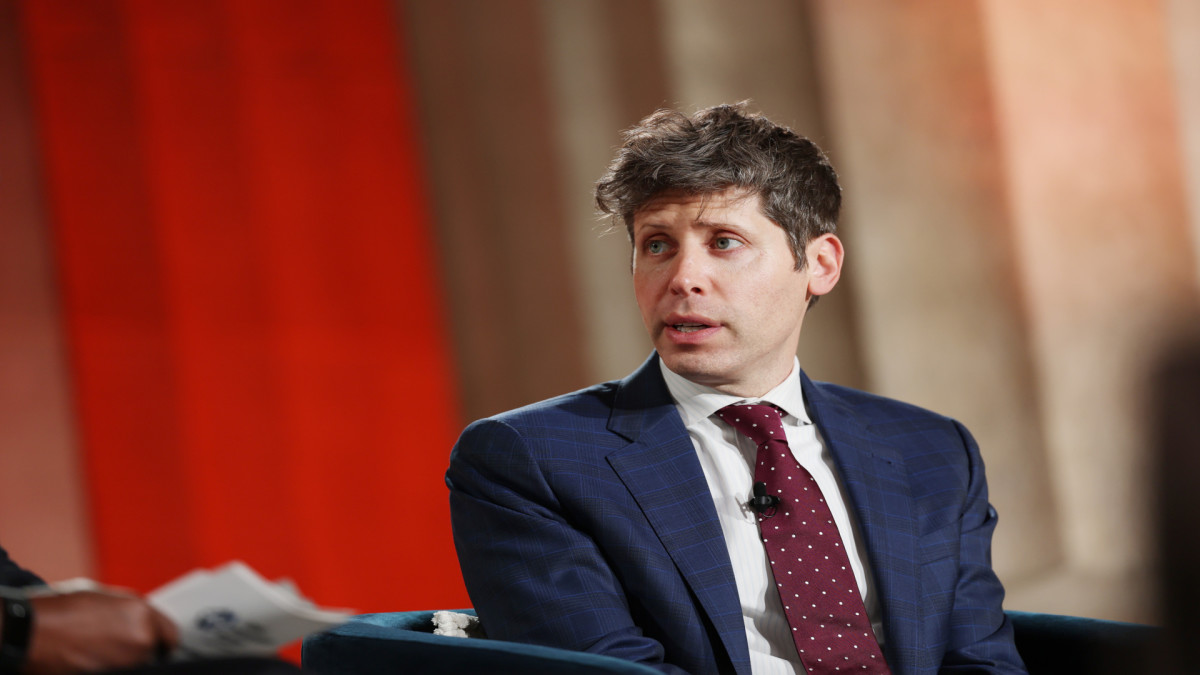
Greg Brockman’s diary, now part of the court record, includes a 2017 entry: “I cannot believe that we committed to non-profit if three months later we’re doing b-corp then it was a lie.”
Whether a jury finds that damning, or simply the private doubts of a founder navigating a difficult transition, will be one of the central questions when the trial begins.
Key facts in the Musk vs. OpenAI case
- Musk’s contribution: $38 million, roughly 60% of OpenAI’s early seed funding
- Trial date: April 27, 2026, Oakland, California
- Musk’s pledge: All winnings to charity focused on safe AGI development
What happens between now and April 27
The pretrial period is already producing significant legal fireworks. Judge Gonzalez Rogers spent four hours at the March 13 hearing working through dozens of motions, signaling she intends to run a tight trial. She also indicated she is unlikely to allow Musk to pursue punitive damages.
Altman and Brockman are expected to testify. Jurors will review internal communications including diary entries, emails, and texts exchanged during OpenAI’s transition years.
Musk’s charity pledge has added one more element to an already charged atmosphere. Whatever the jury decides on the legal merits, Musk has made sure this trial will be about more than money.
He has framed it as a fight over who controls the most consequential technology of the century, and pledged to hand the spoils back to humanity if he wins.
Related: Elon Musk must deliver on Tesla promise in 2026, Deutsche Bank says