Elon Musk, the CEO of Tesla (TSLA), believes that robotics and artificial intelligence may someday make civilization so productive that universal basic income would seem insufficient.
His prediction is something much bigger: universal high income.
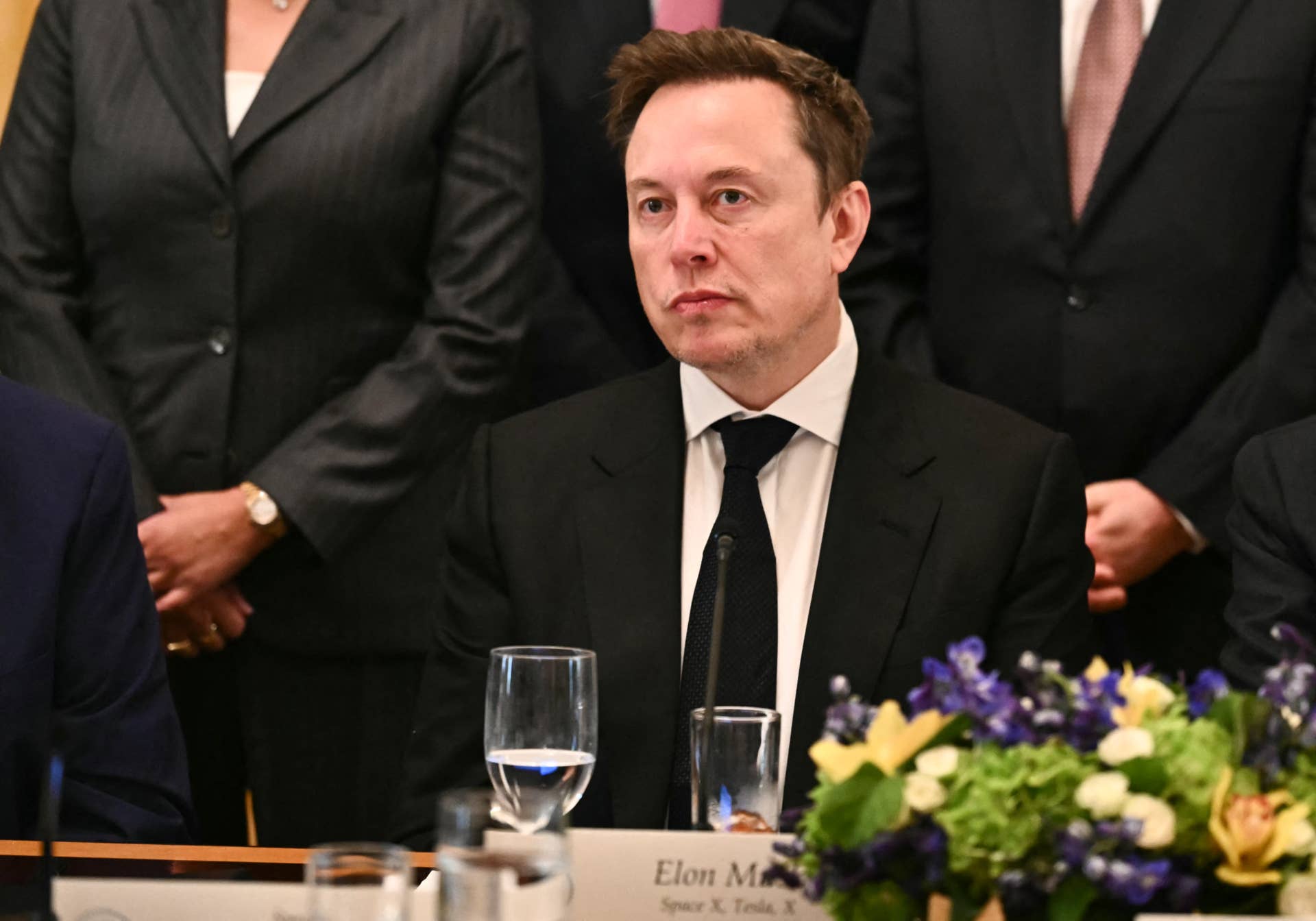
Musk said that an “age of abundance,” when employment change but general living standards improve significantly, is the most probable result of highly powerful AI and robots, during a White House meeting with technology CEOs on Sept. 29. Musk also said that AI and more powerful robots might ultimately make high-quality healthcare widely accessible, CNBC reported.
This is one example of what can happen if robots are able to do more tasks than humans.
Bill Gates, a cofounder of Microsoft (MSFT), is concentrating on a different aspect of the problem. He is worried about what will happen to government income and labor during that transition.
Two of the most well-known billionaires in technology are at odds about how the AI economy may really operate because Gates wants businesses that replace human labor with robots to perhaps pay taxes on that automated job.
Elon Musk expects jobs to evolve rather than disappear
While acknowledging that occupations would alter as AI develops, Musk contended that technology has consistently destroyed certain forms of labor without completely abolishing them.
He cited human “computers,” who were previously hired to do computations before a large portion of the labor was mechanized by electronic computers. Musk said that when robots and artificial intelligence permeate the industry, he anticipates a similar change in jobs.
Investors at Tesla are interested in the projection since robots is now a part of the company’s long-term goals.
Optimus is a general-purpose autonomous humanoid robot designed to do tedious, repetitive, or dangerous activities, according to Tesla. The business is creating the AI, vision, navigation, and control technologies needed to enable the robot to function in the real world.
Related: Elon Musk just handed Nvidia investors another big win
In other words, Tesla is trying to commercialize some of the technologies that Musk believes could change the nature of work.
Musk has gone farther in other recent remarks, claiming that if commodities and services become much more plentiful, developments in AI and robots may someday make money itself less significant. However, there is currently no well-established economic mechanism that would automatically convert such productivity into the “universal high income” that Musk envisions.
Gates’ argument becomes significant at this point.
Bill Gates thinks replacing workers creates a tax problem
According to Gates, automated technologies that replace human labor have the potential to alter more than just a company’s wage costs.
Payroll tax income is produced by human workers. In general, robots don’t.
Gates suggested creating a unit of labor so that labor, whether done by a computer or a human, would be subject to the same Federal Insurance Contributions Act taxes, Business Insider reported.
More AI:
- Nvidia just made a move Wall Street wasn’t ready for
- Microsoft just took sides in AI policy fight
- OpenAI just disclosed something genuinely alarming
His worry is explained by the existing system. According to the IRS, companies often pay an employer portion of Social Security and Medicare taxes in addition to deducting them from employees’ income. Medicare is typically 1.45% for both employers and employees in 2026, while Social Security is 6.2% for both.
In the same way that displaced workers need additional retraining and assistance, Gates contends that governments may ultimately get less employment-tax revenue if technology lowers the amount of money paid as salaries.
For him, this is not a new role.
In a piece penned in August, Gates made the case for taxing both robots and AI tokens, claiming that the current tax system might financially incentivize businesses to replace workers with machines. He said that despite raising funds for retraining and a more robust social safety net, such a levy may considerably hinder that shift.
Gates is not saying that automation ought to cease. His suggestion is to alter the distribution of certain economic benefits and expenses in the event that robots start to replace significant amounts of human work.
Workers are increasingly worried about the AI transition
Musk’s upbeat perspective also contrasts sharply with how many Americans now view AI’s impact on jobs.
A June survey from Pew Research Center found that 71% of U.S. adults expect artificial intelligence to result in fewer jobs over the next 20 years. That was up from 64% in 2024. Just 5% expected AI to create more jobs.
That doesn’t establish what AI will ultimately do to employment. Long-term forecasts about technological disruption carry substantial uncertainty, and AI could eliminate some types of work while creating entirely new occupations.
However, it highlights the financial challenge that businesses and governments face as they increase their investment in automation.
Businesses may boost production and save expenses by using AI to replace costly or repetitive labor. The same change may result in fewer chances for people in jobs that formerly paid well. Reduced wage income may ultimately put strain on tax systems that depend on human employment for governments.
Regarding the fundamental technology, Musk and Gates aren’t inherently at odds. Both anticipate significant advancements in robotics and AI.
The focus is where they vary.
Musk envisions a future with exceptional productivity, an abundance of products and services, improved healthcare, and perhaps much higher earnings.
Gates is focusing on the shift needed to get there, namely what happens to workers and the tax base if robots start to replace human labor at lower costs.
That difference is important to investors.
The next stage of AI isn’t only about whether business creates the best robot or model. The economic regulations pertaining to labor, taxes, and the distribution of productivity gains may become as significant as the technology itself if automation spreads enough to significantly change employment.
Related: Elon Musk sends strong message to SpaceX and Tesla investors