Only a handful of companies can make millions of people stop in their tracks and look up to the sky.
A Space Exploration Technologies (SPCX) rocket launch is part engineering, part business, and part spectacle. A Falcon booster descending back toward Earth still looks like science fiction. Starlink satellites have turned space into infrastructure people use from their homes.
And SpaceX’s longer-term ambitions raise an even wilder possibility: humans living and working beyond Earth.
Today it is a public corporation, with a massive valuation attached to all that amazement, and Elon Musk controls almost half of it.
A new regulatory filing shows Musk held beneficial ownership of 48.4%, or around 6.42 billion shares, of SpaceX as of June 30, Reuters noted. That stake is worth more than $900 billion at current market values.
But the dollar figure doesn’t tell the whole story.
The larger concern for investors is how a corporation that is known for launching rockets can turn humanity’s passion for space into a viable business.
The answer is increasingly something a lot less exotic than Mars: monthly internet expenses.
SpaceX generated $18.7 billion in revenue in 2025, up 33%, according to company IPO materials. Starlink has emerged as its largest business, alongside launch services and a growing push into artificial intelligence.
It’s this mix that makes Musk’s newly revealed shareholding so significant. Investors aren’t just investing in rockets.
They’re betting that space is becoming an economy.
SpaceX makes money before anyone gets to Mars
SpaceX’s most public business is also easy to grasp. Customers pay the company to put stuff into space.
SpaceX designs, builds, and launches advanced rockets and spacecraft. Governments and commercial clients can buy launch services to put satellites, cargo, and other objects into space.
But launches aren’t the company’s biggest revenue driver anymore. That’s the job of Starlink.
Starlink generated approximately $11.4 billion in 2025 revenue, according to financial information reported around SpaceX’s IPO, MarketWatch confirmed. SpaceX’s rocket-launch operation generated roughly $4 billion.
That is a big difference for investors.
Launching a satellite is basically a transaction. Starlink introduces the possibility of a recurrent relationship: Users pay for internet supplied over SpaceX’s satellite network.
The service can reach clients in areas where it is difficult to build fiber or other traditional infrastructure. This expands the target market from regular households to enterprises and individuals in faraway places.
Thus, rockets put SpaceX’s infrastructure into orbit. Once it’s there, Starlink tries to make money from it.
Related: Is SpaceX Worth More Than Earth?
And SpaceX is not stopping at connectivity.
The corporation now says it operates across space, connectivity, and AI. Its IPO filing emphasized what SpaceX sees as a $26.5 trillion opportunity tied to its broader AI ambitions.
That makes the company’s business model all the more unusual. Rockets are the gateway to space, satellites are the gateway to recurring connectivity, and AI is yet another potential huge — but capital-intensive and uncertain — growth engine.
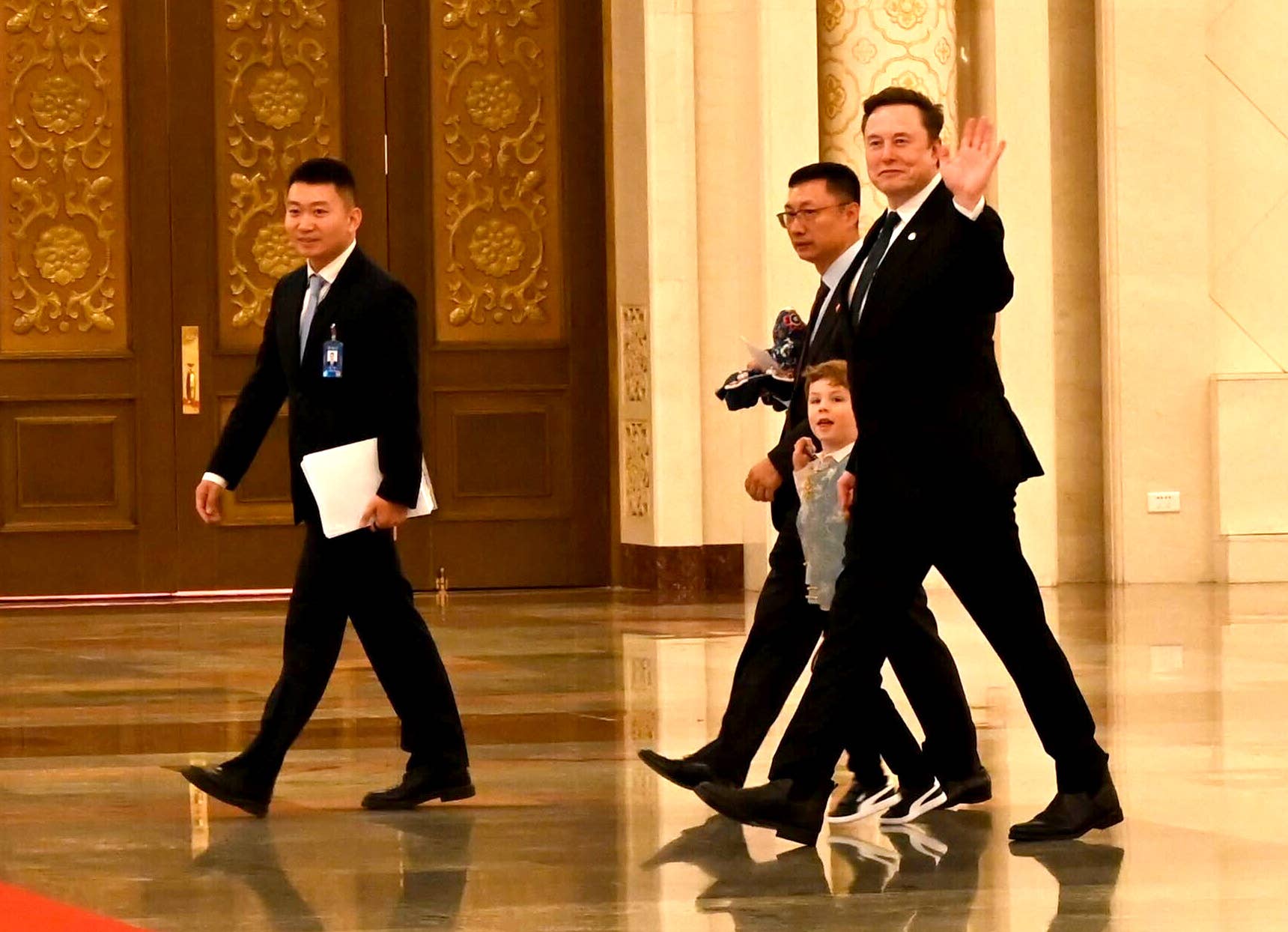
Musk controls more of SpaceX than his 48.4% stake suggests
Musk’s newly revealed shareholding is yet another number for investors to chew on.
His pecuniary interest is less than 50%, but his influence over SpaceX is much bigger due to the company’s share structure.
Musk owned approximately 6.42 billion shares as of June 30, GuruFocus noted. He holds shares through trusts, restricted stock, and options.
Based on his share structure and analysis of the filing, he has more than 80% voting power. That effectively puts the company in the hands of the individual who created it in 2002, even after one of the biggest-ever IPOs.
SpaceX priced 555.6 million shares at $135 each in June. After underwriters exercised their option for additional stock, SpaceX ultimately sold about 638.9 million shares and collected approximately $85.7 billion in gross proceeds.
The corporation then turned to another source of funding. Just days after its IPO, SpaceX marketed $25 billion of senior notes, from debt due in 2031 with a 5.35% coupon to bonds due in 2056 paying 6.65%.
The revenues will be used mostly to repay its bridge-loan agreement, with the rest going to general business purposes, SpaceX said. That’s an incredible amount of capital.
It’s also a reminder of just how pricey SpaceX’s objectives are.
SpaceX is asking investors to put a price on the future
Developing rockets isn’t cheap. Nor are satellite constellations, AI data centers, or spacecraft planned for missions that don’t even exist at commercial scale.
The tension is illustrated by SpaceX’s own figures.
The company’s Space segment produced $700 million of adjusted EBITDA in 2025, down from $1.2 billion in 2024, according to IPO materials. SpaceX attributed the decline partly to $3 billion of research and development spending on Starship.
That’s the core of the investing case.
SpaceX is spending money today to build systems it believes could generate much larger businesses tomorrow.
Starship could ultimately change the economics of moving cargo into orbit if SpaceX succeeds in making the enormous vehicle rapidly reusable. Longer term, SpaceX’s ambitions extend to human exploration beyond Earth.
For the person witnessing a rocket launch, it’s those ambitions that make SpaceX captivating. For a shareholder, they represent both danger and opportunity.
SpaceX numbers investors should know
- 48.4%: Musk’s disclosed beneficial ownership as of June 30
- 6.42 billion: Shares covered by Musk’s ownership disclosure
- $900 billion+: Approximate recent value of Musk’s stake
- $18.7 billion: SpaceX’s 2025 revenue
- 33%: SpaceX’s 2025 revenue growth
- $11.4 billion: Starlink’s reported 2025 revenue
- $85.7 billion: Gross proceeds from SpaceX’s IPO after the underwriters’ option was exercised
- $25 billion: Size of SpaceX’s subsequent bond offering
SpaceX investors are buying a business and a human obsession
Space has long captured people’s imaginations, even before anyone could buy stock in a corporation aiming to make money from it.
That’s part of what makes SpaceX unique.
Starlink already proves that space needn’t be an abstract frontier. Satellites hundreds of miles overhead can deliver something as mundane and monetizable as an internet connection.
Rocket launches can make money from those consumers, and customers want access to orbit. The cash flow from those companies can be used to fund projectslike Starship that are intended for a much bigger future.
That creates an intriguing loop.
SpaceX builds space infrastructure using rockets. That infrastructure can make money on Earth. They can then use the money and resources they obtain from investors to help fund the next generation of rockets and technology.
But investors should not confuse an inspirational objective with a guaranteed return on investment.
SpaceX’s valuation is based on the corporation translating incredibly expensive technology into businesses that can generate equally remarkable cash flows. Its venture into AI offers another potential growth engine but also another reason to spend big on capital.
The success (or lack thereof) of that experiment leaves Musk extremely exposed with his $900 billion-plus position. For the rest, SpaceX poses a question that investors don’t often get to ask.
It’s not just that a corporation can sell more merchandise next quarter.
It’s whether one company can take something humans have looked at for thousands of years, the possibility of what lies beyond Earth, and make it one of the biggest businesses on the planet.
Related: Nvidia just took a very serious step on SpaceX stock