After closing dozens of stores and offloading a brand, one of the fashion industry’s best-known groups is continuing to reshape its retail footprint.
The company ended its latest fiscal year with fewer stores overall, even as it continued opening locations for one of its biggest brands. The contrasting moves highlight how fashion retailers are increasingly concentrating their physical presence around their strongest-performing businesses while reassessing weaker ones.
According to the McKinsey & Company State of Fashion 2026 Report, the global fashion industry is projected to grow only in the low single digits in 2026 as macroeconomic volatility, tariff pressures, and weaker consumer sentiment weigh on the sector.
Against this backdrop, one major fashion group is taking a more selective approach to its store network while investing in the brands it sees as having the strongest growth potential.
Although Tapestry Inc. was founded in 2017, its roots date back to the founding of its flagship brand Coach in 1941. The company acquired Kate Spade in 2017, with the deal helping lead to the creation of Tapestry later that year. Both brands are known for their handbags and accessories.
Tapestry closes 64 stores
Tapestry (TPR) closed 64 directly-operated stores during fiscal 2026, ending the year with 1,299 locations as of June 27, 2026, according to its earnings report.
The closures included 24 Coach stores and 40 Kate Spade locations. Coach ended the fiscal year with 973 stores, while Kate Spade had 326 locations.
The latest closures continue a recent pattern for the company. In fiscal year 2025, Tapestry shuttered 40 Coach stores and 37 Kate Spade locations, according to its fiscal 2025 earnings report.
But the company’s latest store strategy is more nuanced than simply shrinking its physical footprint.
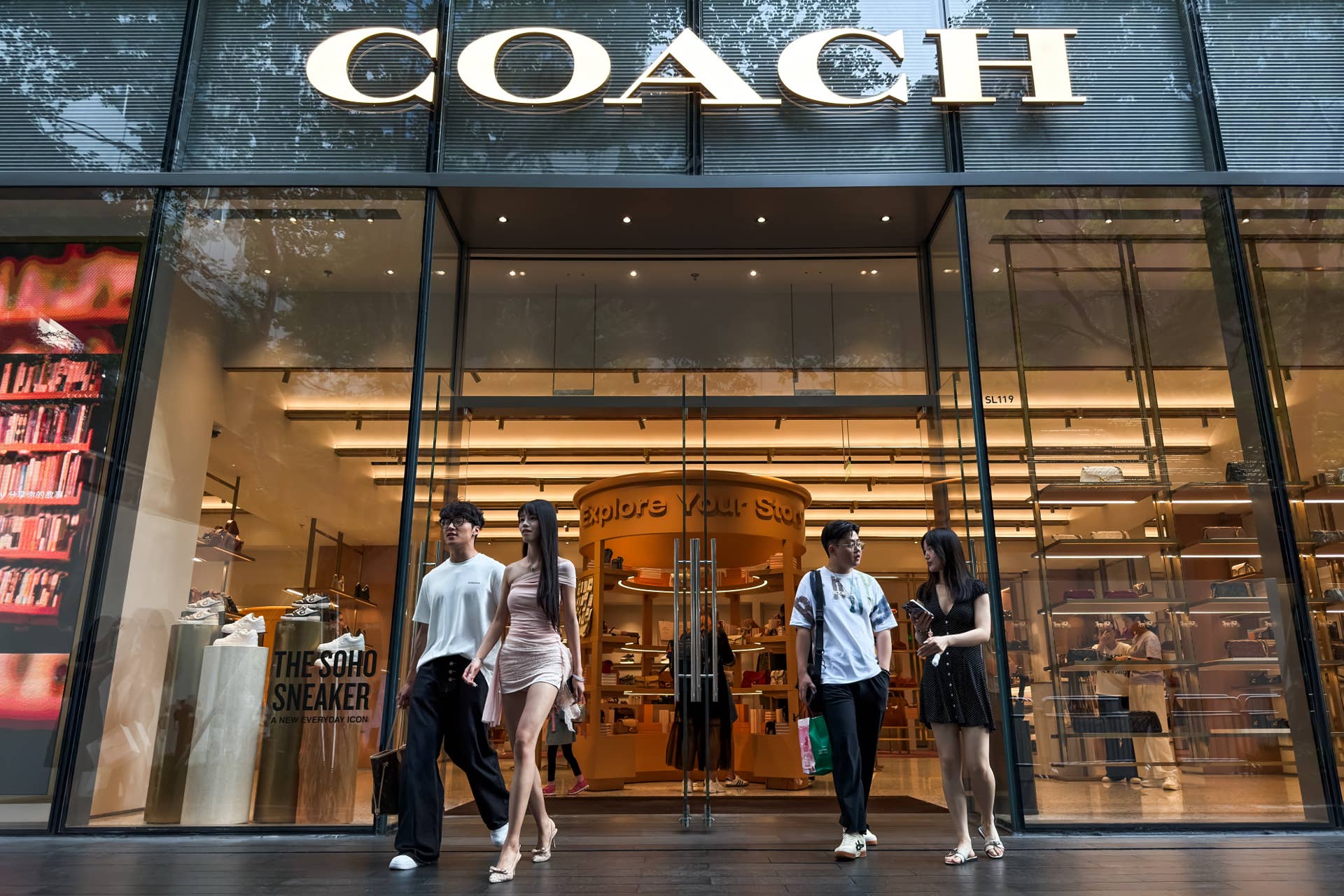
While 64 locations closed across Coach and Kate Spade during fiscal 2026, Tapestry opened 66 new Coach stores and six Kate Spade locations, underscoring the company’s shift toward expanding its strongest-performing brand.
Tapestry also sold the Stuart Weitzman brand in August 2025 after closing 17 of its stores during fiscal 2025.
Why Tapestry is closing stores
Tapestry’s financial results help explain why the company is taking different approaches to its two remaining brands.
In fiscal 2026, the company reported:
- Net sales increased 14% year over year
- Coach revenue rose 24%
- Kate Spade revenue declined 10%
Excluding Stuart Weitzman, Tapestry’s pro forma sales increased 18% for the year. Coach was the primary driver of that growth.
Coach’s performance also extended beyond sales. The brand delivered double-digit revenue growth in every quarter of fiscal 2026, while its handbag average unit retail price increased at a mid-teens percentage rate for the full year.
Tapestry also said it welcomed approximately 11 million new customers during fiscal 2026, with about 35% of them from Gen Z.
“Coach is bringing new consumers into the category and growing the market,” said Tapestry CEO Joanne Crevoiserat during the company’s earnings call. “Given the strength of the brand and our large addressable market, we continue to see a clear path to Coach becoming a $10 billion brand.”
The contrast with Kate Spade was significant.
The company said it is taking a more deliberate approach to rebuilding the brand, focusing on marketing, consumer insights, product assortment, and omnichannel experiences.
“Our strategy for Kate Spade has been deliberate and phased, streamlining the business, solidifying the foundation, and positioning the brand to scale,” said Crevoiserat. “At its core, that means building greater brand desire and relevance to drive sustainable, profitable growth.”
The difference in store openings reflects that divergent strategy. Rather than treating its store network uniformly, Tapestry appears to be concentrating physical expansion where it sees the strongest consumer demand, while using closures to streamline Kate Spade’s footprint.
The company also plans to continue investing in its store fleet, refurbishing 80% of its stores between now and fiscal 2030.
Fashion rivals close stores
Tapestry is not alone in reassessing its physical retail footprint. Several major fashion and luxury groups have also closed locations or announced additional shutdowns as they attempt to adjust their businesses to changing consumer demand.
The moves across the sector show that retailers are not necessarily abandoning physical stores, but are becoming more selective about where they operate them. Stronger brands and markets can continue to receive investment, while underperforming locations are increasingly being closed, relocated, or replaced.
Here’s some of my previous coverage of store closures:
- Capri Holdings: Closed 41 locations across its brands in the year ending June 27, 2026.
- Prada Group: Closed 10 Versace stores since the end of 2025 and plans to shutter more locations while relocating select boutiques to stronger markets in 2026 and 2027.
- Kering: Closed 133 locations across its brands in 2025, with an additional 100 store closures scheduled worldwide in 2026.
- Saks Global: Plans to close an additional nine stores following the shutdown of hundreds of locations and its Chapter 11 bankruptcy filing.
- Ferragamo: Closing roughly 70 stores between 2025 and 2026.
- Burberry: Shuttered 21 locations during fiscal 2026.
For Tapestry, however, the latest store changes aren’t simply a sign that the company is retreating from brick-and-mortar retail.
The company’s results suggest a more targeted approach: investing heavily in the brand that is producing the strongest growth, while using closures and a more selective store strategy to reposition the other brand.
That could leave Tapestry with a smaller overall footprint, but a network more closely aligned with where it sees the greatest opportunity for growth.
Related: Sportswear giant continues store closures nationwide