A restaurant giant that built a global footprint rapidly by opening new locations worldwide is now pulling back on its expansion plans as weaker results and higher costs pressure its business.
The company closed more than 200 stores during the first half of 2026 and has lowered its target for new openings this year, signaling a more cautious approach to growth even as it continues expanding internationally.
Founded in 1975, the Jollibee Foods Corp. restaurant group has more than 10,000 stores across 33 countries under 19 brands, including Jollibee, Coffee Bean & Tea Leaf, Smashburger, Chowking, and more.
Jollibee closes restaurants and cuts expansion
Jollibee Foods Corp. closed 207 stores during the first half of 2026 and now plans to scale back its expansion as weaker financial results and higher costs weigh on the business.
The company plans to open 1,000 to 1,100 new stores by the end of 2026, below its previous target of 1,200 to 1,300.
Jollibee also lowered its capital expenditure forecast to between ₱13 billion and ₱15 billion ($212 million to $245 million), compared with its previous plan of up to ₱16 billion, announced during the first quarter of 2026.
The company has cited higher costs and geopolitical pressures, including the impact of the Middle East conflict, as factors affecting its financial performance.
Jollibee’s net income declined 13.3% to ₱4.87 billion ($79.31 million) in the first half of 2026.
The results led the company to also lower its full-year same-store sales growth target to 3% to 4% from 4% to 6%. Its operating income growth forecast was also reduced to 10% to 15%, down from 15% to 18%.
Why Jollibee is closing locations and reducing expansion plans
The store closures are part of Jollibee’s portfolio optimization strategy, and the reduced opening target indicates that the company is slowing its expansion rather than abandoning growth.
Management emphasized productivity, sourcing, and cost-discipline initiatives as it works to protect margins while continuing to invest in markets where it sees opportunities for long-term growth.
“Pricing actions implemented beginning in April, together with productivity, sourcing, and cost discipline initiatives, contributed to the recovery in gross profit margins,” said Jollibee CFO Richard Shin during the company’s latest earnings call, Gulf News reported.
The strategy allows Jollibee to continue opening hundreds of restaurants as it moderates the pace of investment in its broader portfolio.
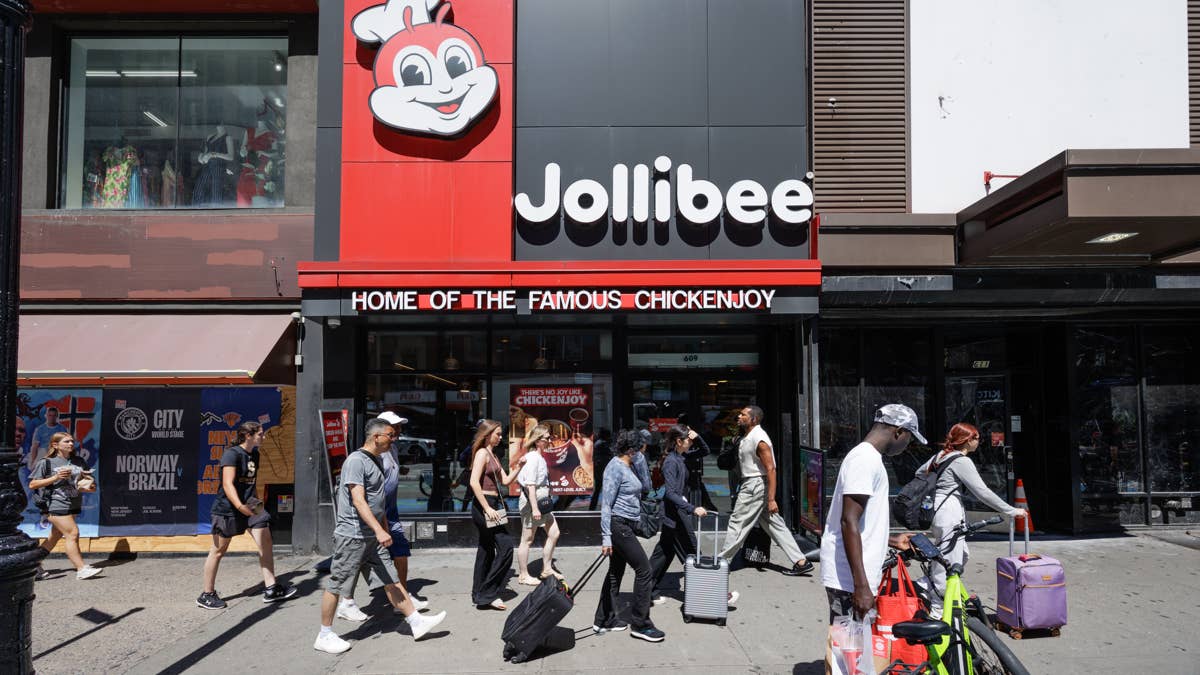
Jollibee’s fast growth
Although Jollibee is lowering its expansion plans and closing stores, international expansion and franchise-led growth remain key parts of its strategy, with Canada, Vietnam, and China among its priority markets.
The Philippines remains the largest revenue contributor, followed by China and North America.
Here’s some of my previous coverage of restaurant closures:
- Popular breakfast chain closes more restaurants
- 17-year-old Mexican restaurant chain closes all locations
- 57-year-old burger chain closed 28 restaurants, 100s more coming
Jollibee increased its global store network by 6.4% year over year to 10,767 stores, reflecting 461 gross new store openings and the addition of 172 stores from the acquisition of Shabu All Day, South Korea’s largest all-you-can-eat hot pot chain.
The company’s store growth illustrates why the latest pullback is better characterized as a slowing of expansion rather than a retreat from growth. Even after closing 207 locations in the first half, Jollibee’s overall network continued to expand, as new openings and acquisitions more than offset those closures.
Jollibee has expanded rapidly through its franchise model, with approximately 70% of its stores franchised as of the last reported quarter.
Its total store network comprised 3,516 stores in the Philippines and 7,251 stores internationally, including 340 in North America.
Related: Restaurant giant quietly closes locations across major brands