Doug Field spent years at Apple working on a car the company never built. When Apple shut down Project Titan in early 2024, Field moved to Ford. He’s been leading the automaker’s technology strategy since. On July 23, you could see exactly what he’s been building toward.
Ford announced it had partnered with Apple to embed Apple Maps directly into its next generation of electric vehicles. Ford is the first automaker in the world to use Apple’s brand new MapKit for Automotive software development kit, and the partnership goes well beyond putting a navigation app on a dashboard screen.
What the Ford Apple deal actually means and why it’s bigger than it sounds
Apple Maps has been available in Ford vehicles through CarPlay for years. This is different. MapKit for Automotive lets Ford build Apple Maps natively into the vehicle itself, separate from CarPlay and separate from any iPhone. The maps are there whether or not a phone is connected. They’re baked into the vehicle’s operating system, the New York Times reported.
“Apple Maps delivers the best map experience in the world, and we’re excited to bring the power of Maps’ navigation technology to Ford’s innovative Universal Electric Vehicle Platform,” said Eddy Cue, Apple’s senior vice president of Services and Health.
Related: Ford’s SUV profits are fueling its future
Ford CEO Jim Farley was equally direct. The first vehicle on the new platform is a midsize electric truck priced around $30,000, launching in 2027. After the truck comes a sedan, a crossover, a three-row SUV, and small commercial vans, all on the same platform, all with Apple Maps built in.
What drivers actually get is turn-by-turn directions with natural language, real-time traffic, and EV routing that knows where chargers are. It also does battery preconditioning, warming or cooling the battery before you pull into a charger so it’s ready to accept a fast charge the moment you arrive. And it can do things like open the garage door and turn on the lights when you get home, because the vehicle knows where you are and what you usually do when you get there.
How Ford is using Apple Maps to go after Tesla’s Full Self-Driving
Navigation is only part of the story. Ford is feeding road-level data from Apple Maps into its next-generation BlueCruise hands-free highway driving system, which already runs on more than a million Ford vehicles today.
The upgraded BlueCruise arriving in 2027 will handle a complete highway journey including entrance and exit ramps. After that, Ford has said the system will progress to what it calls “point-to-point autonomy,” explicitly comparing it to Tesla’s Full Self-Driving (Supervised) software. The final milestone is eyes-off Level 3 driving, targeted for 2028, according to TechCrunch.
More Automotive:
- Uber changes key rule for drivers amid rider safety lawsuits
- Volkswagen may cut 100,000 jobs in brutal reset
- Honda CEO withstands investor backlash after $9B EV misstep
That’s a direct roadmap comparison to Tesla. Ford’s autonomous system will run on Apple Maps data. Tesla runs on its own proprietary mapping and camera stack. Whether the Apple partnership gives Ford a genuine technical edge is still an open question, but it’s a credible answer to the software gap that has kept buyers in Tesla’s ecosystem even when competing hardware has been comparable.
Why Tesla’s software advantage is the real target of this Ford deal
Tesla has spent years building an EV experience that other automakers couldn’t match on software. Full Self-Driving, Autopilot, over-the-air updates, seamless Supercharger routing. That ecosystem is sticky. Owners who go deep into it tend to stay. Ford has been trying to close that gap for years, and the Apple deal is the most significant move it’s made toward that goal.
Tesla’s own competitive position has been under more pressure in 2026 than at any point in recent years. Pricing competition has intensified, EV demand growth has slowed, and the stock has underperformed through much of the year, as TheStreet reported. Tesla’s bull case increasingly rests on Robotaxi and Optimus rather than core EV sales. The core EV business is the one Ford is targeting.
A Ford EV running Apple Maps natively, with intelligent EV routing, battery preconditioning, and a BlueCruise system targeting Tesla FSD-level capability by 2027, is a meaningfully different product than what Ford was selling two years ago. The $30,000 price point puts it within reach of buyers who can’t stretch to a higher-trim Tesla Model 3 or Model Y.
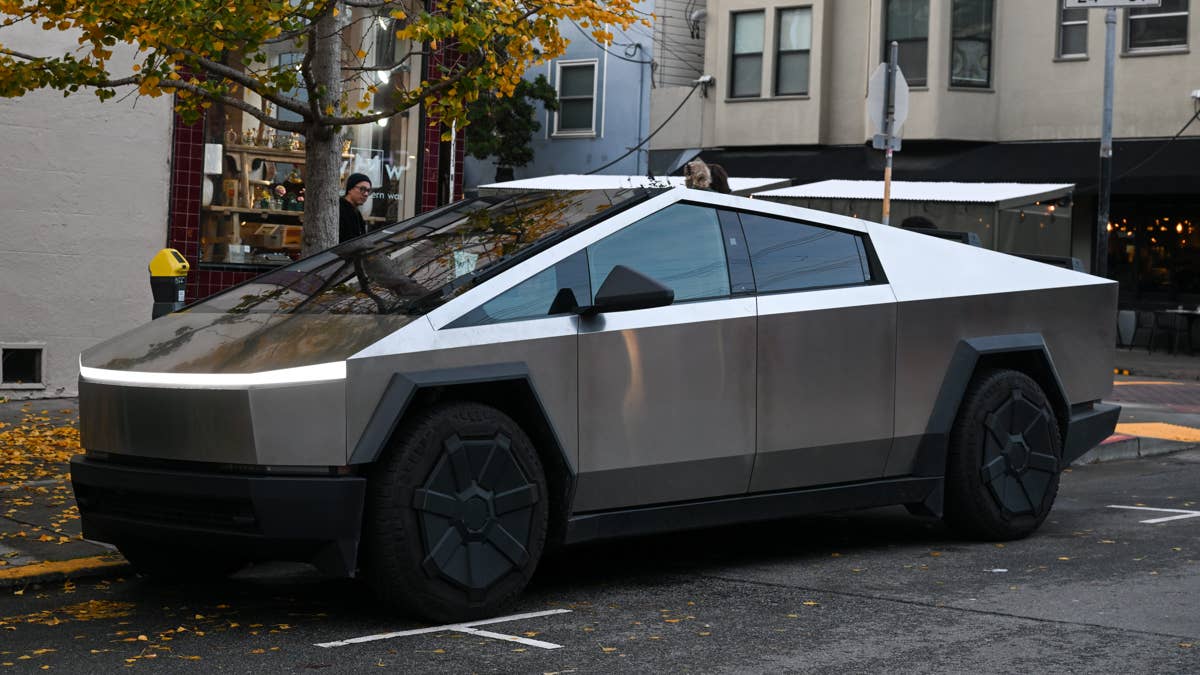
Tayfun/Getty Images
The Ford Universal EV Platform and what it means for the broader EV race
The Apple integration is built on Ford’s Universal Electric Vehicle Platform, or UEV, which the company designed from scratch by abandoning its traditional manufacturing approach. The UEV uses single-piece aluminum unicastings to reduce parts and speed assembly. It runs a zonal electrical architecture that makes software updates easier to deploy across the fleet.
The $30,000 midsize truck is the first vehicle on the platform. Ford’s strategy with the UEV is specifically about affordability. CEO Farley has been explicit that Ford is looking at BYD‘s approach to cost-competitive EVs rather than trying to compete with Tesla on premium positioning, as TheStreet reported.
The Latitude AI team, a group of 600 machine learning, robotics, and software specialists working inside Ford, is developing the autonomous driving stack. Apple Maps is the data foundation they’re building on.
What Apple gets from the deal and where MapKit goes next
Ford is Apple’s first partner on MapKit for Automotive, but the press release hinted at more automakers to come. For Apple, this is the automotive strategy that replaced Project Titan. Rather than building its own car, Apple is embedding itself in cars that everyone else builds. Getting its mapping engine into the navigation and autonomous driving stack of the world’s leading automakers is a more scalable version of that original ambition.
The Apple-Ford Maps relationship goes back to March 2022, when Apple Maps EV routing first arrived on the Mustang Mach-E and later expanded to the F-150 Lightning. The UEV integration is that relationship taken to a completely different level. Apple Maps isn’t the navigation option anymore. It’s the foundation.
Tesla’s response to competitive pressure usually involves a software update or a price cut. Both have happened in 2026. But Ford isn’t trying to beat Tesla on every dimension. It’s trying to be close enough on software and better on price. The Apple deal is the most credible argument it has made yet that it can pull that off.
Related: Tesla rival forced to make big changes amid EV shift