What happened in the Persian Gulf on July 7 may affect your pocketbook in a negative way.
Again.
The problem: Iran fired drones and other projectiles at ships passing through the Strait of Hormuz, U.S. and British officials said. Three ships were struck, Axios said, with one catching fire.
Related: Iran peace deal resets gas prices
Before war erupted on Feb. 28 between the United States and Israel and Iran, about 120 oil tankers passed through the Strait every day, carrying about 20% of the world’s crude oil to customers around the world.
Later in the day, the Trump Administration suspended a license that let Iran sell oil on the open market . The license allowed Iran to realized much needed revenue and was the key benefit from the interim peace deal that ended the fighting between the United States and Iran.
The incidents now threaten the negotiations between the U.S. and Iran built around a June Memorandum of Understanding.
The hope is cooler heads should prevail, although both the Iranians and the Trump Administration can be volatile.
Oil markets react quickly
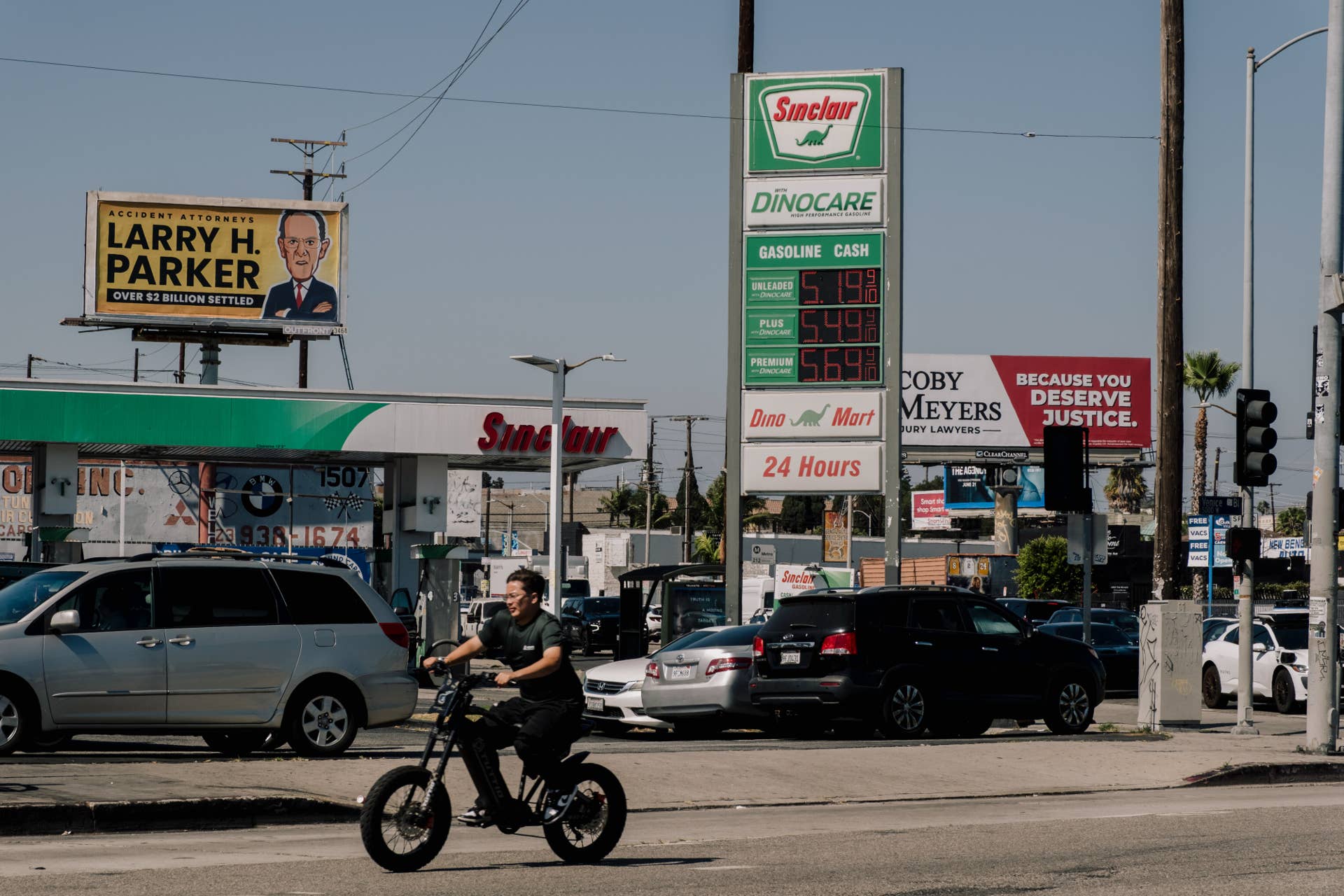
Crude oil prices jumped on the news. Retail prices for gasoline prices were little affected, in part because the news broke early in the morning in the U.S. Unless the situation is cooled down, drivers can expect to see retail prices start to move higher.
Retail gasoline prices nationally had fallen as much as 19% since peaking at around $4.66 a gallon on May 20. That price was up more than 53% from the start of the war on Feb. 28.
Light sweet crude, the benchmark U.S. oil, settled up 2.8% to $76.44 per 42-gallon barrel, the highest price since June 29. In after-hours, crude reached as high as $72.51. Brent crude, the global benchmark, settled up 3% to $74.16 a barrel and was bid as high as $76.36 after hours.
The average U.S. national gasoline price was $3.733 per gallon, down slightly from a day earlier, according to GasBuddy.com. AAA’s daily average was $3.79 a gallon, down almost a penny from a day earlier.
Mark Abramson / Bloomberg / Getty Images
All three tankers were hit close to Oman, which had suggested a new shipping corridor close to its coastline – a proposal Iran opposes as it wants to charge ships to use the waterway, the Guardian newspaper reported.
Terms of passage in Strait in dispute
Oman’s northern coast frames the south side of the Strait of Hormuz, and ships entering or leaving the Persian Gulf must pass through it. Since the cease fire was agreed to in mid-June, Iran has claimed the right to control the strait in consultation with Oman. The United States has disputed the assertion.
Iran has not claimed responsibility for the attacks.
One of the tankers is a liquid-natural-gas carrier, the Al Rekayyat. It was hit as it tried to travel south out of the strait toward the Gulf of Oman, the United Kingdom Maritime Trade Operations center reported.
The ship issued a mayday call, saying drones had hit near its engine room.
The ship is owned by business interests in Qatar, the Guardian said.
More Oil & Gas:
- Chevron CFO reveals why gas prices are stuck
- JPMorgan resets oil price target for rest of 2026
- Goldman Sachs sees an oil glut coming, but don’t expect much relief at the pump
A U.S. official said in a statement that “the MOU in effect with Iran is entirely performance-based,” CBS News reported. “Iran’s actions in the Strait were wholly unacceptable to the United States and will be met with consequences.”
Negotiations have been suspended while Iran holds a weeklong funeral for former Supreme Leader Ayatollah Ali Khamenei. He and members of his family were killed in a strike on the first day of the war.
Restoring the flow of traffic through the narrow strait, which once carried a fifth of the world’s oil and gas supplies, is a key element of the agreement. A 60-day negotiating period is in place to work out some of the thorniest issues in the conflict, The Washington Post noted.
President Trump has threatened to resume major attacks if a deal isn’t struck.
Related: Gas price tumble since May buys a Big Mac and fries