A massive loss of satellite internet subscribers over the last six years has caught up with EchoStar’s Hughes Network Systems, forcing the company to restructure its huge debt obligations, which could lead the company to file for a bankruptcy reorganization in the days ahead.
Satellite internet services provider Hughes Network Systems is planning to file for Chapter 11 protection with a pending $1.5 billion note due on Aug. 1, according to a Wall Street Journal report.
Parent company EchoStar’s co-founder Charlie Ergen has decided to place Hughes Network Systems into bankruptcy to avoid paying the debt obligation, according to the Journal. Hughes only had $102 million cash on hand on March 31, a May earnings report said.
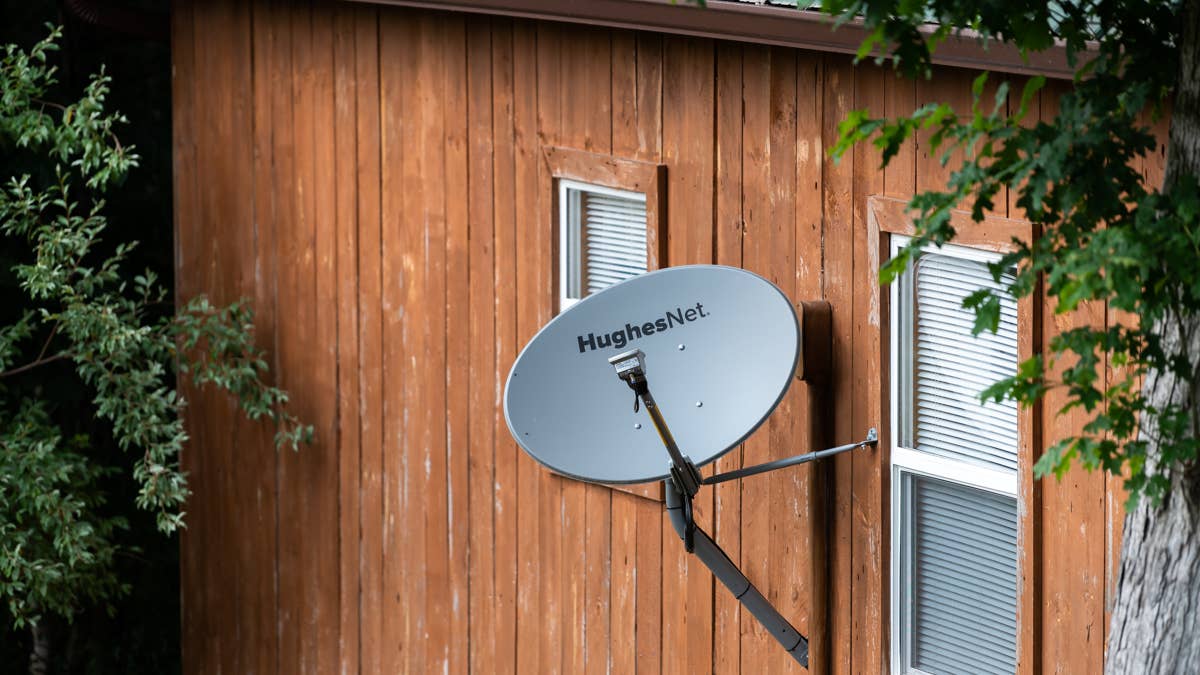
Hughes may file for bankruptcy
Hughes Network Systems will reportedly file Chapter 11 bankruptcy without a pre-negotiated plan. A bankruptcy filing would impose on automatic stay on all litigation against a debtor.
White & Case is Hughes Network’s bankruptcy counsel, and FTI Consulting is its financial adviser.
A spokesperson for Hughes Network Systems did not immediately respond to a request for comment.
Key to rural and underserved users
Hughes Network Systems specializes in geostationary satellite broadband services for U.S. residential, business, and government customers. The company has been a key alternative for rural and underserved communities where terrestrial broadband is limited.
Despite offering higher-speed consumer plans and low-latency hybrid offerings, geostationary satellite operators face increased pressure and loss of subscribers in the consumer broadband segment due to a rapid expansion of Low Earth Orbit satellite constellations, according to Cord Cutters News.
Company’s subscriber count plummets
Hughes Network Systems‘ number of total broadband subscribers has declined from 1.56 million in on Dec. 31, 2020, to 681,000 subscribers on March 31, 2026. Hughes’ subscriber losses accelerated following the launch of Starlink in 2020 as competition in satellite broadband increased.
The satellite internet industry is expected to grow from $14.26 billion in 2025 to $16.81 billion in 2026, driven in part by lower costs for low-Earth orbit constellations (LEO), which compete with Hughes’ geostationary satellite technology, according to analysts at Mordor Intelligence.
“Operators are shifting investment from geostationary systems toward multi-orbit networks that blend LEO, medium-Earth-orbit (MEO) and GEO assets to balance latency, coverage and cost,” according to Mordor Intelligence analysis.
The company’s high amount of debt obligations has also restricted its operational flexibility, contributing to the decision to file for bankruptcy.
Hughes Network Systems’ bankruptcy filing would follow on the heels of another EchoStar subsidiary Dish Wireless’ prepackaged Chapter 11 filing on June 30, 2026, which included a restructuring support agreement that will reorganize the company and facilitated a $23 billion sale of parent EchoStar’s wireless spectrum licenses to AT&T.
EchoStar sells spectrum licenses
EchoStar closed the wireless spectrum licenses sale to AT&T, according to a July 28 statement. The sale added about 30MHz of nationwide 3.45 GHz mid-band spectrum and about 20 MHz of nationwide 600 MHz low-band spectrum to AT&T’s portfolio.
AT&T and EchoStar unveiled the wireless spectrum licenses sale on Aug. 26, 2025, which covered over 400 markets across the U.S., or virtually every market nationwide. Under the deal, EchoStar would operate as a hybrid mobile network operator providing wireless service under its Boost Mobile brand.
SpaceX also buys spectrum
EchoStar also in September 2025 agreed to sell its AWS-4 and H-Block spectrum licenses to Elon Musk’s SpaceX for $17 billion, consisting of up to $8.5 billion in cash and $8.5 billion in SpaceX stock.
The parties will enter into a long-term commercial agreement, which will enable EchoStar’s Boost Mobile subscribers to access SpaceX’s next generation Starlink Direct to Cell service.