The problem with fashion is that it’s fickle and people’s tastes change, demand for items can fall quickly, and yesterday’s success story can easily become tomorrow’s struggling brand.
Even long-time retailers like The Gap have periods where they’re hot and others where they’re on the wrong side of current trends. Fast fashion, was supposed to be somewhat immune to that because of the changed nature of its merchandise cycle.
“With a focus on ultra-low prices and condensed production cycles, fast fashion gets new styles to customers at a record pace — and creates sizable environmental and social challenges,” according to McKinsey and Company’s What is Fast Fashion.
In theory, a retailer like H&M can stay on top of current trends and move away from declining ones quickly.
What the retail giant did not account for, however, was cheaper digital rivals that have lower costs, so they can charge less, while also being able to move even fast.
“Fast fashion retailers have consolidated their position in the American market: retailers such as Shein and Temu are now the primary online fashion marketplaces in the United States — fast or otherwise,” according to McKinsey’s The State of Fashion 2025.
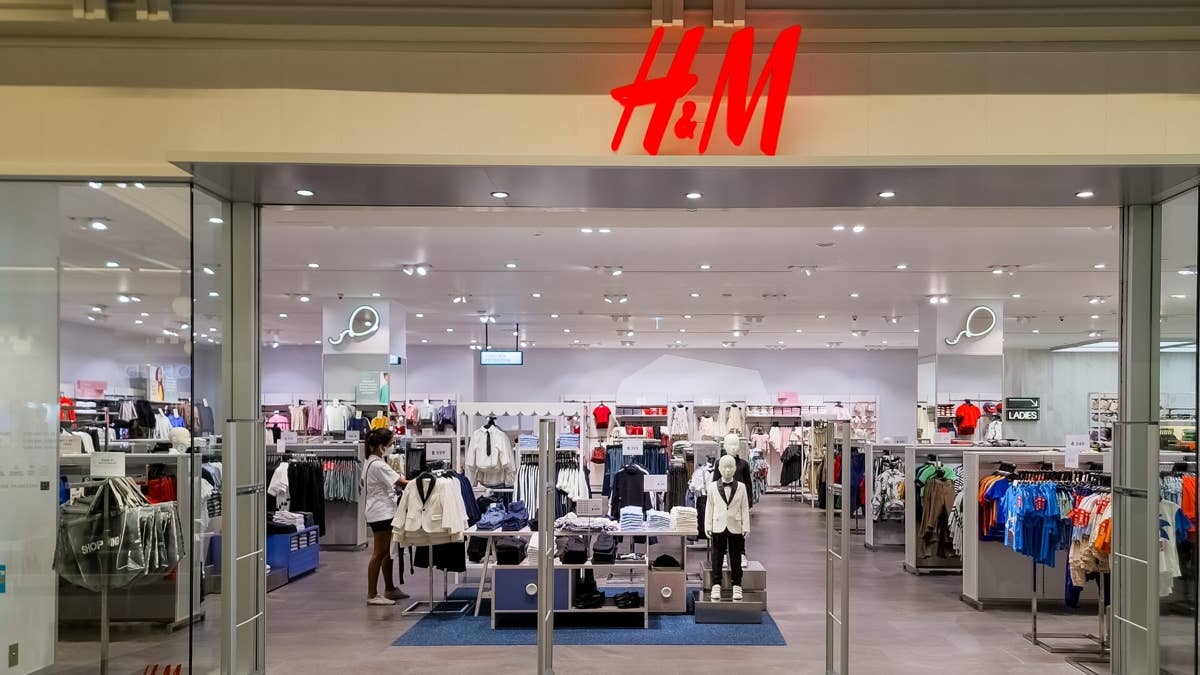
H&M has closed more than 600 stores since 2022, with 136 closing over the past six months. In addition, the chain has shut down most standalone stores for its Monki brand while transitioning select locations to its Weekday brand.
H&M has been steadily shrinking
While it has also opened a number of locations, H&M Group closed 2022 with 4,702 stores and completed the first half of 2026 with 4,038, a loss of 644 locations. The chain has finished every year in that time period with fewer locations than it had the year before.
“At the beginning of the second quarter there were 163 fewer stores than at the same point in time last year and at the end of the quarter there were 128 fewer stores than at the same point in time last year,” H&M shared in its six-month earnings report.
The company also closed down the Monki brand, folding some of its products into the Weekday brand.
“The comparison with the previous year is affected by the closure of all Monki stores in 2025. At the beginning of the second quarter last year there were 43 Monki stores, with 32 remaining at the end of the quarter,” the retailer shared.
Although sales decreased by 1% in the first six months of the year, profitability improved, and CEO Daniel Ervér said the company was on track to complete its goals.
“Sales in the quarter were somewhat lower than planned, while profitability and the stock-in-trade situation developed well. The profitability improvement and increased inventory
productivity are in line with our long-term work to lay the foundations for sustainable and profitable growth,” he wrote in a letter inside the earnings report.
Monki stores were closed
In 2023, H&M paired Monki, its label targeting a younger audience, with its Weekday brand “to create a single youth-focused brand hub,” according to Fashion Network.
At the time, the retailer also shared that it was bringing back its Cheap Monday brand.
“The unique brands Weekday and Monki will be offered, together with Cheap Monday, that is set to return with a small assortment of jeans,” the company confirmed in a press release.
“To develop Weekday into a youth destination, the Monki brand will be incorporated into the Weekday unit. This will leverage customer synergies and also reduce administration and operational costs, freeing up resources to further focus on developing the brand experiences and a strengthened overall offer,” the company shared.
At the time, however, H&M insisted that Monki would also retain an independent presence.
“The unique Weekday and Monki brand experiences will remain, at the same time as new opportunities with combined customer experiences will be explored,” it added.
That decision was reversed in 2024, and all Monki stores were shut down by the end of 2025, although the brand remains as part of Weekday’s product lineup.
Folding Monki into Weekday also reflects a broader shift at H&M. Rather than expanding its portfolio of brands, the retailer is simplifying its business to lower costs and focus its marketing resources on fewer concepts.
Monki operated 56 stores at the time the decision to close the brand was made.
Shutterstock
H&M faces an online challenge
Shein and Temu are digital global brands that can undercut H&M on price and speed because they don’t need to pay for retail stores or worry about the logistics of supplying them.
H&M’s online channel has not picked up the slack of store closures to the extent that it has at many of its multichannel competitors,” Sofie Willmott, content head of apparel at GlobalData, told RetailDive in response to an earlier group of H&M store closures.
Ervér did say H&M was investing in improving its digital business, but was somewhat vague.
“In the second half of the year we will start upgrading the digital infrastructure that will support our development. The new infrastructure will provide better decision support, faster processes and greater precision in how we plan our assortment and stock-in-trade,” he wrote.
H&M has been working to offer a differentiated store experience that’s specific to the market in which it’s operating, PYMNTS.com reported.
“Customizing the shopping experience based on the local community’s needs and preferences is a way for stores to create a sense of familiarity and connection. This personal touch has an opportunity to strengthen the bond between the brand and consumers,” the website shared.
More Retail:
- Struggling women’s clothing retailer shutters 171 stores
- Retail giant launches first new home brand in 5 years
- Discount retail giant wins as shoppers change how they spend
The strategy appears designed to leverage its network of stores around the world in a way Shein and Temu can’t match.
“Smaller, community-focused stores can offer selected products that match the tastes and trends of the area. Staff in these compact stores are more likely to understand the community, allowing them to give personalized recommendations and services that resonate with customers,” PYMNTS added.
H&M faces sustainability headwinds
“The global fast fashion industry in 2026 represents one of the most significant paradoxes in the modern consumer economy. It remains a sector defined by hyper-accelerated production and unprecedented digital engagement, yet it is simultaneously grappling with an existential shift toward mandatory sustainability and circularity,” wrote Retail Analyst Shayaike Hassan.
He shared that H&M has tried to push back on the sustainability issue in a number of ways.
- H&M has positioned itself as a leader in transparency and the circular economy.
- It consistently ranks higher on the Fashion Transparency Index compared to Zara (a leading brick-and-mortar rival) and publishes detailed lists of its Tier 1 and Tier 2 suppliers.
- H&M’s global Garment Collecting program allows customers to recycle old clothes from any brand in exchange for discount vouchers, fostering a circular mindset.
“Transparency is the public disclosure of information that enables people to hold decision-makers to account. For the fashion industry, it means sharing information about supply chains, business practices and their associated impacts on workers, communities and the environment,” according to the Fashion Transparency Index.
Activists remain skeptical.
“The devil is in the data,” Lubomila Jordanova, a sustainability practitioner, told WWD.com about H&M’s sustainability report — noting missing production volume data means the brand may be reporting “50% less of the reality” of its total emissions.
McKinsey’s report examined the depth of the industry’s problem, although it did not address H&M specifically.
“Some estimates suggest that consumers treat the lowest-price garments as nearly disposable, discarding them after only seven wears. For every five garments produced, the equivalent of three end up in a landfill or are incinerated each year,” according to McKinsey.
H&M also suffers from being stuck in the middle compared to some of its rivals, Bernstein Analyst William Woods told Business of Fashion.
“The business model is still slow. They’re still on six-month lead times, not near-shoring much and not really sustaining the product newness. Zara is dropping product into stores once a week.
H&M remains profitable, but its challenge has shifted from competing against Zara to competing against a new generation of digital-first retailers that can move faster and operate with lower costs.
The company’s shrinking store base reflects an effort to adapt, but whether those changes are enough remains uncertain.
Related: 60-year-old retailer closes over 240 locations across 35 states