It’s been about five years since the U.S. Food and Drug Administration approved Wegovy for chronic weight management, but semaglutide, the active ingredient in Ozempic and similar drugs, goes back much further.
Semaglutide was first synthesized in 2008 after scientists found that saliva extracted from Gila monsters contained a peptide that stimulated insulin release, similar to glucagon-like peptide-1, which does the same in humans, Formblends shared.
But human GLP-1 has a half-life of just one to two minutes, while the Gila monster peptide has a half-life of two to four hours. That type of stability made the saliva a viable candidate for further testing, which eventually led to the creation of semaglutide.
Ozempic was eventually developed by Novo Nordisk in 2017 to treat type 2 diabetes. The drug’s off-label use for weight loss was noticed by providers and patients almost immediately, and Novo Nordisk responded by developing Wegovy, which also featured the same semaglutide molecule, just at a higher dose.
The new half-life was about seven days, enabling once-weekly dosing. Wegovy was approved in 2021, and the rest is history.
By 2024, Ozempic became the best-known prescription medication brand in the U.S., according to Formblends.
But that only scratches the surface of just how popular GLP-1 medications have become.
GLP-1 use in the U.S. reaches new high
About 11% of U.S. adults took GLP-1 medications for weight loss purposes in 2026, according to the Gallup National Health and Well-Being Index.
That is more than triple the 3% of adults who reported doing so just two years prior in 2024. And 15% of Americans report having used GLP-1s for weight loss at some point, an increase of nine percentage points.
So more than one in 10 American adults is currently using a GLP-1 drug for weight loss, and more than one in seven have used it at some point in the past, the Gallup Index revealed. The results relied on a web survey of 5,065 adults conducted between May 28 and June 5.
Obviously, GLP-1s work well, so U.S. obesity is starting to decline.
The U.S. obesity rate is down to 36.4% in the U.S. in 2026 from a record high of 39.9% in 2022, according to Gallup.
Brand-name GLP-1 medicines dominate
If you have insurance, GLP-1s aren’t that expensive.
Patients with diabetes coverage are only on the hook for the typical prescription co-pay, which could range between $25 and $100 a month, according to Sword Health.
Some plans now also cover GLP-1s for weight loss. If you have weight loss coverage, patients usually pay between $100 and $300 a month.
But without insurance, these drugs are prohibitively expensive, especially the name-brand ones.
Without insurance, GLP-1s often cost between $900 and $1,400 a month, or up to $12,000 a year, according to the National Conference of State Legislatures.
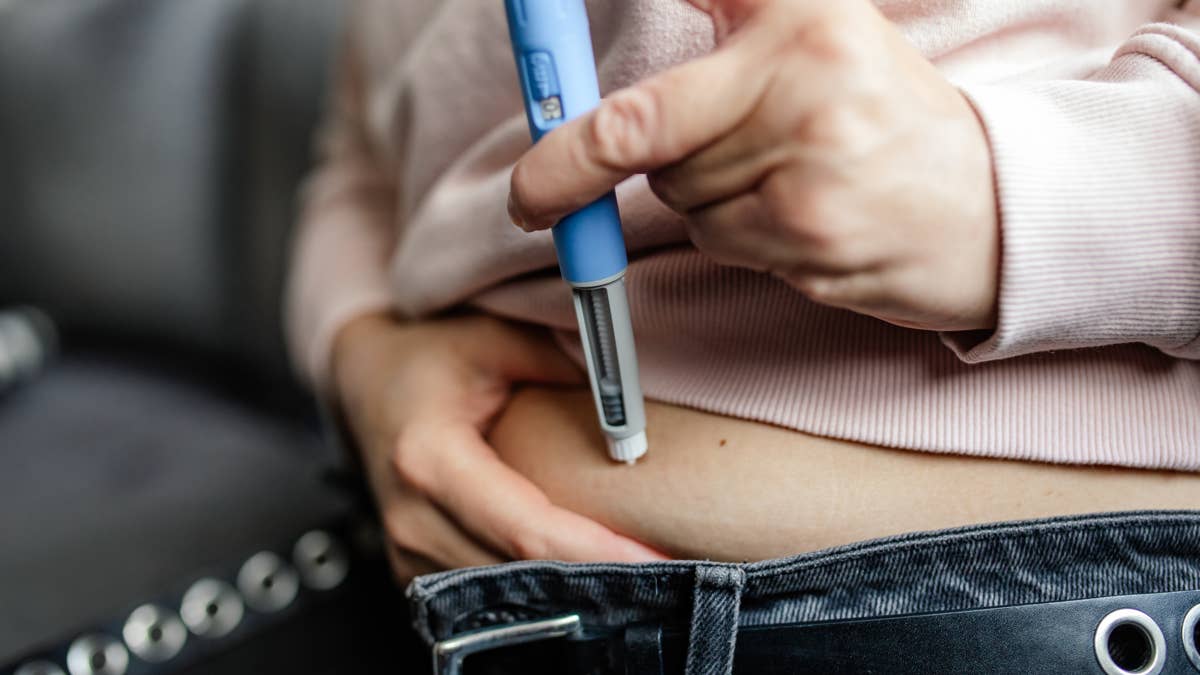
Still, brand-name medications like Ozempic and Wegovy comprise 68% of current usage, according to Gallup, compared to 19% for compounded or custom-mixed versions of the medicine.
However, despite the Food and Drug Administration recently raising concerns about the side effects of unapproved GLP-1s for weight loss, one-third of GLP-1 users have switched from brand-name to compounded or custom-mixed drugs.
“While brand-name GLP-1s continue to significantly lead the marketplace, the lower cost of compounded or custom-mixed varieties is fueling a shift away from brand-name choices and is likely making GLP-1s available to broader sectors of the population,” Gallup researchers concluded.
“That broader availability — though still limited — may be what’s driving GLP-1 usage higher overall.”
Related: Goldman Sachs doubles down on Novo stock target after key event