Two tankers loaded with Saudi crude turned around in the Red Sea on July 22. They had been heading toward China and India. The Houthis had just claimed strikes on them.
Around the same time, Kazakhstan’s oil exports were falling again after the Caspian Pipeline Consortium suspended loadings at its Black Sea terminal because of attacks.
Two separate disruptions, two separate shipping corridors, on the same day.
Goldman Sachs was already working on a new oil research note. Lead analyst Daan Struyven and his team had been watching the same headlines. By the time the note published, Goldman had a clear message for investors: The price forecast stays at $80 Brent for Q4 2026, according to Investing.com — but the risk around that forecast has shifted.
The chances of going higher have increased. The chances of going lower have not.
What Goldman Sachs said about oil prices and Red Sea shipping risks
The two events on July 22 are exactly the kind of thing Goldman’s note was built around. Houthi forces claimed strikes on two Saudi oil tankers transiting the Red Sea. The tankers turned around before reaching the Bab-al-Mandab Strait, according to CNBC.
At the same time, CPC oil loadings appear to have declined following fresh attacks on tankers at its Black Sea terminal, affecting the pipeline that carries about 80% of Kazakhstan’s crude exports to global markets.
Neither development on its own changes the supply picture fundamentally. Together, Goldman says, they’re the kind of incremental pressure that tilts near-term risk to the upside without yet being large enough to move the baseline.
Related: U.S. blocks Strait of Hormuz: Here’s what’s next for oil prices
Oil flows through the Bab-al-Mandab Strait, the chokepoint connecting the Red Sea to the Gulf of Aden, have averaged nearly 9 million barrels per day over the past 30 days.
That includes roughly 4 million barrels per day that would be extremely hard to reroute if disruptions hit the Bab-al-Mandab, the Strait of Hormuz, and the Suez Canal simultaneously.
The Houthis declared a maritime embargo against Saudi Arabia, threatening to cut off the kingdom’s Red Sea oil exports entirely, according to CNBC.
Saudi loadings at the Yanbu port have stayed stable at around 5 million barrels per day for now. Whether they stay that way depends on whether the Houthis follow through.
Why Goldman kept its $80 Brent oil forecast unchanged
Goldman didn’t raise its forecast because the baseline still assumes geopolitical tensions gradually ease before Q4.
That assumption is doing a lot of work in the model. The bank expects Middle Eastern production to fall in the second half of 2026 as a result of the conflict, which provides support. But two things are pulling the other way.
Middle Eastern output came in stronger than expected in June, adding supply the market hadn’t fully priced in. And Goldman downgraded its demand expectations for China, South Korea, and the Middle East after weak consumption data from all three.
More Oil & Gas:
- Drivers face an unpleasant surprise at the gas pump
- U.S. blocks Strait of Hormuz: Here’s what’s next for oil prices
- A big shift in the U.S. energy market is about to happen
That demand softness takes some pressure off prices even as supply risk rises on the other side.
WTI stays at $76 for Q4 2026 under the same unchanged baseline. For 2027, assuming Hormuz stays open, Goldman forecasts Brent at $75 and WTI at $70, with a global surplus of 3.2 million barrels per day.
That’s not a bullish picture for next year. But Goldman doesn’t think it translates to a price collapse either, as TheStreet reported.
Goldman’s oil price upside scenario and how bad it could get
Goldman outlined what happens if the baseline assumption is wrong.
If the Strait of Hormuz remains significantly disrupted through 2027, Brent could exceed $120 in Q4 2026 and average around $100 throughout 2027. If disruptions spread simultaneously to the Bab-al-Mandab and the Suez Canal, Goldman estimates an additional $25 of upside on top of that scenario.
Gulf oil production would only fully recover by December 2027 in that case, with pipeline extensions helping bridge the gap.
There’s also a downside. Brent could fall to the low $60s by the end of 2027 if supply exceeds Goldman’s expectations and demand losses prove more persistent. That scenario looks less likely right now, but it’s there.
Goldman also gave investors a specific trade to go with the view. If you want to hedge against persistent Mideast and Russia disruptions, the bank said to go long the December 2026 to March 2027 European diesel/gasoil timespread.
That’s the instrument Goldman thinks captures the geopolitical risk most efficiently right now.
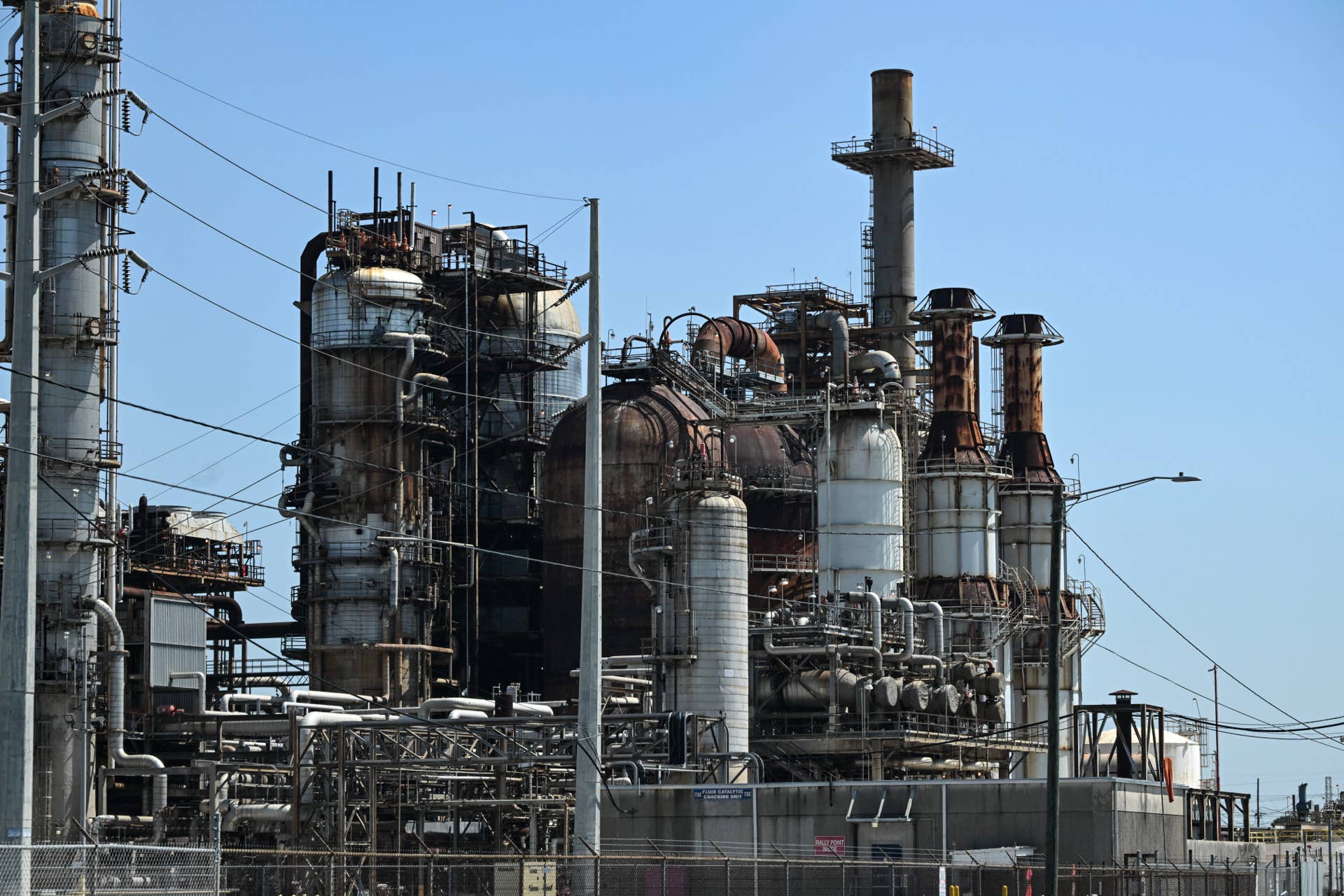
Ronaldo/Getty Images
Why Goldman expects oil prices to stay firm through summer 2026
Even under the base case, Goldman expects oil to hold most of its recent gains through July and August. Global visible oil stocks have already hit a year-to-date low.
Three things are keeping them under pressure.
Middle Eastern production is expected to fall in July. Summer travel should add roughly 0.8 million barrels per day of demand in Q3 versus Q2. And strategic petroleum reserve releases have slowed sharply after heavy drawdowns in Q2, with South Korea and Japan now actively rebuilding reserves rather than releasing them.
That shift removes a source of supply that had been quietly cushioning the market.
Put those together and you get a summer where inventory keeps drawing even if the broader economic backdrop stays mixed.
What prevents oil from collapsing even in a 2027 surplus
Goldman’s 2027 surplus forecast is 3.2 million barrels per day, assuming Hormuz stays open.
That’s a large number. Normally it would drag prices down hard. Goldman doesn’t think it will, and the reasons are specific.
Governments are expected to add roughly 1.2 million barrels per day of demand through strategic stockpiling in 2027. U.S. shale economics create a natural floor: sustained prices below roughly $60 a barrel slow drilling and reduce future supply, which tightens the market from the supply side.
Both factors together mean Brent probably doesn’t fall much below the high-$60s even in the surplus scenario, as TheStreet reported.
Goldman’s bottom line is that the balance of risks points up, not down, especially near-term. The official forecast hasn’t moved yet. But the conditions that would move it higher are building.