The S&P 500 has already gained more than 9% this year. Goldman Sachs just said it’s not done.
In a note published May 26, the bank raised its year-end target for the index. It made a specific argument about what drove the decision, and it’s something every equity investor should understand.
Goldman Sachs raises S&P 500 target: the analyst behind the call
Goldman Sachs raised its 2026 year-end S&P 500 (SPY) target to 8,000 from 7,600 on May 26, according to Bloomberg.
The new target is 6.4% above the index’s last close of 7,519.12 and implies a total return of approximately 17% for 2026. Ben Snider, Goldman’s chief U.S. equity strategist, led the revision.
More Wall Street:
- JPMorgan resets S&P 500 price target for the rest of 2026
- Vanguard challenges the S&P 500 as a one-stop strategy
- Goldman Sachs resets Broadcom stock forecast
Goldman also raised its S&P 500 earnings-per-share forecast to $340 for 2026, implying 24% year-over-year growth, and to $385 for 2027, a further 13% increase, Bloomberg confirmed.
“Earnings growth has powered the entire S&P 500 return so far this year, and we expect this dynamic to continue in the coming months,” Goldman explained in the note.
Why earnings are the entire foundation of Goldman’s bull case
Goldman is not making a valuation argument; it is making an earnings argument. That distinction matters because a market rising on multiple expansion is fragile and depends on investors continuing to pay more for the same profits. A market rising on actual earnings growth has a more durable foundation.
The bank is explicitly saying the second scenario is what’s happening. Earnings estimates are rising faster than index prices, which means the market is not getting ahead of fundamentals, at least not yet. That gives Goldman confidence that the index can keep advancing through year-end.
The first-quarter reporting season was the trigger. Goldman described it as “exceptionally robust,” according to TipRanks.
The beat rate was strong enough to push the bank’s full-year EPS assumptions materially higher and give Snider the confidence to move the year-end target by 400 points.
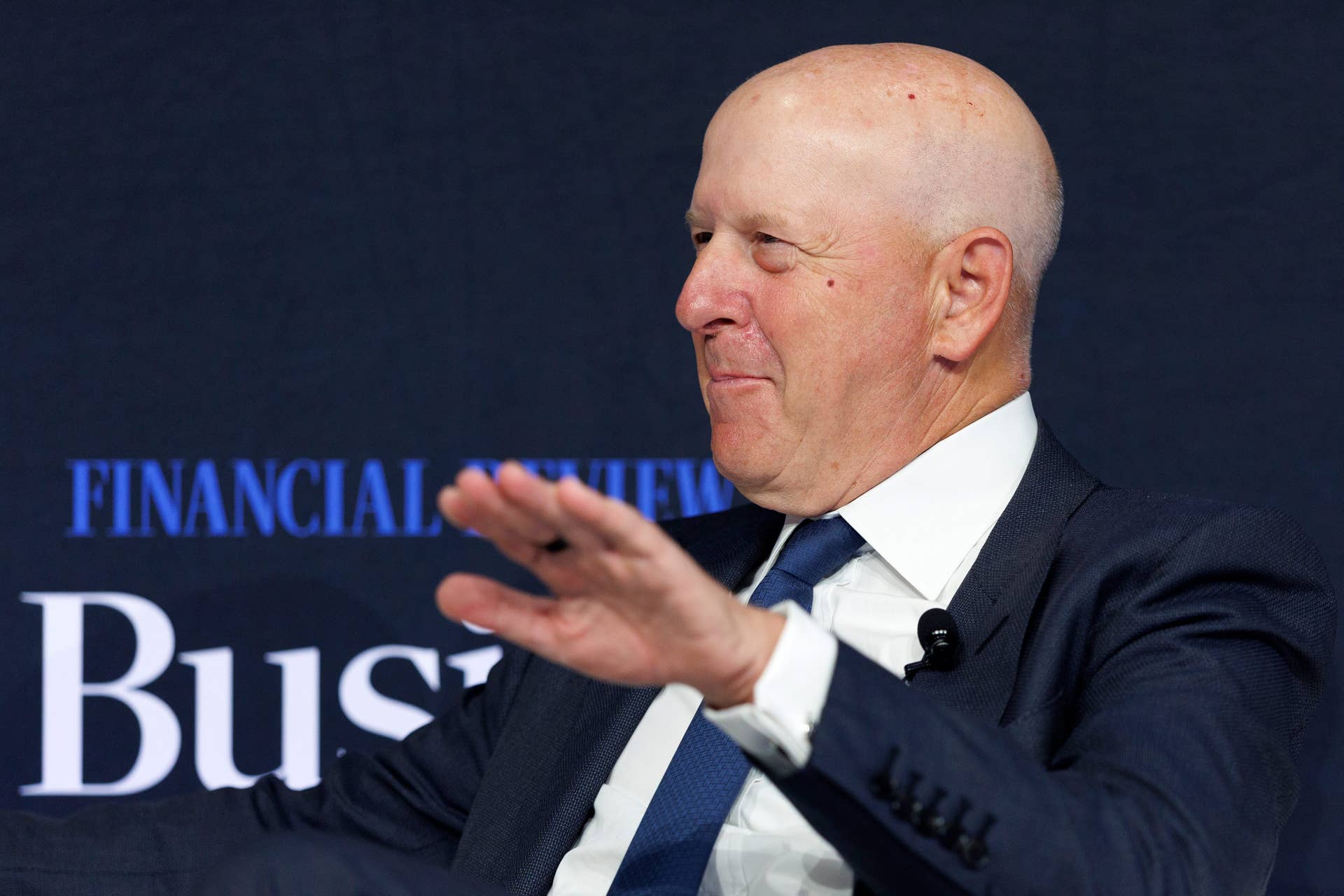
Thorne/Getty Images
How AI is shaping Goldman’s S&P 500 earnings outlook
AI infrastructure beneficiaries are set to drive approximately half of the S&P 500’s earnings growth this year, according to Goldman, Bloomberg confirmed. That concentration is the single most important structural fact in the bank’s revised forecast.
Goldman noted a specific tension inside that theme. “While S&P 500 earnings estimates have risen more quickly than index price appreciation, the semiconductor stocks at the heart of the AI infrastructure complex have recently outpaced their forward earnings,” the bank said.
In plain terms, the broader index looks reasonably valued on earnings. But the AI semiconductor names that are driving a disproportionate share of those earnings have already run ahead of their own profit growth. That creates a two-speed market where the overall target can still be justified, even while the hottest names carry elevated risk.
Goldman flagged weak consumer spending and elevated costs as risks that strong AI investment would need to offset. The bank’s base case is that it can, at least through year-end.
Key figures from Goldman’s May 26 S&P 500 note:
- New target: S&P 500 to 8,000 by year-end 2026, raised from 7,600; 6.4% above the May 26 close of 7,519.12; analyst Ben Snider, according to Bloomberg.
- Implied total return: Approximately 17% for full-year 2026 from current levels, TipRanks noted.
- EPS forecasts: $340 for 2026, implying 24% year-on-year growth; $385 for 2027, a further 13% increase, Bloomberg confirmed.
- AI earnings driver: AI infrastructure beneficiaries set to drive approximately half of S&P 500 earnings growth this year, Bloomberg reported.
- S&P 500 YTD: Index up more than 9% year to date through May 26, TipRanks confirmed.
- Peer calls:UBS also recently raised its S&P 500 outlook, citing AI-driven earnings as an offset to inflation and geopolitical risks, according to Gulf Business.
What the S&P 500 needs to reach 8,000 and what could stop it
Goldman’s target is an earnings call more than a market call. If the 24% EPS growth assumption holds, the math works. If it does not, the case weakens quickly.
The key variables are Q2 and Q3 earnings seasons. Strong results with stable or improving guidance would validate Goldman’s revised EPS assumptions and keep the 8,000 target in play. Margin compression or cautious guidance from major tech names would put the forecast under pressure.
The AI semiconductor tension Goldman flagged is also worth watching. If those stocks continue outpacing their earnings growth while the rest of the market catches up, the index can still reach the target. If AI names correct to close the gap, the index’s largest components face headwinds at the exact moment the rest of the market may not be ready to compensate.
Goldman is constructive for now. The earnings data over the next two quarters will determine whether that view proves right.