Oil prices surged above $120 a barrel in April as the Iran conflict choked the Strait of Hormuz and traders feared the worst.
Since then, something unexpected has happened. Prices have been falling. Not because the conflict ended, but because the market found a way around it.
Goldman Sachs analysts Daan Struyven and Yulia Zhestkova Grigsby published a note this week laying out why the energy market’s recovery matters, what it means for different parts of the energy sector, and why crude oil faces less upside risk than many investors might expect, Bloomberg reported.
Why Goldman says Hormuz oil flows are recovering faster than expected
The Strait of Hormuz is the single most important oil chokepoint in the world. About a third of the globe’s seaborne oil passes through it on the way from Persian Gulf exporters to global buyers.
When the Iran conflict escalated earlier this year, flows collapsed. Goldman estimates total crude and oil-product exports through the Strait fell to roughly 5 to 6 million barrels per day in March, down from about 22 to 24 million barrels per day before the conflict, Bloomberg reported.
Since March, that recovery has been steady. Flows now sit at approximately 15 to 16 million barrels per day. Still 7 to 8 million barrels short of prewar levels, but well above the March low. About 6 to 8 million barrels per day of crude specifically is transiting the Strait, according to traders who spoke with Bloomberg.
More Oil & Gas:
- Goldman Sachs doubles down on oil price forecast for 2026
- Drivers lose control over gas price squeeze
- A big shift in the U.S. energy market is about to happen
“The rise in dark crossings by specialized shippers, and in ship-to-ship transfers shows that producers and shippers are adapting to the Mideast conflict,” Goldman wrote. “Higher dark flows could moderate the upside to crude oil prices even if Mideast disruptions last longer.”
A dark crossing is when a tanker turns off its satellite transponder to avoid tracking. Ship-to-ship transfers move cargo between vessels mid-journey instead of following a standard route. Neither practice is new. Both are being used more heavily now. The oil is moving. It is just harder to see where it is going.
The result is that crude prices have fallen sharply from the April peak above $120. At the time of Goldman’s note, oil traded around $89 a barrel. It has since slid further toward $83. The recovery in Hormuz flows is the primary reason.
Why European gas and refined fuels face more risk than crude
Goldman’s more cautious crude outlook does not apply equally to every part of the energy market.
Flows of liquefied natural gas and refined fuels through the Strait remain lower than crude oil flows. That creates a different risk profile. “We continue to see greater price upside to European natural gas prices and deferred oil product prices in persistent disruption scenarios than for crude,” Goldman wrote.
European natural gas is particularly exposed because the region depends heavily on imported LNG and has limited capacity to absorb sustained shortfalls. If Hormuz disruptions persist, European gas buyers face a tighter market than crude-oil traders do.
Refined fuels, including diesel, jet fuel, and gasoline, face a similar dynamic. Crude can flow through workarounds that refined products cannot always use. Refineries and fuel distribution networks are less adaptable to ship-to-ship transfers and dark routing than raw crude cargoes.
For consumers and businesses, that distinction matters. Gasoline and diesel prices can move differently from crude when refinery capacity, shipping routes, or fuel-specific supply chains are disrupted. The current disruption is showing that split in real time.
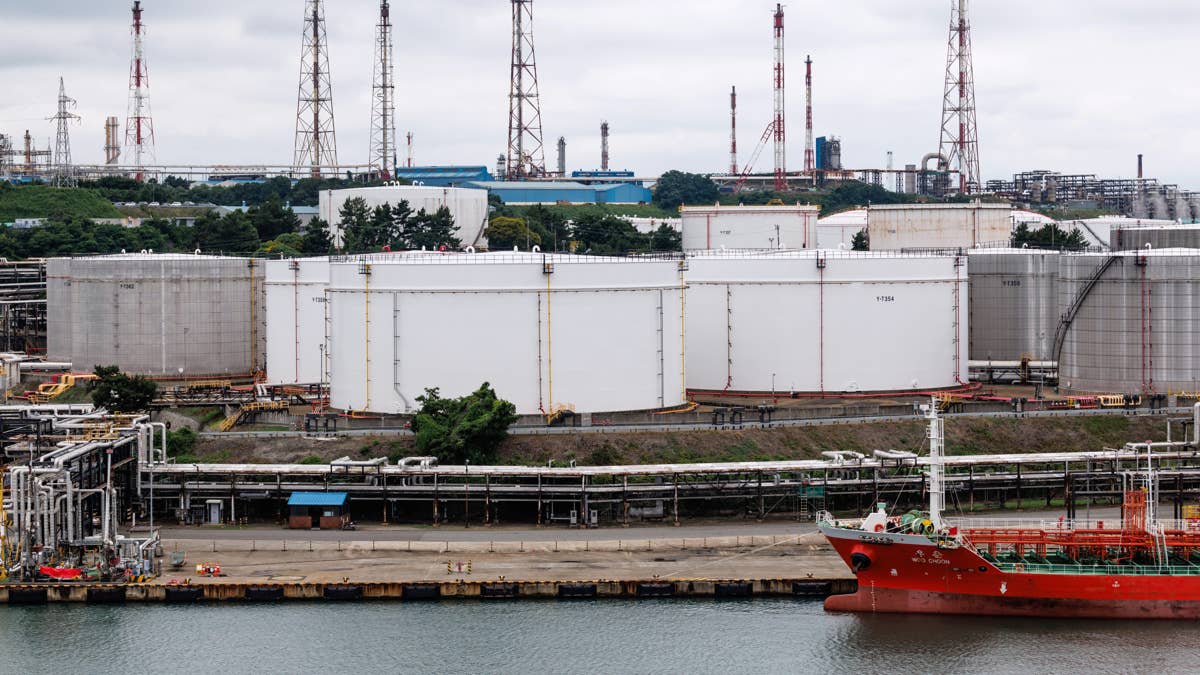
Cho/Getty Images
What Goldman’s oil call means for the U.S. economy
The pullback in crude from $120 to $89 has direct economic consequences that go beyond energy sector earnings.
Energy prices drove the bulk of the spike in headline inflation earlier this year. The Federal Reserve Bank of Boston found that the personal consumption expenditure price index jumped from 2.9% in February to 3.8% in April, the bank noted, and attributed the move primarily to the energy price surge.
A sustained pullback in oil reverses much of that inflationary pressure.
The Federal Reserve Bank of Chicago modeled the GDP impact of the 2026 oil shock and found it could shave between 81 and 166 basis points off economic growth this year, the Chicago Fed reported. A sustained drop back toward prewar price levels would partially restore that lost growth.
The San Francisco Fed was more direct. When oil prices surged in April, the bank revised its near-term growth projections down, citing the impact of higher energy costs on real incomes and consumer spending.
Lower gas prices work the other way. They put more money in household budgets without requiring a wage increase.
Goldman’s view is that the Hormuz recovery limits the upside risk to crude. If that assessment holds, energy’s drag on the U.S. economy should ease through the rest of 2026. That in turn reduces pressure on the Federal Reserve to hike rates specifically because of energy-driven inflation.
What investors should watch in energy markets now
Goldman’s note is not a declaration that the crisis is over. It is a call for more precision about which parts of the energy complex carry the most risk.
The recovery in Hormuz flows can reverse quickly. A decline in tanker activity, infrastructure damage, or a broader escalation could push crude back toward the spring highs. The dark-shipping workarounds that have supported flows depend on a specific set of conditions that are not guaranteed to persist.
Physical oil flows matter more than daily price moves as a signal. Export volumes through the Strait, tanker tracking data, the volume of ship-to-ship transfers, and LNG shipment volumes are more informative than crude spot prices on any given day.
For investors watching the broader economy, the key question is whether Goldman’s assessment holds through the end of the year. If flows stabilize at current levels, the inflation and growth drag from the energy shock eases. If they deteriorate, the economic headwinds return alongside higher crude prices.
Related: Chevron stock turns heads as company strikes fresh oil