Goldman Sachs is no stranger to paradigm shifts.
The term refers to a fundamental change in the basic concepts, practices, or underlying assumptions of a field or society.
The phrase was popularized by American physicist and philosopher Thomas Kuhn in his 1962 publication, The Structure of Scientific Revolutions.
The book argues that science progresses through periods of “normal science” punctuated by revolutionary shifts — or “paradigm shifts” — rather than a steady accumulation of facts.
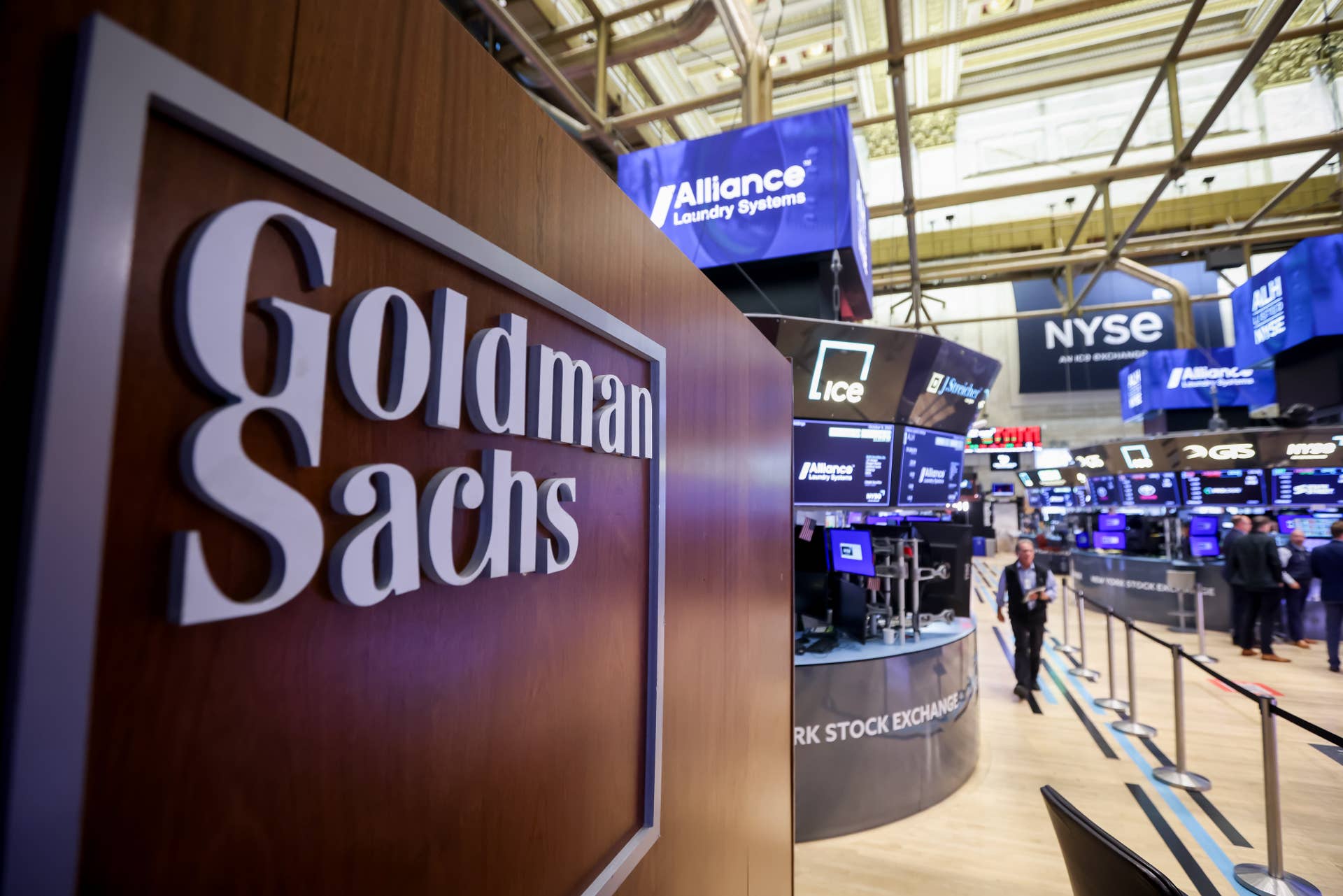
Those were the very same words that Goldman Sachs (GS) used to describe the iconic investment firm’s decision to go public on May 4, 1999, ending its 130-year history as a private partnership.
“After decades of impassioned debate, the partners of Goldman Sachs vote in 1998 to take the firm public the following year,” said the firm, which functioned briefly as a joint stock association between 1922 and 1927.
In the late 1960s, the company’s top executives canvassed partners for their views on going public, but the idea didn’t garner much support.
However, three decades later, the firm said, “the business advantages of going public became undeniable.”
Goldman Sachs was the last major private Wall Street investment firm to go public. The IPO involved 69 million shares and raised $3.657 billion, the second-largest initial public offering in the history of U.S. finance at the time.
The shares were offered at $53, and they rose by 33% over the course of their first trading day, closing at $70.375.
“Everyone knew it was going to be big,” Randall Roth, an analyst at Renaissance Capital Corp., told the Associated Press at the time. “This is a stock you’re going to sock away in your portfolio rather than day trade.”
The paradigm shift was underway.
Nagle/Getty Images
The origins & early years of Goldman Sachs
The firm’s journey to become a global investment bank with $3.1 trillion in assets under supervision began over 150 years ago in 1869, when a German immigrant named Marcus Goldman opened a one-room basement office next to a coal chute in a building on Pine Street in lower Manhattan.
Goldman identified himself as a broker of IOUs, purchasing promissory notes from local merchants and reselling them to commercial banks.
In 1885, his son-in-law, Samuel Sachs, joined the enterprise, and the company formally adopted the partnership structure that would eventually become Goldman, Sachs & Co.
Related: History of Honeywell: Company timeline, milestones & facts
Goldman Sachs joined the New York Stock Exchange (NYSE) as a member company (AKA a broker-dealer, not a listed company) in 1896. The company pioneered the use of commercial paper — short-term unsecured promissory notes — to help entrepreneurs raise capital.
Goldman Sachs entered the IPO business in 1906 when it helped take Sears, Roebuck and Co. public.
This is the area of finance that would define the firm, as it became the undisputed market leader in taking some of the world’s largest and most famous companies public for over a century.
Other underwriting work for IPOs followed, including those of General Cigar Company (also in 1906), F. W. Woolworth Company in 1912, and Continental Can in 1913.
Sidney Weinberg, also known as “Mr. Wall Street,” started with Goldman Sachs as a janitor’s assistant at $3 per week and became senior partner in 1930.
Under Weinberg’s leadership, Goldman Sachs was the lead advisor on the Ford IPO in 1956, a major victory at the time, as well as the $350 million debenture offering by Sears Roebuck in 1958.
Goldman Sachs becomes an IPO powerhouse
The firm also started an investment research division and a municipal bond department, as well as becoming an early innovator in risk arbitrage, which is essentially the process of betting on the outcomes of mergers and acquisitions.
Goldman Sachs would go on to manage some of the largest public offerings in history, including Deutsche Telekom, for which the firm served as joint global coordinator on the company’s $13 billion privatization in 1996, the largest equity offering to date.
Related: History of Amazon: From garage startup to tech titan
The company co-led General Motors’ (GM) $20.1 billion IPO in 2010, served as a joint bookrunner on Alibaba Group’s (BABA) record $25 billion listing in 2014, and acted as a lead underwriter on Uber Technologies’ (UBER) $8.1 billion IPO in 2019.
Goldman Sachs also acted as the lead underwriter for the highly anticipated SpaceX IPO in June 2026.
On December 4, 1928, the firm launched the Goldman Sachs Trading Corp., a closed-end fund, which failed during the Wall Street Crash of 1929, amid accusations that Goldman Sachs had engaged in share price manipulation and insider trading.
While Goldman Sachs became one of the world’s most influential investment banks, its history has not been without setbacks and controversy.
Goldman Sachs’ history of contending with controversy
The firm has been criticized for its role in the 2008 global financial crisis, the use of offshore tax havens, and a “revolving door relationship” where employees and consultants have moved in and out of high-level U.S. government positions, leading to the nickname “Government Sachs.”
The list includes former Goldman Sachs CEO Hank Paulson, who served as Treasury secretary under President George W. Bush; former Goldman partner Steven Mnuchin, who served as Treasury secretary under President Donald Trump; and former co-chairman Robert Rubin, who served as Treasury secretary and director of the National Economic Council under President Bill Clinton.
Related: History of IBM: Company timeline, milestones & facts
Goldman Sachs’ stock and financial performance
Goldman Sachs entered the Dow Jones Industrial Average on September 23, 2013.
Since going public in 1999, the financial institution has maintained its stock structure without any forward or reverse stock splits, causing its shares to trade at high nominal values. As of mid 2026, GS shares were trading at well over $1,000.
Analysts generally view Goldman Sachs as a bellwether for investment banking activity and capital markets trends, with earnings often influenced by dealmaking volumes, trading activity, and broader economic conditions.
Goldman Sachs reported net revenues of $58.28 billion in 2025, up 9% from the previous year. The company posted net earnings of $17.18 billion in 2025, up from $13.52 billion a year earlier.
More company histories:
- History of American Express: Company timeline & facts
- History of Costco: Company timeline & facts
- History of Coca-Cola: Timeline, facts & milestones
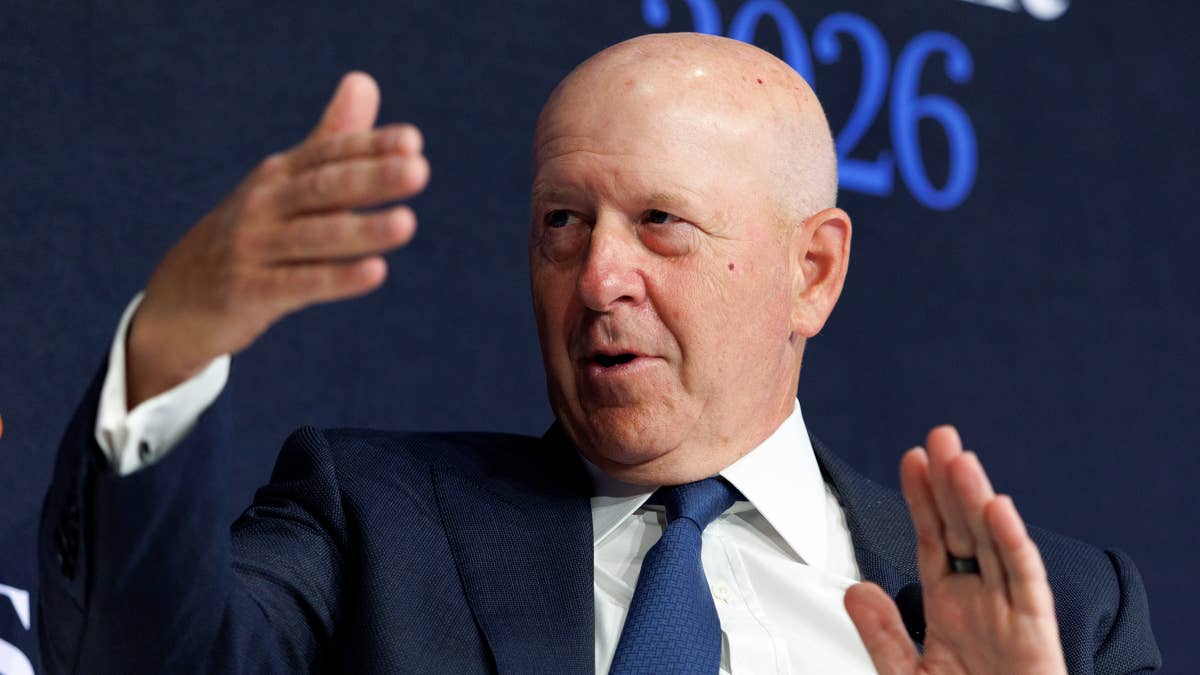
David Solomon, who joined the company in 1999, became CEO in October 2018, succeeding Lloyd Blankfein and was named chairman after Blankfein’s retirement.
“Our performance underscores the importance of having a scaled, diversified, and global franchise that can support clients across a wide range of market conditions,” Solomon told analysts during the company’s first-quarter 2026 earnings call.
“Operating as a leading global financial institution requires deep expertise, long-term investment, and a culture grounded in risk discipline.”
“This is what differentiates Goldman Sachs and what clients rely on, particularly in periods of uncertainty,” he added.
A timeline of Goldman Sachs’ milestones
1869: German immigrant Marcus Goldman opens a one-room basement office in lower Manhattan.
1882: Goldman’s son-in-law, Samuel Sachs, joins the firm.
1885: Goldman’s son, Henry Goldman, and his son-in-law, Ludwig Dreyfuss, join the business, and the firm adopts its present name, Goldman Sachs & Co
Nov. 1906: Goldman Sachs leads the initial public offering for Sears, Roebuck and Co
1970: Goldman opens its first international office in London, marking the start of its global presence.
Nov. 16, 1981: Goldman acquires J. Aron & Company, bringing the firm into the commodities and physical trading markets.
May 4, 1999: Goldman Sachs goes public and begins trading on the NYSE.
Sept. 21, 2008: Goldmanconverts to a bank holding company to access Federal Reserve funding during the global financial crisis.
Oct. 13, 2016: The company launches its consumer digital banking platform, Marcus by Goldman Sachs.
June 12, 2026: Goldman Sachs is the lead underwriter for the SpaceX (SPCX) IPO — the largest IPO in history.
Related: Goldman Sachs’ verdict on SpaceX’s record-setting $1.8T IPO
Quick facts about Goldman Sachs
- Founder: Marcus Goldman
- Founded: 1869
- Joined NYSE as a member company: 1896
- IPO: May 4, 1999
- Added to the Dow: September 23, 2013
- Employees: 47,000
- Headquartered: 200 West Street, New York, NY 10282