In 2014, Mark Zuckerberg decided it was time to shake things up.
Facebook’s co-founder and CEO had launched his company a decade earlier under the now-famous dictum “move fast and break things.”
The line was sparked by Zuckerberg’s fascination with hacker culture and a renegade attitude that pushed action over caution and flipped off authority.
“The idea is that if you never break anything, you’re probably not moving fast enough,” he said.
But 10 years after Facebook’s founding, the company had become a corporate heavyweight with a market cap of $206 billion, and the bad boy stance wasn’t working so well anymore.
So, Zuck chucked the old line and rebooted the internal motto to “Move fast with stable infrastructure” since constantly fixing bugs and rebuilding broken code was slowing Facebook down.
The company, now known as Meta Platforms (META), has continued to move, boasting a market cap of $1.57 trillion as of September 2026, while owning or operating several prominent social media platforms and communication services, including Facebook, Instagram, WhatsApp, Messenger, and Threads.
Meta & its stock in the modern day
Meta, which has nearly 79,000 employees, has never executed a stock split since going public. The company pays out cash dividends quarterly, and Wall Street analysts remain broadly bullish on the company, although their views on the stock’s valuation and AI spending vary.
No one can deny, however, that the social media giant has played a major role in reshaping how people communicate, form relationships, and consume information in the digital age.
Meta’s family of apps has 3.60 billion daily active users globally as of June 2026, but the company started with a much smaller following. Let’s go back to the beginning.
Facemash: Meta’s Harvard origins
In 2003, Zuckerberg, then a sophomore at Harvard University, created “Facemash,” which allowed users to compare two student photos side-by-side and vote on who was more attractive.
The site went viral instantly within the campus housing network, attracting 450 visitors and racking up 22,000 photo views in its first few hours online.
Harvard executives shut the website down after just a few days due to intense student outrage and copyright complaints. The university disciplined Zuckerberg, and he dropped out of Harvard during his sophomore year.
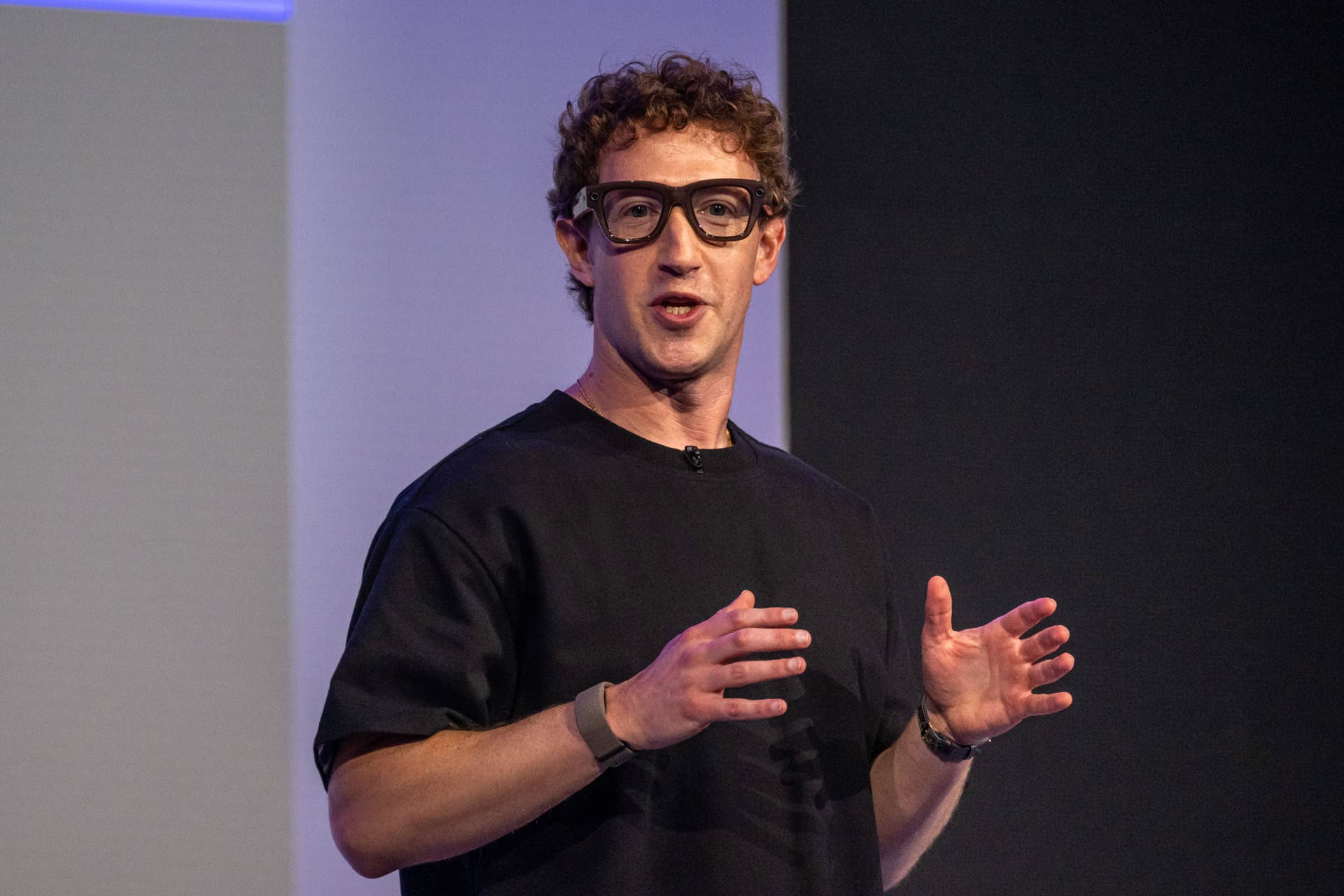
Facebook’s origins & early years
The project was a direct predecessor to TheFacebook, which launched in 2004.
Napster co-founder and Facebook’s first president Sean Parker advised Zuckerberg to ditch the ‘The’ because it sounded much cleaner. It doesn’t sound like such a big deal, but dropping that article allowed the site to transition into a proper noun and, eventually, a universal verb, as in “Facebooking” someone.
Related: History of TSMC & its stock: Company timeline, facts & milestones
Zuckerberg said in a 2010 interview that Facebook was “definitely in no rush” to go public, but two years later, the company did just that at an IPO price of $38 per share.
“Facebook organizes and prioritizes content and serves as a powerful social distribution tool delivering to users what we believe they will find most compelling based on their friends and interests,” the filing said.
Facebook’s growth and controversies
As Facebook grew, so did the controversy surrounding the popular platform.
In 2018, Facebook was engulfed in a major scandal after Cambridge Analytica, a British political consulting firm, improperly harvested personal data from up to 87 million Facebook users.
The Federal Trade Commission fined the company a record $5 billion in 2019 for privacy violations and deceptive practices related to user data.
The company paid an additional $100 million to settle charges with the Securities and Exchange Commission for misleading investors about data misuse risks.
Studies and whistleblowers have tied the platform’s design to compulsive usage loops and negative psychological effects, including anxiety, depression, and social comparison — particularly among teenagers.

Indranil/Getty Images
Facebook’s whistleblower charges
Frances Haugen, a former data scientist and product manager at the company, revealed internal research showing that platform algorithms prioritized profits over public safety.
“I’m here today because I believe Facebook’s products harm children, stoke division and weaken our democracy,” Haugen told Congress in October 2021.
She noted that the company’s leadership knows how to make Facebook and Instagram safer, “but won’t make the necessary changes because they put their astronomical profits before people.”
More tech company histories:
- Nvidia company history & timeline: From GPU maker to AI leader
- History of IBM: Company timeline, milestones & facts
- History of Apple: Company timeline and facts
Zuckerberg and other top executives faced aggressive questioning during congressional hearings and intense internal dissent from employees who demanded better transparency.
In a letter posted on Facebook, Zuckerberg said that “many of the claims don’t make any sense.” And it was at this heated time that Zuckerberg decided to shake things up again.
The Meta rebrand
The company would now be called Meta Platforms, and Facebook would become one of its subsidiaries.
Critics slammed the rebrand as an attempt to distract from the damaging revelations in Haugen’s leaked documents, but Zuckerberg maintained that the company was heading in a new direction.
“We are at the beginning of the next chapter for the internet, and it’s the next chapter for our company, too,” he said in his founder’s letter. The next platform will be even more immersive — an embodied internet where you’re in the experience, not just looking at it.”
“We call this the metaverse, and it will touch every product we build.”
However, the metaverse push generated heavy financial losses, and Meta increasingly shifted its focus toward artificial intelligence.
Reality Labs, which produces virtual reality (VR) and augmented reality (AR) hardware and software, posted a $19.193 billion operating loss in 2025 alone, forcing Meta to cut hundreds of jobs.
Benjamin/Getty Images
The Change to Meta Platforms
“Sometimes, we knock it out of the park,” Samantha Ryan, the vice president of content at Meta’s Reality Labs division, wrote in a blog post. “Other times, we get things wrong. And when we do, we look at the data, take in feedback, make decisive adjustments to our business strategy, and keep building.”
In August of 2026, Meta suffered another setback when it reached an agreement with a coalition of state attorneys general that could cost the company up to $18 billion.
Among other things, Meta agreed to impose stronger child-safety measures on Facebook and Instagram as part of a settlement that ended a trial over teen social media addiction.
Meta’s AI pivot
In September, Meta launched Muse, a personal AI agent designed to execute real-world, multi-step tasks in the background rather than just answering questions.
“Meta thinks personal superintelligence will be one of the most transformative technologies of a lifetime,” the company said in a statement. “Muse is a first step: an agent that takes on more of the work so people can focus on what matters to them.”
Meta reported $200.97 billion in revenue for 2025, up 22% from the previous year, while net income fell 3% to $60.46 billion due to a significant tax charge related to that year’s tax law.
“We’re the only major company building AI with the primary goal of putting superintelligence directly into people’s hands,” Zuckerberg said during the company’s earnings call. “Rather than centralizing superintelligence, we’re focused on distributing it widely and giving everyone the ability to direct it towards what matters to them.”
Meta’s history: A timeline of company milestones
October 2003: Mark Zuckerberg creates the predecessor site Facemash in his Harvard dorm room, which is quickly shut down by the university.
February 4, 2004: Zuckerberg launches TheFacebook with co-founders Eduardo Saverin, Dustin Moskovitz, and Chris Hughes.
August 2005: The company officially drops the “The” from its name after purchasing the facebook.com domain name for $200,000.
April 9, 2012: Facebook acquires Instagram for roughly $1 billion in cash and stock.
May 18, 2012: Facebook launches an initial public offering (IPO) at a price of $38 per share.
October 4, 2012: Facebook announces it has reached one billion monthly active users, having crossed the milestone a few weeks earlier on September 14.
February 19, 2014: Facebook announces its agreement to buy WhatsApp for about $19 billion.
March 17, 2018: Cambridge Analytica improperly harvests personal data from up to 87 million Facebook users without their consent.
September 2021: The Wall Street Journal publishes a series of articles based on leaked documents from whistleblower Frances Haugen showing Facebook was aware of harmful societal effects from its platforms.
October 28, 2021: The company rebrands as Meta Platforms, and faces book becomes one of its subsidiaries.
November 2022: Meta lays off 11,000 employees, approximately 13% of its total workforce.
July 6, 2023: Meta launches Threads, a “microblogging”-style social media app similar to X (formerly Twitter).
September 8, 2026: Meta releasesMuse, a personal AI agent designed to execute real-world, multi-step tasks in the background rather than just answering questions.
Related: History of Amazon: From garage startup to tech titan