TheStreet aims to feature only the best products and services. If you buy something via one of our links, we may earn a commission.
Style might be subjective, but everyone can agree that clothes are an important part of life. They express who you are, show off your personality, and at a certain point, start becoming part of a collection that doesn’t simply get refreshed or renewed with the change of a season. Whereas when we were younger, our closet was more of a revolving door than a permanent fixture, one where we were constantly substituting clothing items that we’d grown out of, sometimes within a mere couple of months, at a certain age. However, as we got older, we started holding on to items more and more, meaning now we’ve accumulated quite the amount of accessories, apparel, and shoes.
Although a seasonal closet cleanout is always a good way to cut down on items you don’t need or wear, a lot of times, you’re still left with a lot of clothing and not enough space. In those cases, sometimes, you’re simply not organizing your closet in the most optimal way, and other times, you simply don’t need all your clothes hanging in your closet or folded in your drawers at the same time. It’s these situations where storage is your best friend.
Storing items improves the longevity and lifecycle of your clothing. By investing in the right storage, you don’t have to worry about spending money to replace items that are damaged by yellowing, smells, mold, mildew, and moisture from ineffective storage options.
Not every box, bin, or bag will keep your items safe and secure, which is why making sure that you have the right clothing storage is important to maintaining the quality and cleanliness of your items. Here’s what you need to know.
What kind of material should you look for?
When deciding what to store your sweaters, skirts, and seasonal items, not every organizer is created equal. In order to preserve the quality of your clothes, there are some fabrics and material you should prioritize more than others when purchasing storage. Clothing storage should be made of breathable natural fabrics, plastic, cedar wood, and acid-free archival materials (so definitely not cardboard).
Natural fabrics like wool, cotton, or silk, promote air flow since they allow air circulation, which prevents trapped humidity, mold or mildew growth, and fabric degradation and yellowing. Plastic is super durable and very protective against dust, insects, and moisture. Cedar wood, although not necessarily the typical choice, naturally repels moths and silverfish, both which are attracted to natural fibers. Acid-free archival materials are products that are designed to have a neutral or slightly alkaline pH. What this means is that it prevents the natural chemical breakdown that causes yellowing or brittleness with storage items.
Avoid using standard cardboard boxes, since they are susceptible to moisture and mold and aren’t acid-free — so they’re likely to deteriorate the quality of items that are stored inside them. Skip plastic garbage or dry-cleaning bags, since they can also trap condensation inside.
Storage bins and boxes
Not only are storage bins and boxes ideal for short-term situations like moving, but they are great at providing structured storage that won’t bend or falter under heavy weight. Clear bins or boxes with transparent plastic provide quick identification and easy locating when you’re searching for something specific. Just be aware with a clear material you want to make sure you’re not storing the bin or box in an area with lots of sun since sun exposure could cause fading.
Storage bins are generally superior when it comes to stackability. Their structured design makes them easy to store on top of one another, helping you more efficiently organize your space and consolidate items. Bins are also far better for heavy or fragile items since they have a more durable rigid design that’s crush-resistant and will keep items from breaking or damage. Many bins also have latching lids that create a secure, airtight closure, further protecting your storage items from moisture, pest, discoloring, and odors.
Broview Extra Large Stackable Storage Bins
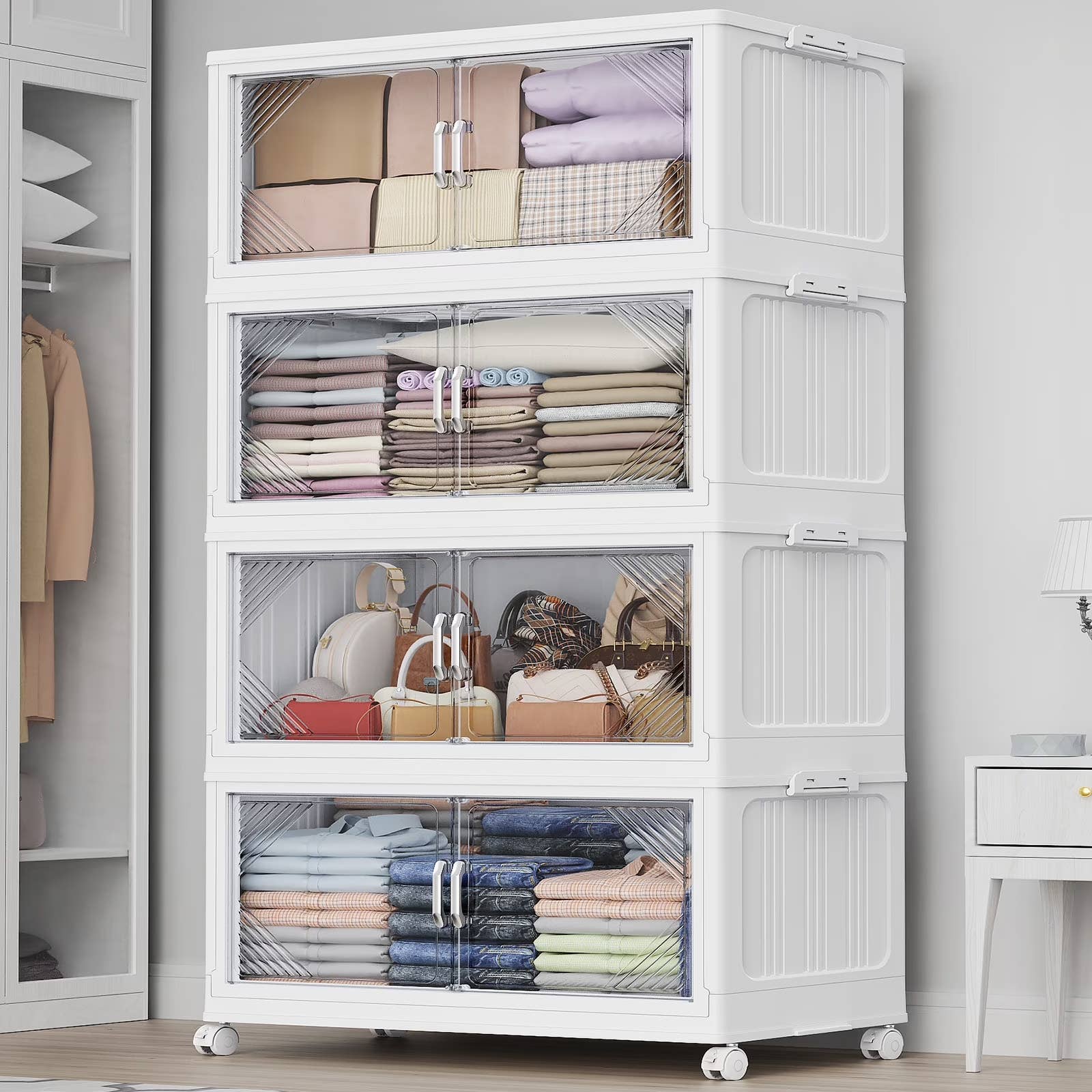
Latitude Run Storage Bins
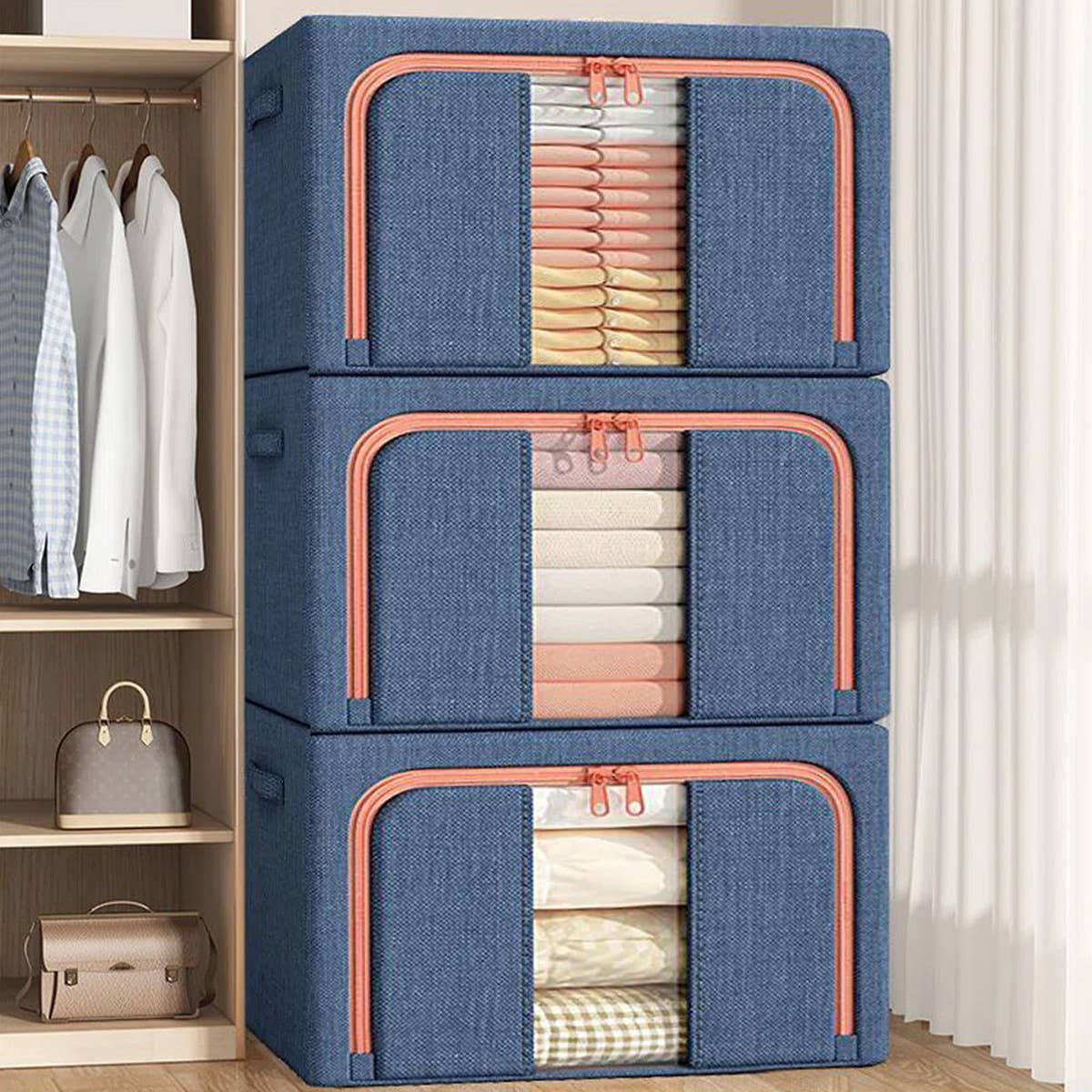
Sterilite 4-Pack Ultra Latching Plastic Storage Bins
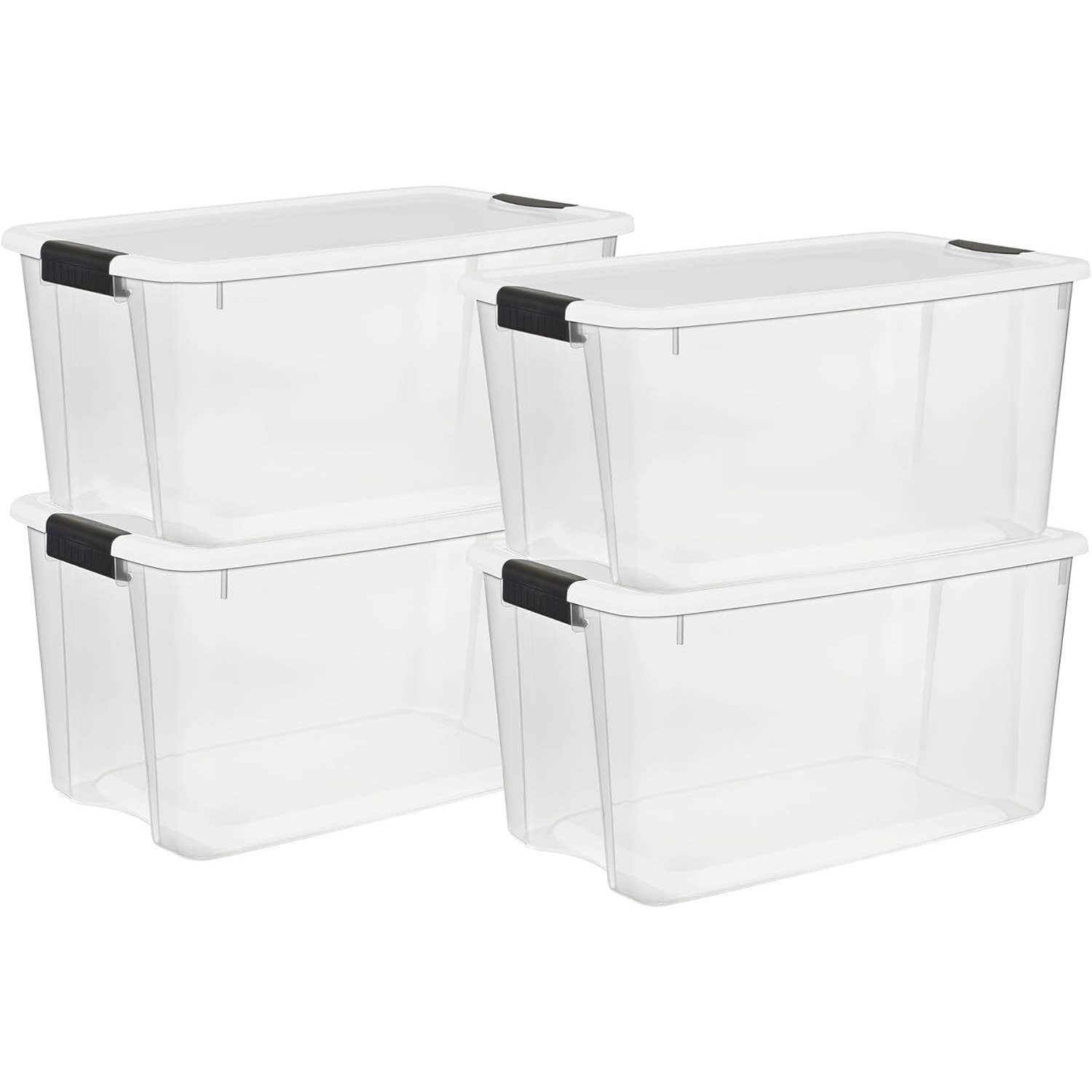
Storage bags
What storage bags lack in structure they make up in flexibility. Because they have a more pliable design, storage bags are highly adaptable to irregular or weirdly-sized spaces like tight corners, cramped closets, or under furniture. They can be adjusted or compressed to save room or fit an oddly-shaped area better, and are easily folded and stored when they aren’t in use. With heavy-duty handles often stitched to the sides, they are easily transportable, and they typically offer superior breathability than more structured, rigid alternatives.
With many storage bags you can use compression technology or the vacuum to suck the extra air out, shrinking bulky items like bedding, winter boats, and sweaters. This better consolidates items, allowing you to often pack more away and eliminating the hassle of trying to store those bulky items in their full form. They’re perfect for seasonal items.
Amazon Basics Vacuum Storage Bags
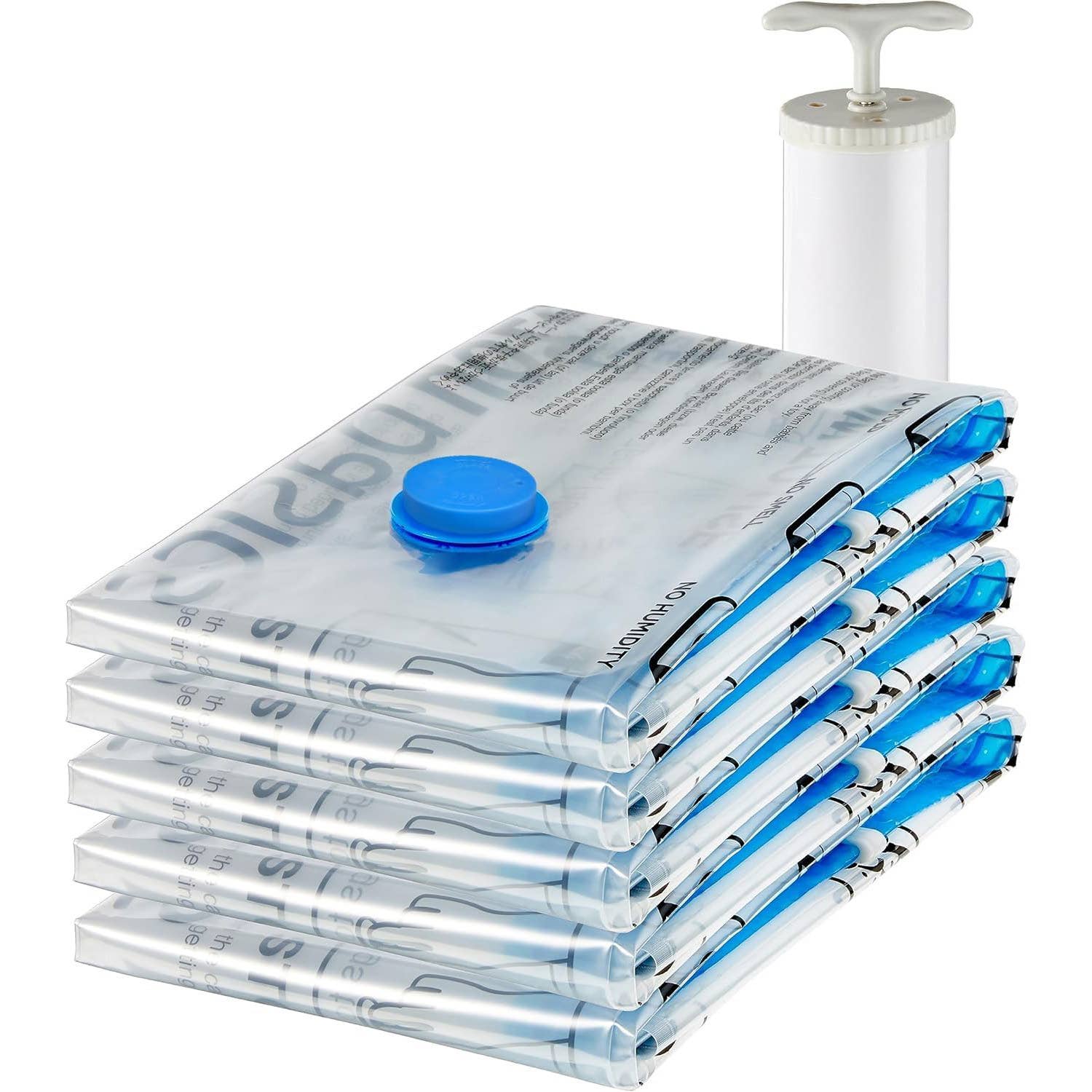
SpaceAid Extra Large Heavy Duty Storage Totes
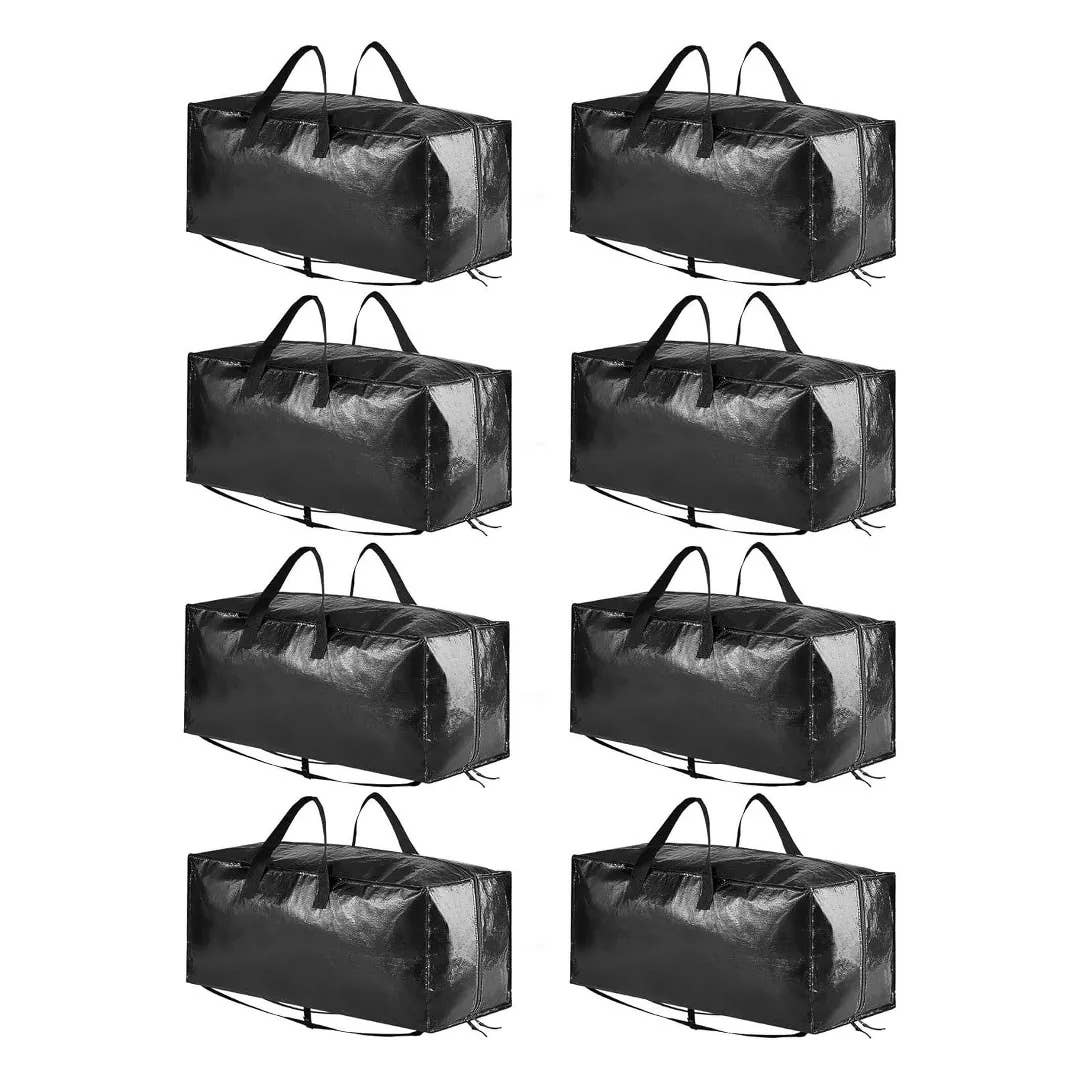
Wiselife Storage Bags
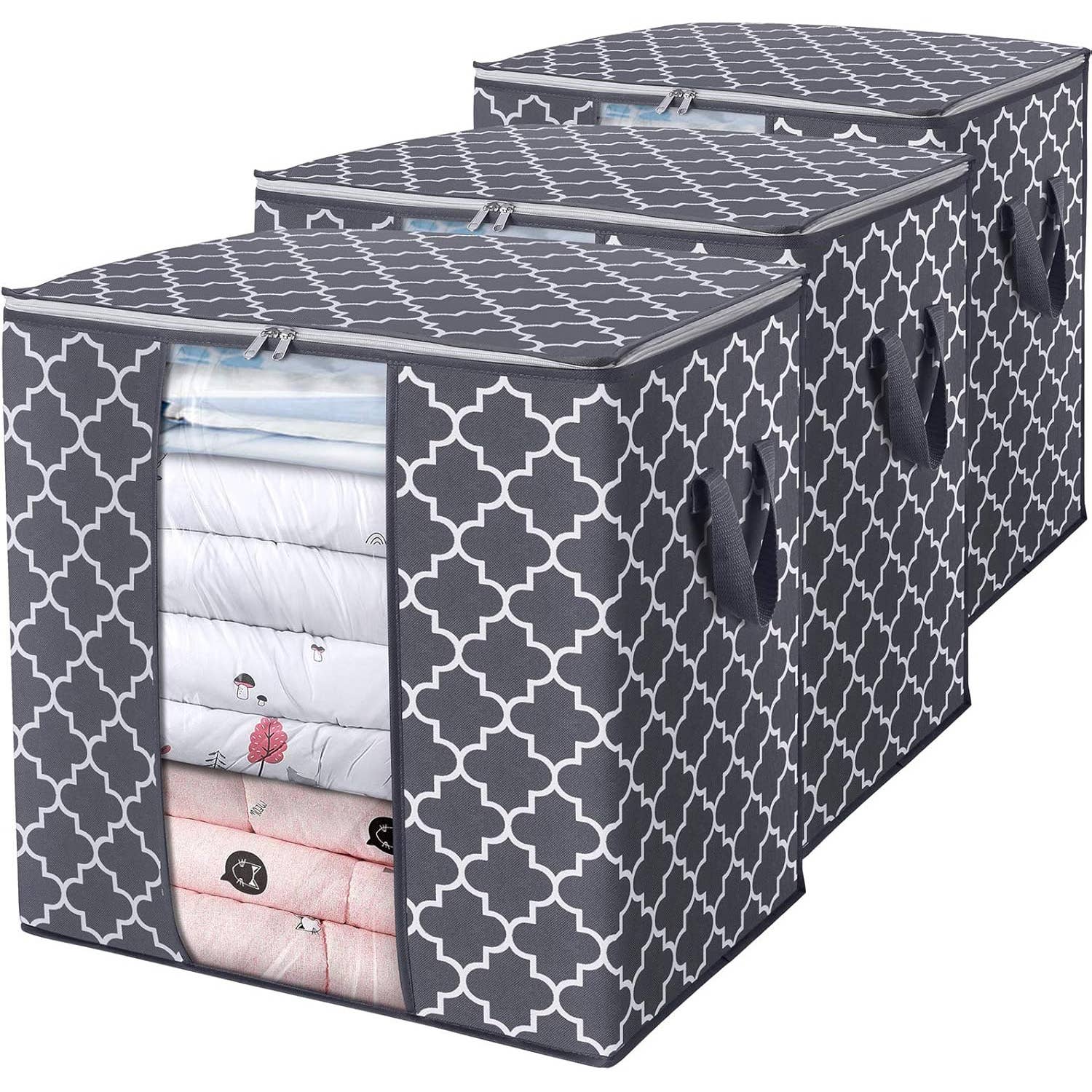
Under-furniture storage
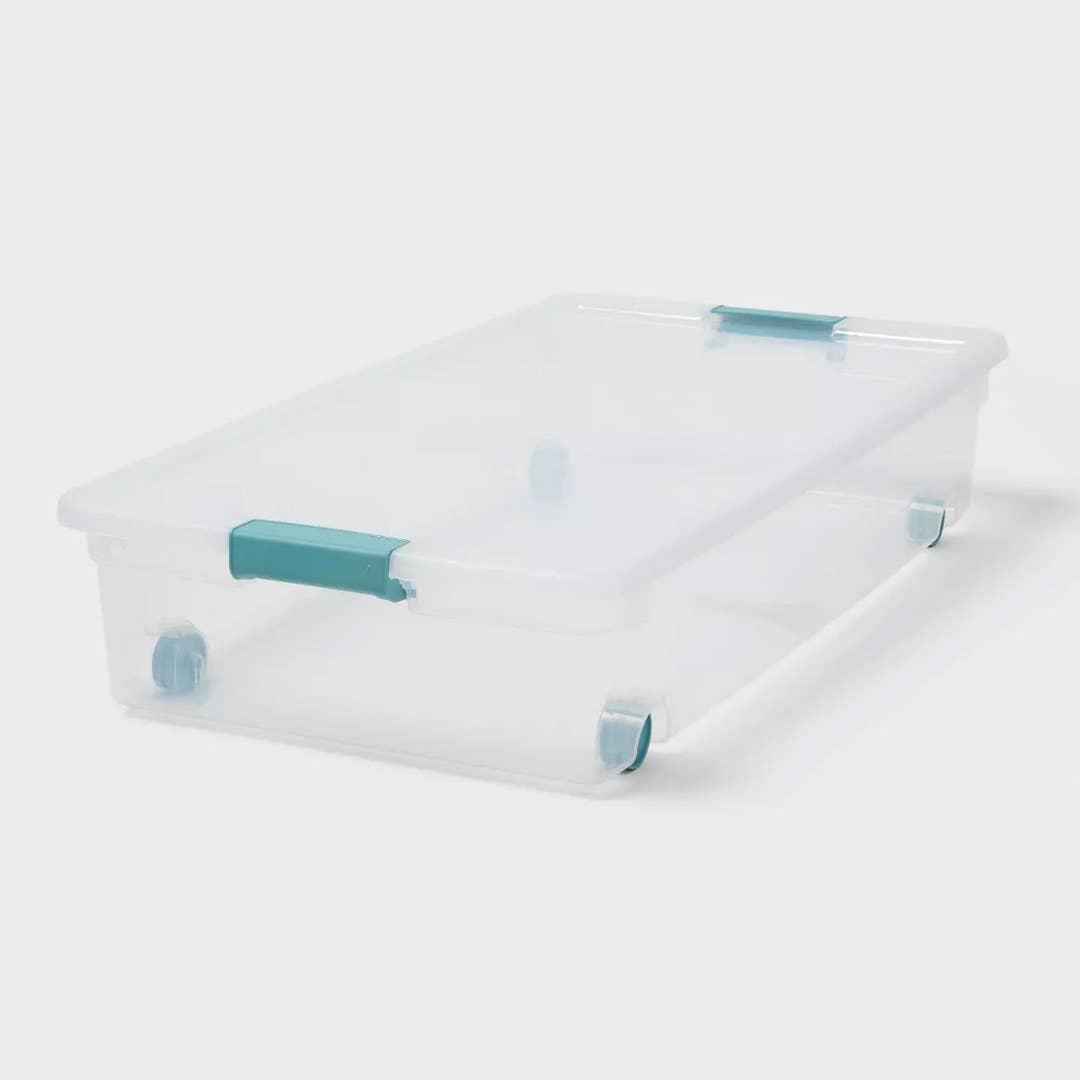
Under-furniture storage is great for clothing you wear occasionally, but not all the time. It allows you easy access to what’s packed away without cluttering up your closet or dresser drawers. The most common form of under-furniture storage, designed to slide under your bed, maximizes the limited space underneath it in order to clear up clutter. Many have wheels that make them easy to pull in and out, and transparent, plastic coverings that securely zipper or snap shut, allowing you to easily see what’s being stored in each without needing to open them up. It’s perfect if you need extra organization but still want daily access to the clothing in it should you need it.
Lifewit Under Bed Shoe Storage
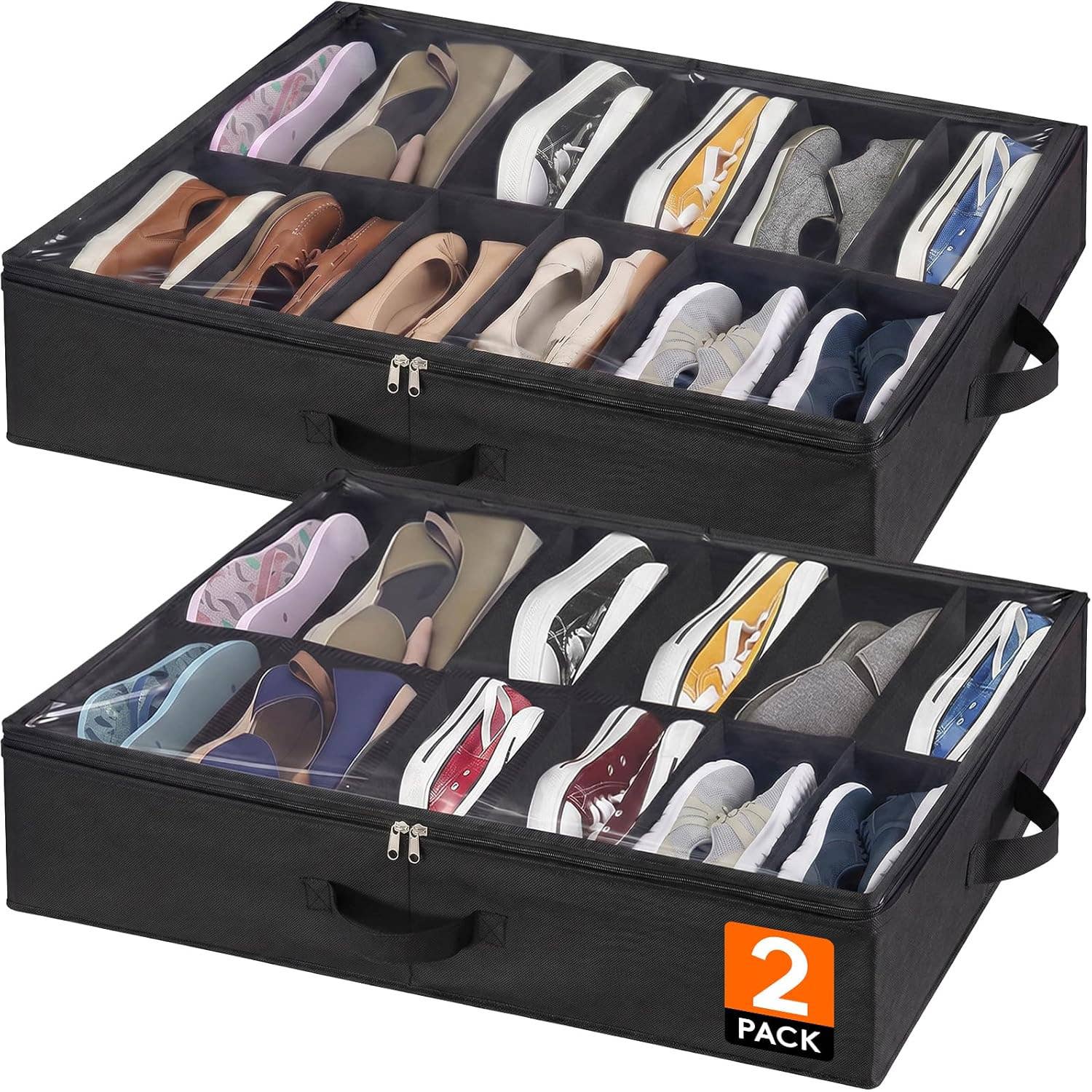
Catgood Rolling Drawers
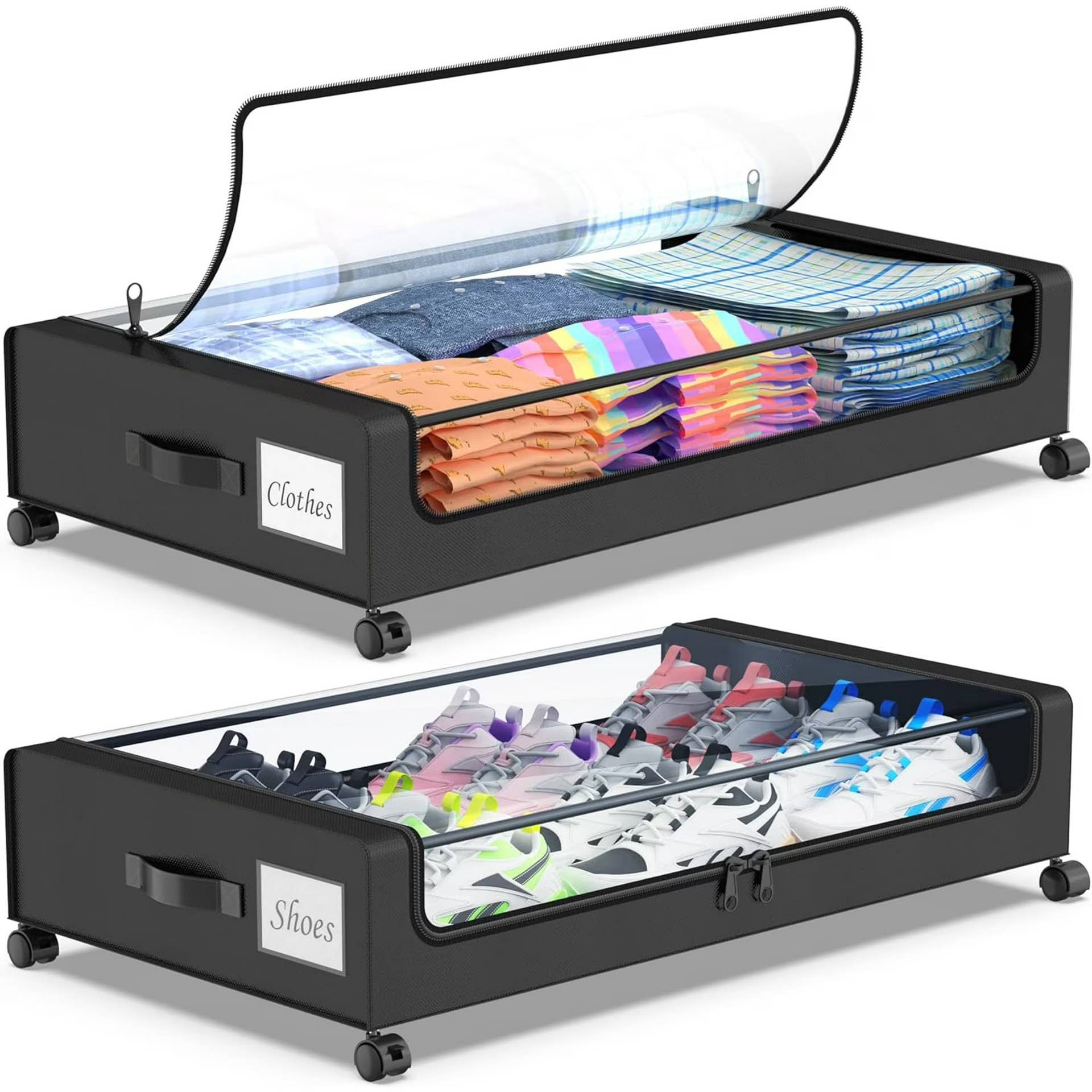
IRIS Plastic Under Bed Storage Containers
Are there things I need to do ahead of time to properly store clothes and shoes?
Just as there are precautions you take before storing food, your personal garments require the same thoughtful consideration. Before packing things away, clothing, even if only worn once, should be washed or dry cleaned. Oils, sweat, and perfumes can attract pests and cause permanent yellow stains, so making sure everything is fresh and clean before storing is essential to maintaining the quality of your clothing. Since dry-cleaning plastic can cause condensation and moisture, make sure to take clothing out of them.
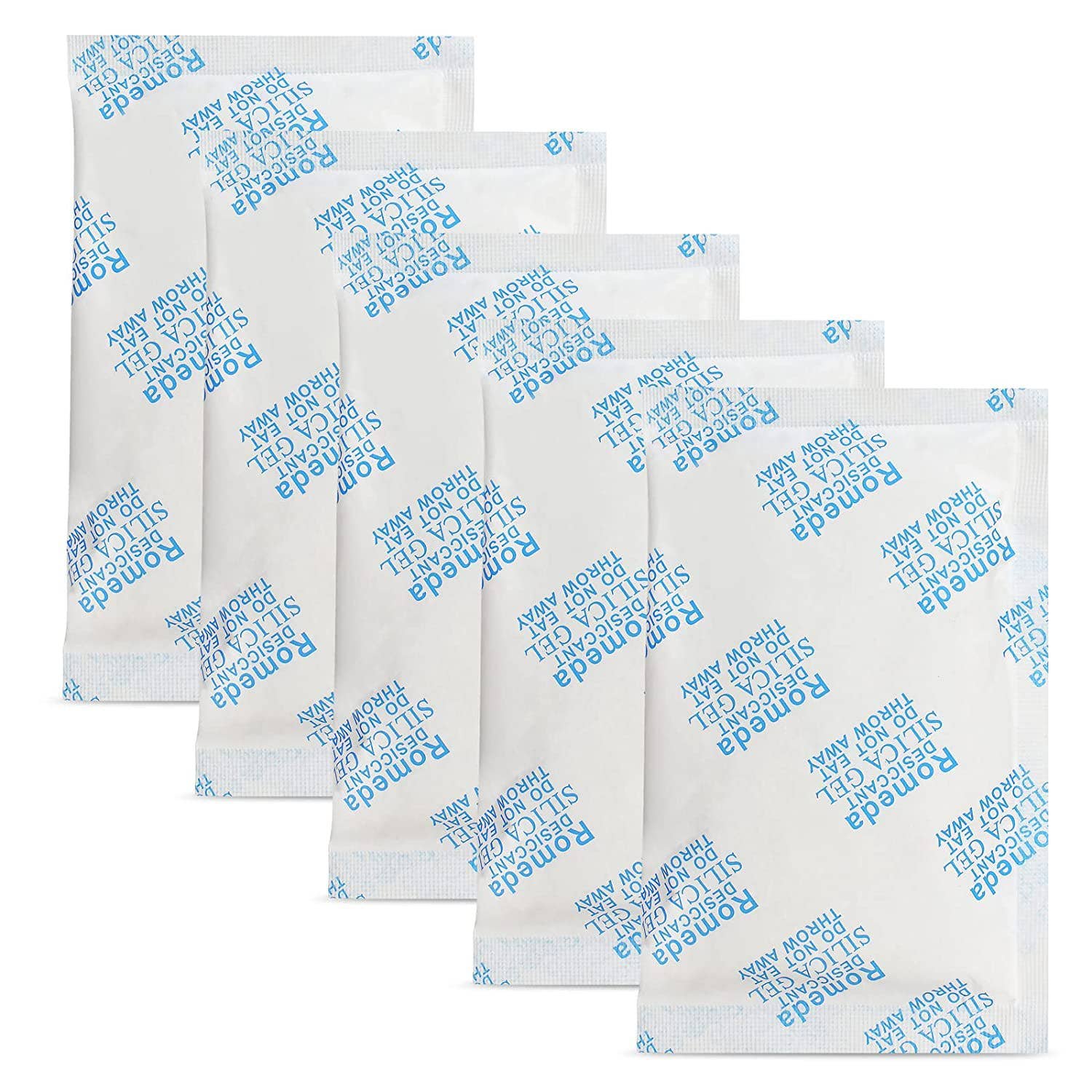
For heavy sweaters or sweatshirts, always fold and store instead of hanging. Hanging heavy garments for long periods of time can cause your items to stretch out and lose their fit. To further protect natural fibers, you can purchase cedar blocks, lavender sachets, or gel packs because they help repel pests, absorb any excess moisture which prevents mold and mildew growth, and they neutralize any stale, musty odors. They are the preferable option compared to mothballs which, although effective at doing the same, emit a strong, harsh chemical smell that can be hazardous to your health if used incorrectly.
Romeda Silica Gel Packs
TheStreet Shopping is your guide for shopping insights and advice. We look beyond the price tag to find the best value in home, tech, and wellness gear based on product features and real-world use. Read more about our Editorial Standards and How We Choose Our Shopping Deals.