Dividend stocks are not as popular as AI stocks or other growth companies. But for long-term investors, a steady, rising dividend payout could significantly boost yield-at-cost over time.
“Always take into account prospects for both growth and income” when picking a dividend stock, a Merrill wealth strategist advised in a recent client note, cautioning against chasing yield alone.
Nuveen strategists have made a similar point this year, noting that companies with a history of growing payouts tend to hold up better when markets get choppy.
Few dividend stories illustrate that better than Bank of America.
Warren Buffett’s Berkshire Hathaway, which has owned the iconic bank stock for more than a decade, is still cashing some of the largest dividend checks in corporate America, even after quietly trimming its position this summer.
Bank of America hikes its dividend
Bank of America’s (BAC) board approved a 14% dividend increase in July, lifting the quarterly payout to $0.32 a share from $0.28 a share.
The new rate is payable Sept. 25 to shareholders of record as of Sept. 4, pushing the forward annual dividend to $1.28 a share.
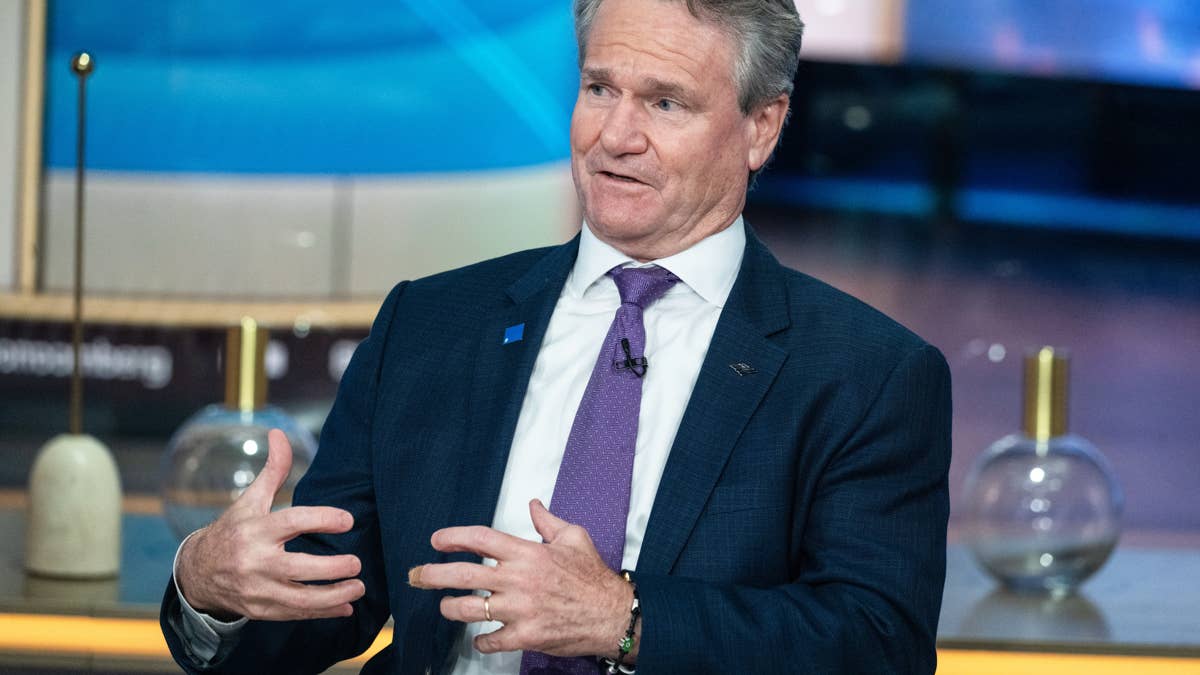
“The increase in our dividend reflects the strength of our earnings, the power of our franchise,” Bank of America CEO Brian Moynihan said in the statement.
Berkshire currently holds 483,394,015 shares of Bank of America, according to CNBC.
Multiply that by the new $1.28 annual dividend, and Berkshire is on pace to collect roughly $619 million a year just from BAC dividends, an income stream that keeps growing even as Buffett’s successor, Greg Abel, reshapes the rest of the portfolio.
BAC stock ratios every dividend investor should know
Bank of America has paid a dividend every year since 1991, and the July increase extends a run of steady payout growth. Here’s where the key dividend metrics stand:
- Quarterly dividend: $0.32 per share, up 14% from 28 cents
- Forward annual dividend: $1.28 per share
- Dividend yield: Approximately 1.9%
- EPS estimates (2026): $4.68 per share
- Payout ratio: Roughly 28% of earnings, leaving ample room for further increases
- 10-year dividend growth rate: About 15.6% annualized
- Ex-dividend date: Sept. 4, 2026
- Payment date: Sept. 25, 2026
A payout ratio in the high 20s is a healthy sign. It means Bank of America is returning a meaningful share of profits to shareholders without straining its balance sheet, something regulators watch closely at large banks.
The dividend hike came alongside a strong quarter.
Bank of America posted net income of $9.1 billion for the second quarter, up 27% from a year earlier. In comparison, earnings per share jumped 34% to $1.21.
Related: Bank of America sends message on Capital One stock
Revenue climbed 15% to $31.6 billion, and return on tangible common equity reached 17%.
Moynihan told investors the bank returned $8 billion to shareholders during the quarter through dividends and buybacks combined, while common equity Tier 1 capital stood at nearly $202 billion, well above regulatory minimums.
“We maintained strong liquidity and funding while we optimized our balance sheet, and we supported all that with diversified funding and healthy client-driven growth,” CFO Alastair Borthwick stated.
Executives also raised full-year operating leverage guidance to a range of 300 to 400 basis points, citing stronger net interest income and fee revenue, the kind of profit growth that gives a board confidence to keep raising a dividend.
Warren Buffett trims stake in BAC stock
Even as Bank of America’s business remains steady, Berkshire has been quietly paring back.
According to Berkshire’s second-quarter 13F filing with the Securities and Exchange Commission, the firm sold about 30.2 million BAC shares, a 5.9% reduction, worth roughly $1.7 billion at quarter-end prices.
More Warren Buffett:
- Warren Buffett reveals he broke his own investing pattern
- Warren Buffett has a blunt take on today’s market
- Warren Buffett pulls no punches on stock market for 2026
Despite the sale, Bank of America remains one of Berkshire’s five largest holdings, representing roughly 8.3% of its U.S. stock portfolio, behind only Apple, American Express, Coca-Cola, and Alphabet.
Buffett first built the stake through a crisis-era preferred stock investment in 2011.
Analysts have grown more constructive on the shares since the dividend hike and earnings beat.
JPMorgan raised its price target to $68 from $62.50 while keeping an overweight rating. UBS and Barclays have both reiterated buy ratings with targets above $70, according to multiple analyst notes tracked by TipRanks.
The average 12-month BAC stock price target sits in the high $60s, implying further upside.
For income-focused investors, the combination of a growing dividend, a low payout ratio, and steady earnings growth makes Bank of America one of the more closely watched dividend stocks among the big banks, even with one of its most famous shareholders taking some chips off the table.
Related: Dividend Aristocrat pays Warren Buffett’s Berkshire $601M annually