Will the Federal Reserve cut interest rates at its July meeting this week?
As economic jitters shake up kitchen tables and investment portfolios across America, Kevin Warsh gets a chance to act on his commitment that managing inflation is the Fed’s top priority.
The consensus prediction among many Fed watchers is that the policymaking Federal Open Market Committee holds benchmark short-term interest rates steady when it meets July 28-29, but that doesn’t mean all 12 FOMC members will agree.
A steady labor market and a solid GDP may or may not warrant leaving the Federal Funds Rate unchanged to provide the “price stability” Warsh has vowed to rectify because the Fed has “no tolerance’’ for elevated consumer and producer costs.
“There should be a good ‘family fight’ on the inflation outlook and forward policy-settings,” RJ O’Brien Managing Director John Brady told Bloomberg. “Our sense this morning is that this Warsh Fed will use this meeting to prepare the markets for a September rate hike.”
“We think the FOMC will be willing to hold off for a few more weeks to see how events unfold in the Middle East,” J.P. Morgan Asset Management Chief Global Strategist David Kelly said in a LinkedIn post. “Thereafter, if oil prices are still rising, the Fed will feel pressure to hike rates to validate its recently tougher talk.”
Should gasoline prices fall back, “this could allow the Fed to avoid adjusting interest rates at all this year, sending a positive signal to both stock and bond markets,’’ Kelly said.
Inflation prompts traders to reset Fed interest-rate bets
As of July 27, the widely watched CME Group FedWatch Tool shows traders are pricing in higher probabilities of interest-rate hikes for the final months of this year, while expecting a 63.5% probability that rates will remain steady and a 36.5% chance of a quarter-point rate hike this week. This is a marked change from a few weeks ago, when there was a near 90% chance of July rates holding steady.
- September shift: Traders now price in a 79.6% cumulative chance of at least one quarter-point rate hike happening by or during the September FOMC meeting.
- December tightening: By the end of the year, the CME Group FedWatch Tool leans heavily toward a half-point hike with a 37.7% probability of a 4.00% to 4.25% target rate, reflecting sustained inflation concerns.
July Fed interest-rate decision most unpredictable in years
Melissa Brown, global head of investment decision research at SimCorp, said there is plenty of reason to believe that rates “will, or at least should, rise.”
“The one-two punch of oil prices up from recent lows and renewed tariff threats suggests it might be a good decision, to get out in front of the renewed inflationary tide. Although the most recent CPI was below expectations, it was still significantly higher than the Fed’s 2% target,’’ Brown told TheStreet in an email.
And even if inflation remained steady at the 3.5% reported level — which Brown said is unlikely — there would still be ample justification for a hike.
“The uncertainty surrounding oil shipments will likely lead to continued volatility of oil prices,’’ Brown said. “This is all reflected in FedWatch’s current near-certainty of a hike before the end of the year.’’
Warsh commits FOMC to “price stability“
“While monthly price fluctuations are inevitable, especially in an unsettled world, underlying inflation over longer time horizons is determined largely by monetary policy,’’ Warsh said in prepared remarks while delivering the Fed’s twice-yearly Monetary Policy Report to Congress July 14-15.
The report, issued July 10, said the outlook of the future path of interest rates “is subject to considerable uncertainty.” It also described the U.S. economy as overall “expanding at a solid pace despite elevated uncertainty that owes, in part, to the conflict in the Middle East.’’
Warsh repeatedly reminded members of both chambers that the Fed is committed to its dual Congressional mandate: use interest rates and balance-sheet policy to keep prices stable and the labor market at full employment.
That’s tricky.
- Lower interest rates support hiring but can fuel inflation. This risks fueling further inflation, potentially leading to an inflationary spiral.
- Higher rates cool prices but can weaken the job market. This increases the cost of borrowing and further stifles economic activity.
As I reported, Warsh consistently repeated his pledge that the central bank would work on its “resolute commitment” to restore price stability.
Fed holds interest rates steady thus far this year
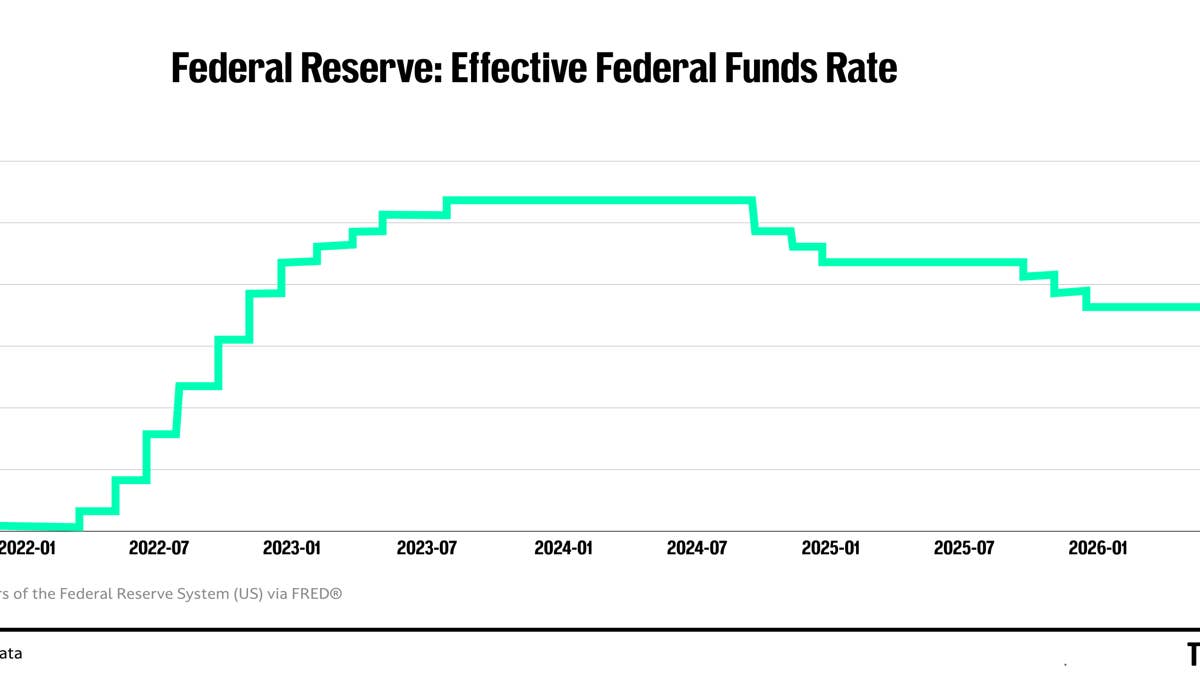
The rate-setting FOMC voted unanimously in June to hold its benchmark Federal Funds Rate target in a range of 3.5% to 3.75%.
But the minutes of the June FOMC meeting showed policymakers splitting their views on inflation risk and its impact on interest rates, with a rising hawkish tinge to the “dot plot.”
Shortly before the cooling June CPI came out, I reported that Fed Governor Christopher Waller issued a stark warning on inflation and its long-term impact on prices.
“No matter how you cut it, or what measure you want to use, inflation is up this year,” Waller said in a July 13 speech. “At this point, I am concerned about the elevated pace of core inflation.”
Related: Rising inflation turns July Fed meeting into rate-hike showdown
Two other voting FOMC members — Cleveland Fed President Beth Hammack and Dallas Fed President Lorie K. Logan — expressed concerns they’ve seen and heard from their districts on rising prices and the potential for inflation to spike higher.
“It is clear listening to the Fed officials that you have a small group — like Logan, Hammack — who probably are ready to get going,” New Century Advisors LLC Chief Economist Claudia Sahm told Bloomberg. “And then there’s a pretty large group that wants to see more improvement — and soon.”
Will the Fed hike interest rates in September?
The FOMC will have two additional months of inflation and labor data to consider when it meets Sept. 15-16.
The Fed’s preferred inflation measure, Personal Consumption Expenditures, will be released July 25. Headline May PCE (year over year) increased to 4.1%, up from 3.8% in April. Consensus expectations estimate the June PCE to cool to 3.7 % to 3.8%, primarily driven by a sharp drop in energy and gasoline prices.
The September FOMC meeting follows the renowned Jackson Hole Economic Policy Symposium in August where Fed Chairs typically use their keynote addresses to signal potential policy pivots, major framework overhauls or other fundamental changes in how the U.S. central bank interprets macroeconomic data.
Markets and consumers will look to Warsh’s inaugural Jackson Hole address to set expectations for the September rate decision and the rest of the year.
Warsh will be closely watched to see if he drops hints or clues as to the future of interest rates, especially since he eliminated forward guidance language from the Fed’s post-FOMC meeting statement in June.
“Rates should be lowered,’’ President Donald Trump told reporters aboard Air Force One July 27. “We should have the lowest interest rates in the world.”
The president and his allies repeatedly blasted former Fed Chair Jerome Powell for years for not drastically cutting interest rates to 1% or lower to curb the fear of recession, ignite the stagnant housing market, and reduce interest on the $39.80 trillion national debt.
How the Federal Funds Rate impacts you
The funds rate is the interest rate at which banks lend balances at the Federal Reserve to other banks overnight.
A change in the funds rate triggers moves in short-term borrowing costs ranging from credit cards to auto loans to even longer-term mortgage rates.
Policymakers had cut rates by a quarter point at each of its last three meetings of 2025 to shore up the softening labor market.
These “insurance” cuts stopped after the majority of policymakers decided the risk from higher prices was outweighing signs that the jobs market was stabilizing.
Related: Goldman Sachs pitches eye-opening view on Fed interest-rate bets